



The head of the air traffic controllers’ union said Wednesday it could take the industry “weeks to recover” from the impacts of the government shutdown.
Nick Daniels, president of the National Air Traffic Controllers Association, said on CNBC’s “Squawk Box” that the holiday season will be particularly affected by the shortage of air traffic controllers, who did not receive their first full paycheck last week. The Department of Transportation reported an increase in delays and ground stops due to the closure, which is now in its fifth consecutive week.
“To imagine that we could go into the holiday season with a government shutdown, I can’t even begin to predict what the impacts will be across this country,” Daniels said. “Three-hour lines at TSA will be the least of our worries.”
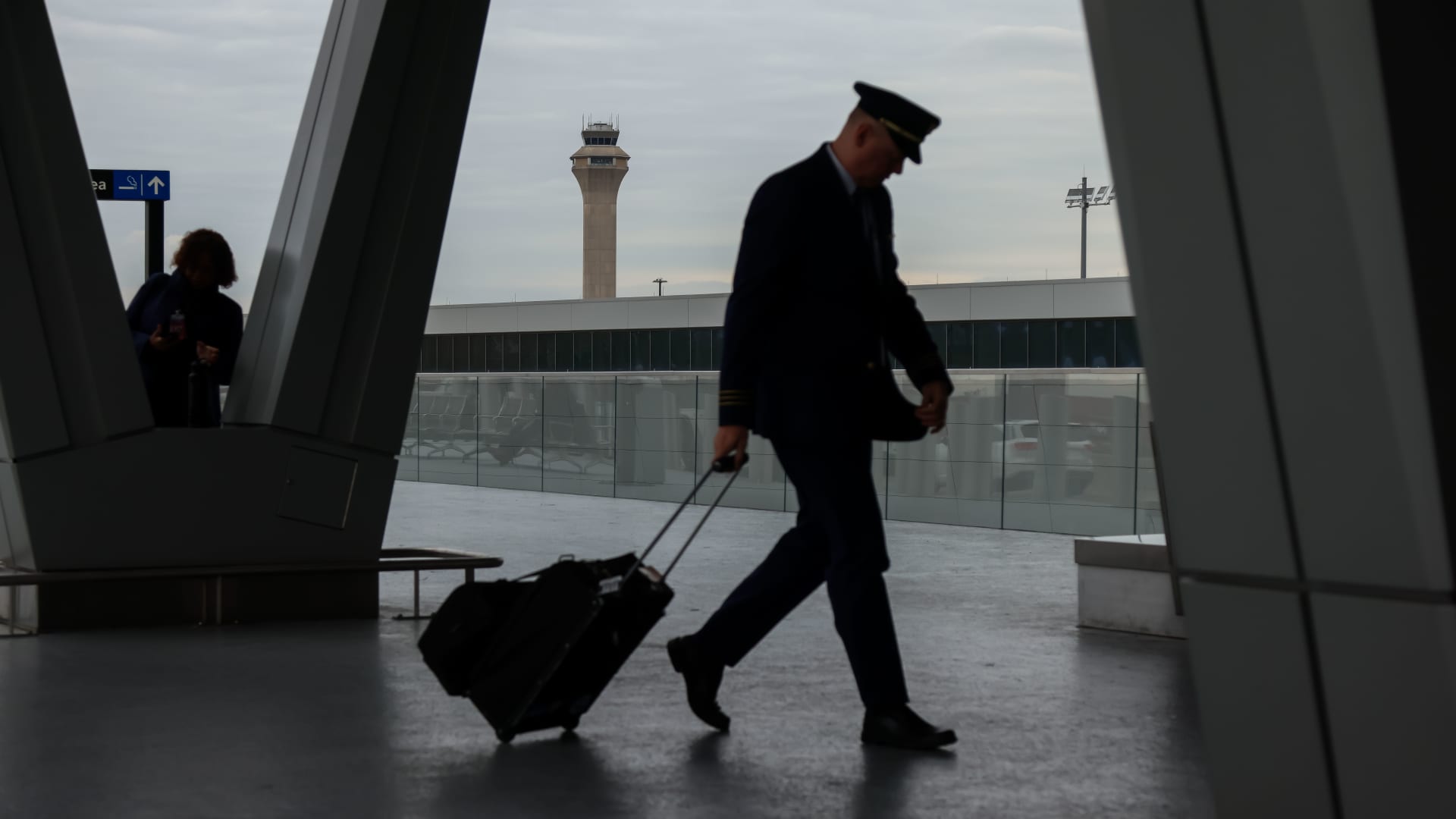
The FAA air traffic control tower at Newark Liberty International Airport (EWR) in Newark, New Jersey, United States, Monday, November 3, 2025.
Michael Nagle | Bloomberg | Getty Images
Air traffic controllers and airport security screeners are among the employees required to work during the shutdown as essential employees, even if they do not receive regular paychecks. The closure, which entered its 36th full day on Wednesday, is now the longest in history.
Even if the shutdown ended today, Daniels added, the impacts could take much longer to be felt among air traffic controllers and pose challenges to the industry as a whole.
“We’ve been in this shutdown for so long at this point, I don’t think we’ll actually see the damage until well after the shutdown is over, seeing air traffic controllers resigning from this career and this profession,” he said. “Even if they open the government today, we will not get the salary that we deserve, that we have rightfully earned for over two to two and a half months.”
Daniels said there are already 300 to 400 fewer air traffic controllers today than in 2019, when the government was shut down for 35 days. That shutdown ended after a shortage of air traffic controllers led to severe disruptions at U.S. airports.
“We’ll do everything we can and be the professionals that show up and try to move the plane through the airspace. At the same time, we can’t make the impossible possible if it’s just going to put us in an impossible situation,” Daniels said.
Earlier this week, Transportation Secretary Sean Duffy said on “Squawk Box” that he could “shut down all airspace” if the shutdown continues to expand. The sector is currently 2,000 to 3,000 controllers short of its ideal staffing target, he added.
“We will not let people travel, [but] we are not there at this stage. These are just significant delays,” Duffy said.