


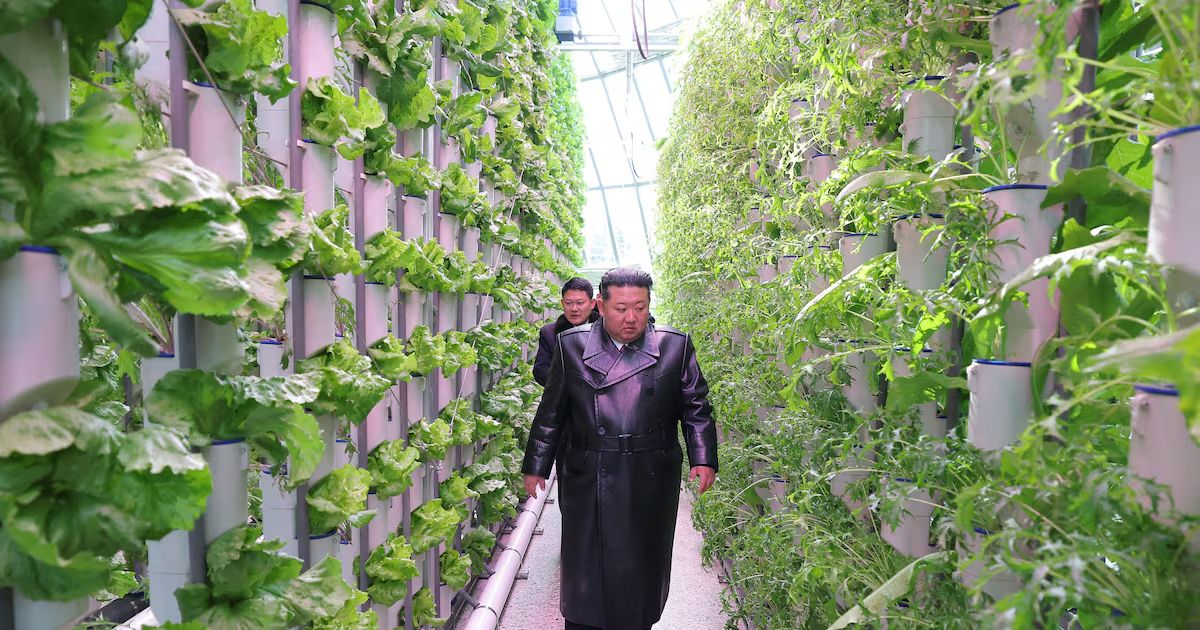
Months after North Korea unveiled the country’s largest-ever greenhouse, analysts told Radio Free Asia that satellite images show less than half of the farm is operational, likely due to electricity shortages.
According to state media, the country’s leader, Kim Jong Un, personally led the construction of the Sinuiju greenhouse agricultural complex. It has been touted as a way to rejuvenate the Wihwa, Mado and Kumdong islands in the Yalu River near the border with China, which were flattened by floods in 2024.
At the agricultural complex’s inauguration in February, Kim acknowledged that the flooding was the worst on record, but said the project had overcome nature to create “that will benefit our people at all ages.”
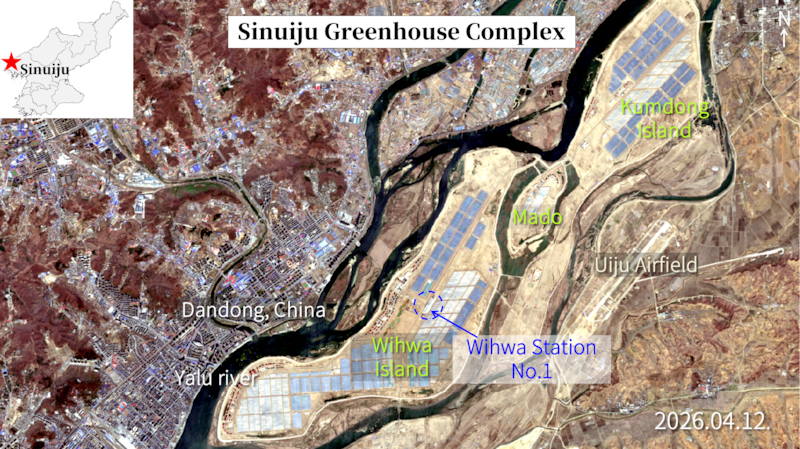
Covering a gargantuan 450 hectares (1.7 square miles), the agricultural complex is roughly the size of 625 football fields, and officials say it can produce vegetables for eight months of the year.
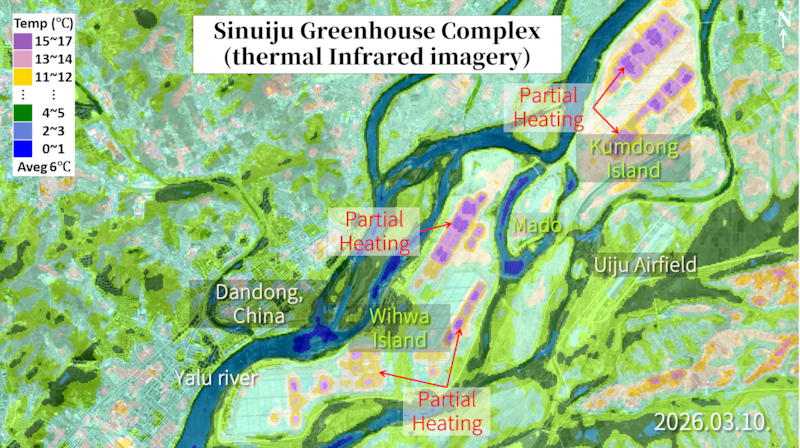
But thermal infrared images from NASA’s Landsat-8 satellite suggest that only 44 percent of the total complex recorded temperatures above the surrounding average, Bruce Songhak Chung, a researcher at the Seoul-based National Security Strategy Institute, told RFA.
He told Radio Free Asia that after seeing thermal data from March 10, the unheated areas were proof that either the heating infrastructure was not fully installed or that chronic electricity shortages were preventing greenhouses from operating at full capacity.
Chung also examined night light images (VIIRS) captured by the U.S. weather satellite of the Suomi Nuclear Power Plant around 1:30 a.m. on April 17, finding almost no detectable light emanating from the Sinuiju greenhouse. Electric grow lights typically used in smart farming operations were largely absent — a finding consistent with reports of frequent power shortages due to poor power infrastructure within the country.
Kim Hyuk, a senior researcher specializing in North Korean agriculture at the South Korea-based Korea Rural Community Corporation’s Rural Research Institute, told RFA that heat maps showed only certain parts of the farm had electricity.
“What can be analyzed through night light and thermal infrared imaging at the Sinuiju greenhouse suggests a single unit equipped with solar panels and five glass greenhouses, covering only about 25 hectares (0.1 square mile),” he said. “The rest looks more like basic plastic coverings than properly equipped greenhouses, and the electricity that can be produced from the solar installation is not enough to meet the energy needs of the farm.”
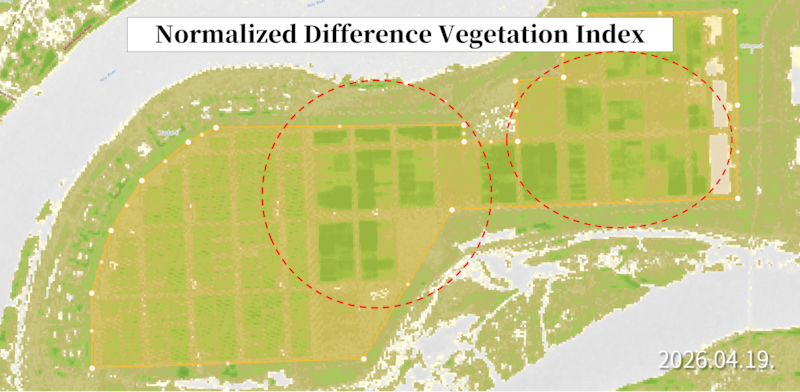
Kim noted that Normalized Difference Vegetation Index (NDVI) images taken on April 19 visually confirmed that crops appeared to have been planted in most of the greenhouses, suggesting an operating rate of about 65 to 75 percent, a bit higher than thermal infrared data alone indicated.
Despite more optimistic images, it remains an open question whether the farm can actually meet authorities’ expectations of eight months or more of annual harvests using solar power and geothermal systems.
South Korean satellite image analysis company SI Analytics reached a similar conclusion in its own assessment published in March, warning that the large-scale complex was at risk of becoming a “ghost greenhouse” during the winter months.
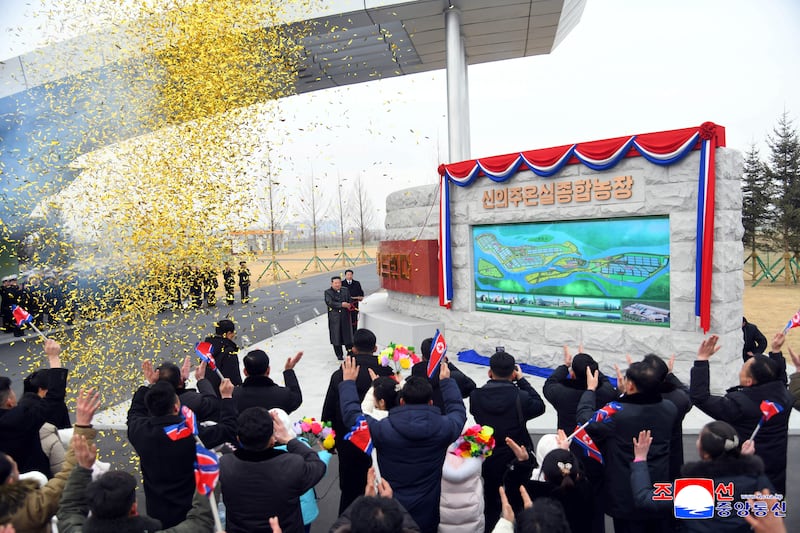
In its report, SI Analytics wrote that although the Sinuiju greenhouse is now heavily promoted as a regional development model to showcase achievements in “improving people’s living standards”, it is still expected to face significant practical challenges.
The main problem is the supply of essential energy sources such as coal, heavy oil and electricity necessary for its operation. Greenhouses are facilities primarily used in winter, but this region constitutes a flat border area in the far north of North Korea, making it one of the coldest places in the country, according to the report.
Edited by Eugene Whong.