


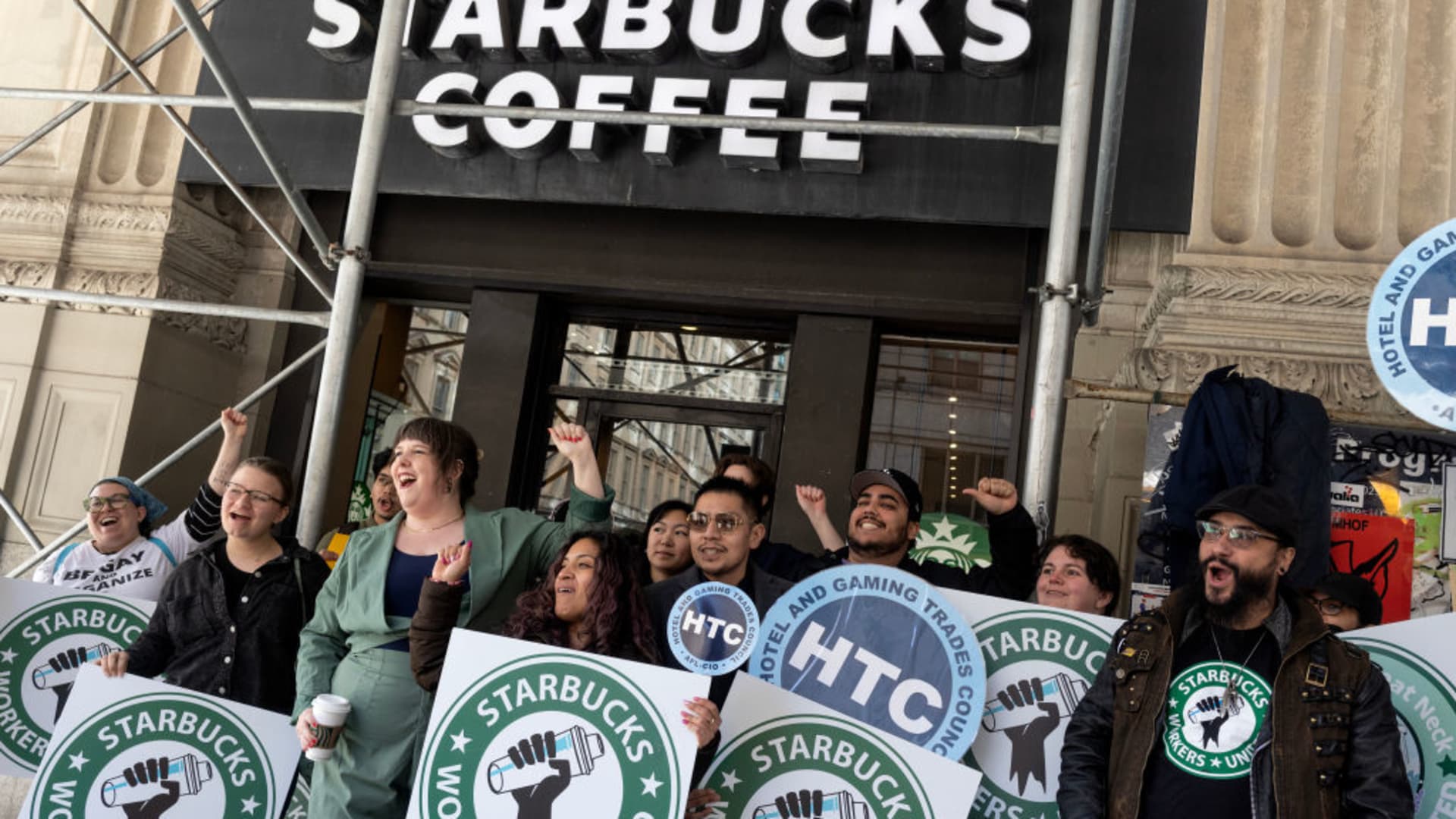

Starbucks Workers United is launching a strike authorization vote Friday, as the union representing baristas attempts to secure a contract with the coffee giant.
The union also said it was planning a wave of rallies and pickets across the country with its baristas and allies.
The vote on authorizing a strike at unionized cafes will be open for several days. If approved, the strike itself would be of indefinite duration, with details to be determined. While the vote takes place, seventy rallies and pickets will take place from Friday to November 1 in 60 cities, the union said. If the union votes to strike, it would be the third national strike to take place since last December.
The two sides are not in active negotiations to reach a contract after negotiations failed in December 2024. In February, the two sides began mediation and hundreds of barista delegates voted against the economic package proposed by Starbucks in April.
Workers United says it is pushing for a contract that addresses three key issues. The union is demanding “better hours to improve staffing,” higher take-home pay (although it did not specify a salary figure), and “resolution for hundreds of outstanding unfair labor practice charges.” Workers United, which began organizing at Starbucks in 2021, now represents more than 12,000 workers in more than 650 stores. The number of unionized stores is still small, as Starbucks has more than 18,000 company-operated and licensed stores in North America.
“We’re going to do whatever it takes to get this contract,” Jasmine Leli, a barista at a union store in Buffalo, New York, who participated in regional and national negotiations, told CNBC. The union, which organized a nationwide wave of picket lines in 35 cities in September and October, says it would cost the company less than an average sales day to settle the contract.
Starbucks spokeswoman Jaci Anderson said in a statement that “Workers United represents only about 4 percent of our partners, but has chosen to walk away from the negotiating table. If they are ready to come back, we are ready to talk.”
Any deal must reflect the reality that Starbucks already offers the best jobs in retail, she added. “Hourly partners earn on average more than $30 an hour in pay and benefits and we are investing more than $500 million to attract more partners to stores during peak periods.”
“The facts show that people love working at Starbucks. Partner engagement is up, revenue is nearly half the industry average, and we receive more than a million applications a year,” Anderson said.

Starbucks is expected to report its fourth-quarter results on Wednesday. The stock is down 6% year to date and same-store sales have fallen for six straight quarters.
The company is in the middle of a turnaround plan led by new CEO Brian Niccol, nicknamed “Back to Starbucks.” As part of this strategy, the company announced the rollout of its Green Apron Service plans, which rely on warm and engaging interactions between baristas and customers in hopes of making visits to Starbucks a habit.
The program is supported by changes to ensure adequate staffing and better technology to maintain rapid service times. It was born from the growth of digital orders, which now account for more than 30% of sales, and feedback from baristas, the company said.
The Green Apron Service campaign is the largest investment the company has ever made in hospitality and its store employees, Starbucks said. During the company’s third-quarter earnings call, CFO Cathy Smith said Starbucks would invest more than $500 million in labor hours at company-owned cafes over the next year, starting with the rollout of the Green Apron service. Starbucks also launched a pilot program for its assistant store manager position in late September. The company now has 62 assistant store managers in newly created leadership positions across six regions. The company says 90% of these hires are internal promotions.
Staffing is a constant problem for organized baristas. Niccol has faced somewhat less scrutiny from the union than his predecessors, including former CEO Howard Schultz, who took a more combative approach.

In September, the company announced a billion-dollar restructuring plan that includes closing some 500 of its North American stores, according to analyst estimates, and laying off 900 employees in non-sales positions. The union says it has secured additional benefits for workers through negotiations over effects at the 59 unionized stores that are closing as a result of the restructuring, including severance packages even if they refuse a transfer offer and expanded health benefits.
At the time of the restructuring, Starbucks said in a statement that “given the industry-leading offering available to impacted partners – including reassignment opportunities where possible and generous severance packages – we were able to quickly reach an agreement with Workers United to similarly assist represented partners through this transition. This reflects our commitment to caring for partners.”
The company added that it had contacted Workers United to work on a framework on how the changes would impact unionized cafe baristas.