


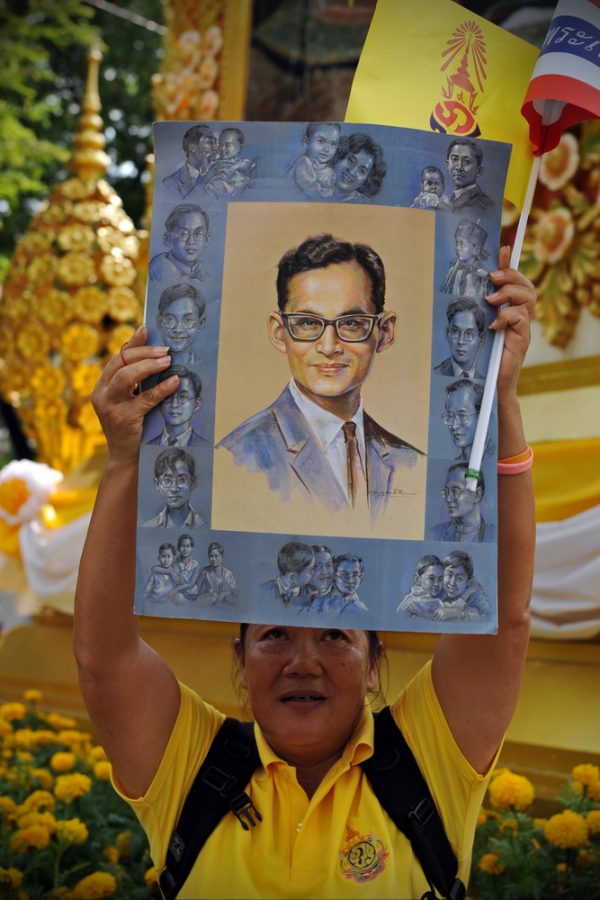
Global discourse around Thailand’s implementation of Article 112 – commonly known as the lèse majesté law – has long focused on the state’s use of repression. Academics, activists and international human rights organizations have analyzed the draconian nature of the law and the judicial complicity that guarantees conviction rates close to 100%. They examined physical violence, including state-sponsored cross-border kidnappings and extrajudicial killings, which are often directed against critics of the monarchy. The role of military-funded information operations as a means of doxxing and harassing critics of the monarchy has also been well documented.
However, an under-analyzed dimension of this repressive ecosystem is the ultra-royalist establishment’s use of a coterie of pseudo-academics and right-wing influencers on social media. Recognizing that brute force, prison sentences and clumsy military information operations are not enough to win the hearts and minds of a critical and highly connected population, the royalist establishment has cultivated a network of digital proxies to provide the “intellectual” face of the monarchy. Figures such as Arnond Sakworawich, an associate professor at the National Institute of Development Administration (NIDA), and Suphanat Aphinyan (better known online as “Dr. New”), have recently been named as leaders of the counter-offensive against pro-democracy academics and student activists.
But rather than strengthening the prestige of the crown, this strategic use of pseudo-intellectualism backfired. These proxies have consistently trafficked in conspiracy theories, historical revisionism, and personal vitriol that often result in public ridicule. This article analyzes the mechanics of this pseudo-academic war, its profound impact on Thailand’s digital and intellectual landscapes, and whether the monarchy’s association with these figures ultimately preserves or degrades its institutional position.
In Thai society, hierarchical structures have historically conferred immense social capital on institutional titles. The prefix “Ajarn” (professor) or “Doctor” imposes automatic deference, lending an aura of objective truth to the speaker’s assertions. The ultra-royalist right has deliberately used this cultural deference as a weapon to construct a counter-narrative against the rigorous historical and structural critiques raised by pro-democracy academics like Somsak Jeamteerasakul and Thongchai Winichakul.
Arnond Sakworawich illustrates this militarization of university diplomas. Operating within NIDA, an institution entrenched in the Thai bureaucracy and closely linked to its state-building efforts, Arnond uses his academic platform to give a veneer of intellectual legitimacy to ultra-royalist dogmas. Similarly, Suphanat Aphinyan used his agenda, amplified by right-wing media outlets like Top News, to position himself as a highly educated young defender of the faith, capable of debunking the arguments of the progressive movement.
Far from engaging in a real academic debate, the primary objective of these figures is to construct a parallel intellectual reality. When progressive academics point out the flaws in the management of the Crown Property Bureau, which manages the monarchy’s billions of dollars of assets – or criticize the expansion of the military budget under royal responsibility, pseudo-academics respond with hyper-nationalist historical revisionism – for example, by asserting that Western-style democracy is a foreign imposition unsuitable for the unique “Thai soul”.
The main battleground for these pseudo-academics is social media, particularly Facebook, This reflects the realization that state-controlled television networks no longer reach significant Thai demographic groups and the need for actors who can engage with the fast-paced, meme-driven, intensely argumentative narrative style of social media.
However, when forced to operate on an equal footing where arguments are subject to intense peer review and public fact-checking, the intellectual fragility of right-wing proxies becomes painfully apparent. Indeed, the online behavior of royalist influencers has become a permanent spectacle of self-deprecation.
The intellectual strategy of figures like Arnond and Suphanat is largely based on conspiratorial thinking. A prominent example is the pervasive narrative that Thailand’s pro-democracy movement is not an indigenous uprising driven by systemic inequality, but a “color revolution” orchestrated by the CIA and Western NGOs who wish to destabilize Thailand for their own geopolitical ends.
Needless to say, these claims did little to the credibility of the royalists. When Suphanat or Arnond publish elaborate and unsourced diagrams linking student activists to foreign governments, the Internet responds overwhelmingly with mockery.
Moreover, when defeated in the realm of ideas, these pseudo-academics invariably seize the ultimate weapon of the intellectual coward: the violent apparatus of the state. They move from the status of debater to that of informant. Arnond, for example, openly boasted of having filed Article 112 complaints against activists, citizens and academic colleagues. This convergence reveals the fact that far-right arguments cannot survive without the threat of prison for their opponents.
The rise in these figures has had a corrosive effect on the Thai academic community. When individuals like Arnond use their academic affiliations to actively campaign for the imprisonment of students and colleagues under Section 112, it creates a profound chilling effect across the higher education sector. This signals to young teachers and researchers that career advancement and institutional security depend on the fervor of their royalist sycophancy. Academic freedom is being stifled as universities increasingly control their own faculties to avoid angering royalist fanatics.
This dynamic has led to a divided intellectual world. On one side is a cohort of highly rigorous, globally connected Thai academics who analyze their country through the prism of political science, sociology, and critical history. On the other side is an insular, state-protected group of pseudo-academics whose primary intellectual output consists of Facebook rants, hyper-nationalist opinion pieces, and legal complaints. By rewarding loyalty rather than competence, the Thai establishment has damaged the intellectual credibility of its own leading educational institutions.
There is also the more fundamental question of whether the deployment of these influencers and pseudo-academics serves the intended purpose of strengthening the prestige, stability and sacred status of the monarchy.
The short answer is no. In fact, this strategy accelerates the erosion of the moral and intellectual authority of the monarchy.
Historically, the Thai monarchy led by King Bhumibol Adulyadej has maintained its hegemony through a carefully curated image of benevolence, intellectual genius and moral superiority. Bhumibol was presented as a “development king”, working tirelessly on scientific, agricultural and social projects. The intellectual defense of the monarchy was provided by elegant and highly eloquent technocrats and royalists who presented the institution as a necessary stabilizing force above the dirty political fray.
Today’s online royalist defenders have completely shattered this illusion. By descending into the digital trenches to engage in absurd smear, doxing and conspiracy theories, they have tarnished the image of the monarchy. When the public sees that the Crown’s primary defenders are individuals who rely on hysterical diatribes and the constant threat of judicial violence to win a debate, the logical conclusion is that the institution itself can no longer be defended on its own merits.
In the long term, this strategy constitutes an intellectual and political impasse. By substituting genuine intellectual debate for state-protected sycophancy, the royalist establishment has alienated the country’s youth and educated classes. They have proven that their arguments cannot win in an open competition of ideas.
The self-deprecation of the monarchy’s digital defenders also serves as a continuing public demonstration of the decadence of the establishment. The palace can continue to shield itself behind Article 112 violence, the military, and cyber-harassment operations, but as long as its public intellectual face is defined by conspiracy and parody, it will continue to lose the most critical battle of all: the battle for legitimacy in the minds of the Thai people.