


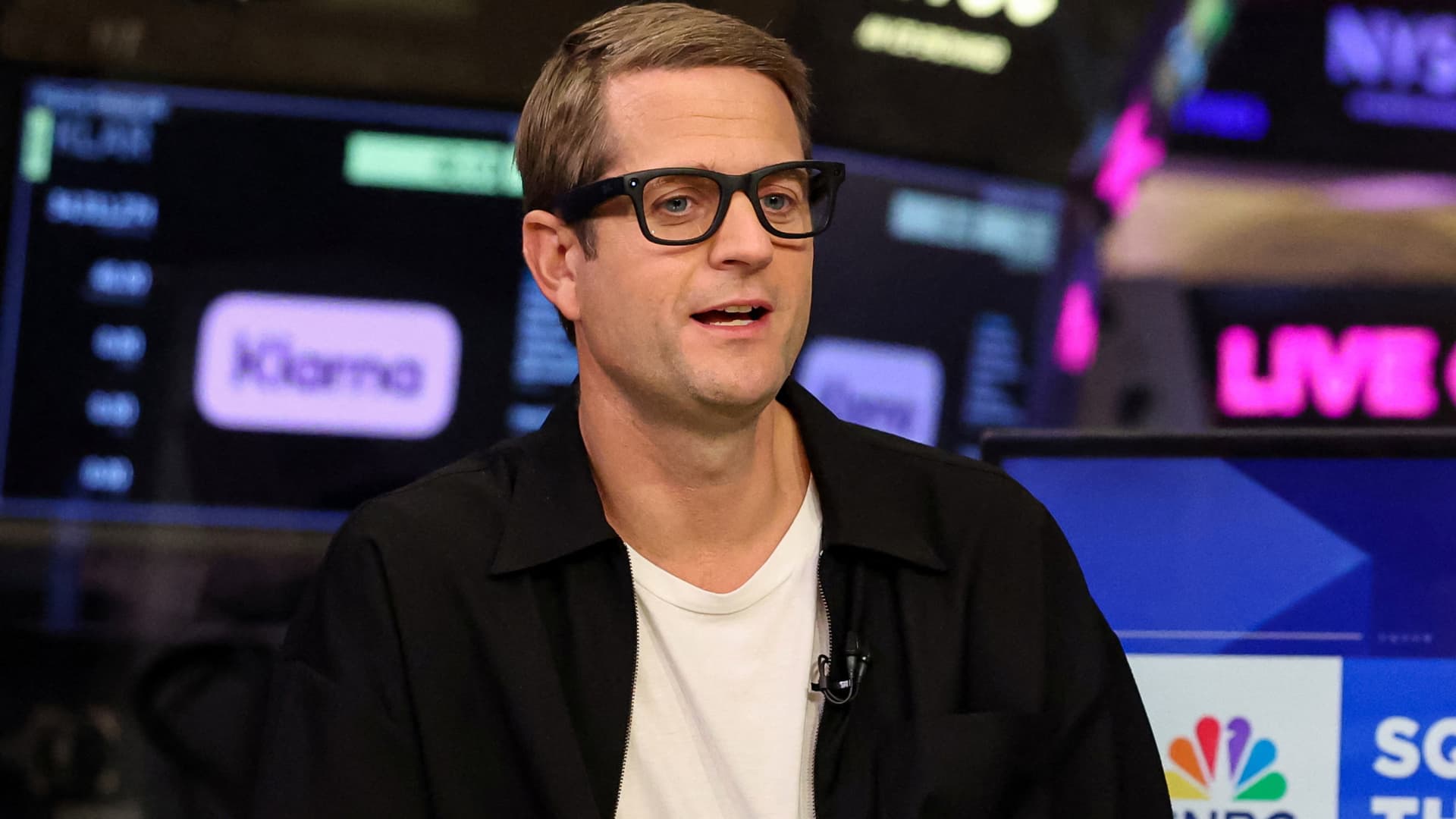
Sebastian Siemiatkowski, CEO and co-founder of Swedish fintech Klarna, gives an interview to CNBC during the company’s IPO on the New York Stock Exchange, in New York, September 10, 2025.
Brendan McDermid | Reuters
KlarnaThe Swedish fintech company best known for its “buy now, pay later” offerings said Monday it has asked federal and state regulators to establish a U.S. banking subsidiary.
The company said that, if approved, Klarna Bank USA would be a Federal Deposit Insurance Corp.-backed institution. and licensed in Utah. The proposed bank would be led by Gary Harding, former CEO of Milestone Bank and Prime Alliance Bank, according to Klarna.
“We have seen first-hand the appetite for a fairer and more transparent approach in the United States, and our own banking license is the natural next step,” said Sebastian Siemiatkowski, co-founder and CEO of Klarna.
The move will give “customers tools to borrow responsibly and build their financial confidence, while bringing more competition, innovation and choice” to the market, he said.
Klarna’s application is the latest sign that fintech companies, which primarily partner with U.S. banks to offer services, now view having their own charters as a key advantage. In April, fintech provider Mercury said it had received conditional approval to start its own bank, joining a wave of fintech and crypto companies seeking access to the traditional banking system.
Klarna said its charter, if approved, would allow it to bring its banking operations in-house and strengthen the reliability of payments, credit and merchant services.
The app marks Klarna’s latest step in becoming a broader consumer bank rather than just a buy now, pay later provider. Last month, Klarna introduced high-yield savings accounts to its US customers, although its partner WebBank holds these accounts.
By owning a bank, fintech companies can fund loans with their own customer deposits instead of more expensive wholesale financing, offer checking accounts and credit cards directly, and rely less on third-party banking partners.
Klarna, which went public last September, is trading at about half its IPO price of $40.