


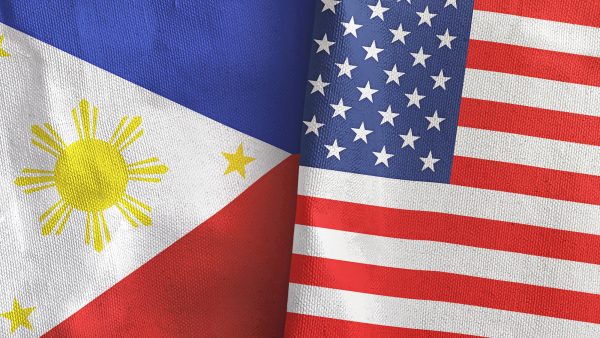
The United States hopes to soon reach an agreement with the Philippines on the long-term framework for establishing an economic security zone under Washington’s Pax Silica initiative, according to a senior Trump administration official.
Manila last month became the 13th country to join the Technology Supply Chain Alliance, established in December with the aim of establishing a secure technology supply chain, including critical minerals, advanced manufacturing, IT and data infrastructure.
As part of this, the Philippines and the United States agreed to jointly establish a 1,620-hectare economic security zone on the island of Luzon. According to the U.S. State Department, this zone is intended to “increase production of critical inputs to U.S. supply chains” and “serve as a launching point for a purpose-built platform for allied manufacturing.”
In an interview with Reuters published yesterday, U.S. Undersecretary of State for Economic Affairs Jacob Helberg said the two countries were in talks on a long-term framework for the creation of the zone.
“I expect the United States and the Philippines to reach an agreement as soon as possible,” said Helberg, who this week visited the proposed site in New Clark City, not far from the former U.S. Clark Air Base, closed in 1992. He added: “There is tremendous momentum behind this.”
Helberg said the two allies are also establishing “sectoral industrial priorities for the types of economic activities” that will take place in the zone, in Reuters’ words. In other interviews, Helberg suggested that U.S. companies operating in the area would have access to essential inputs such as critical minerals over which China currently has tight control. Accompanying him during his visit to the area earlier this week were representatives from more than a dozen U.S. companies, Reuters reported, including 8VC, Foxconn, Agility Robotics, Joby Aviation and Valar Atomics.
Helberg also told Reuters there was great interest in the area from U.S. companies, including those who accompanied him to the site this week and others.
One apparent point of disagreement concerns how the area should be governed. On April 16, the Wall Street Journal reported that the United States would “occupy the site rent-free and administer it as a special economic zone.” He also said the zone would enjoy diplomatic immunity similar to the protections afforded to a U.S. embassy and would operate under U.S. common law, which the Journal described as “the first arrangement of its kind in the world.”
However, Bases Conversion and Development Authority (BCDA) chairman and chief executive officer Joshua Bingcang said the Philippines had not agreed to any of these proposals, The Straits Times reported on May 18.
“This is their request, but we did not agree to this,” Bingcang told media when asked about the Wall Street Journal report. “No special arrangements will be granted to the United States”
He said the zone would be governed by the country’s Special Economic Zones Act and a BCDA Act, which oversees the conversion and development of former US military bases – including the former Clark Air Base and the nearby Subic Bay Naval Base – into investment hubs.