


In 2021, after the US withdrawal from Afghanistan, Pakistan was sidelined in major international capitals and seen as a desperate country, struggling with political and economic instability and a growing wave of terrorism. The country survived thanks to loans from the International Monetary Fund and friendly countries.
However, in a remarkable turnaround, the country has regained its strategic and diplomatic relevance due to rapidly changing geopolitical dynamics in West Asia. This is primarily due to a fundamental shift in the perception of Pakistan in West Asia following the May 2025 military conflict with India. Until then, Pakistan’s partners in West Asia had largely forgotten its role as a regional stabilizer.
Not only did the Pakistani narrative withstand unsubstantiated Indian allegations regarding its role in the April 22 terror attack in Pahalgam, its impressive performance on the battlefield also proved to be a game-changer.
After the May 2025 conflict with India, Pakistan signed a security pact with Saudi Arabia, linking the two long-time allies in a NATO-like framework. Then, in January 2026, Pakistan formally joined the Trump administration’s Gaza Peace Council, buoyed by the close personal ties that Pakistan’s military leader, Field Marshal Asim Munir, had quickly established with U.S. President Donald Trump. It is important to mention that the Pakistan-Saudi defense agreement and participation in the Gaza Peace Council stem from the Trump administration’s reassessment of the difficulty of simultaneously forging constructive partnerships with India and Pakistan within the same regional security framework due to the intractable nature of their rivalry.
Under Washington’s new global strategy of ‘burden shifting’ and ‘burden sharing’, India has been positioned in the Indo-Pacific, while Pakistan is encouraged to play a greater role in West Asia, Central Asia and Afghanistan.
Keeping this in mind, the Pakistan-Saudi Arabia security agreement should be seen as an arrangement complementing the US-led regional security architecture in West Asia rather than replacing it. The Saudis brought Pakistan into a strategic pact following signals from the Trump administration that Riyadh and Abu Dhabi were the main powers in West Asia and that they should play a more assertive role in managing regional security.
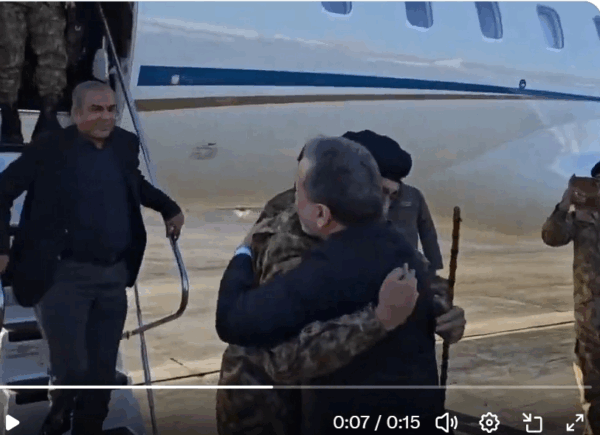
The most crucial change occurred when the United States and Israel invaded Iran and the latter closed the Strait of Hormuz, leading to a standoff with far-reaching consequences for global energy markets. Three factors forced Pakistan to step in as mediator, help Tehran and Washington reach a ceasefire, and organize the first face-to-face talks between Iran and the top U.S. leaders since 1979. Although the Islamabad talks did not result in a breakthrough, Pakistan continued its clandestine diplomacy to help the two sides reach an agreement to end the war. These developments involving Pakistan’s proactive diplomacy have further strengthened its role in West Asia, not only as a security partner but also as a diplomatic actor.
The main factor that prompted Pakistan to offer itself as a mediator was its security arrangements with Riyadh and its friendly ties with Tehran. If the war with Iran had widened, bringing in other Gulf states, the Saudis would have asked Pakistan to kinetically enter the war on its side as part of their 2025 mutual defense pact.
For Pakistan’s overstretched security forces, battling two full-blown insurgencies in its western provinces while also embroiled in a military conflict with Afghanistan and maintaining a fragile ceasefire with India along its eastern border since the May 2025 conflict, it would have been difficult to spare troops for active combat in West Asia.
In such an unstable security environment, going to war against Iran on behalf of the Saudis would have left three of Pakistan’s four borders vulnerable while also complicating the delicate sectarian harmony in the country.
The second factor is Pakistan’s dependence on foreign remittances and energy supplies from the Gulf. More than 4.5 million Pakistanis work in the Gulf states, mainly Saudi Arabia and the United Arab Emirates, and account for 54% of the country’s foreign remittances. Similarly, Pakistan is heavily dependent on fuel imports from Gulf countries. The disruption of energy supplies and foreign remittances due to the war between the United States, Israel and Iran is said to have jeopardized Pakistan’s fragile economic situation. When the war broke out, Pakistan’s economy was just beginning to improve.
However, unlike other Gulf countries, Pakistan is uniquely positioned to mediate negotiations between the United States and Iran from a position of neutrality. It does not host a US military base, nor has it taken part in the war kinetically. Furthermore, during the 12-day war between Israel and Iran last year, Pakistan condemned Israeli action and defended Iran’s right to self-defense, a fact that was not lost on Iranian leaders. The then Chief of Staff of the Iranian Armed Forces, Major General Abdolrahim Mousavi, praised Pakistan’s position and support. At the same time, Pakistan is also close to the Trump administration while maintaining cordial ties with China, Saudi Arabia, Turkey, Qatar and Egypt. Thus, not only does Pakistan enjoy the trust of Iran and the United States as a mediator, but it also has the diplomatic reach to lead a coordinated diplomatic effort towards the negotiations.
The third and most important factor is Pakistan’s geography. This is both a strategic advantage and a source of vulnerability for the South Asian nation. Pakistan occupies a unique position between South and West Asia, China and the Arabian Sea. Pakistan is ‘too exposed to ignore the conflict’ [in West Asia] and too relevant to be overlooked.
Islamabad is still working with Tehran and Washington through diplomatic channels to end the war. Although differences remain in reaching a final agreement, the two sides have significantly narrowed their differences. Regardless of the outcome of the US-Iran negotiations, Pakistan’s increased role in West Asia as a security stabilizer and assertive diplomatic actor is here to stay. This renewed role is neither accidental nor temporary. Rather, it is a byproduct of several structural factors that have manifested in recent years and been accelerated by the events of the last year.
As a middle power and key geopolitical actor, Pakistan’s assertive role in West Asia will have far-reaching consequences not only for the emerging regional security architecture, but also for the country’s strategic position in South Asia.
Pakistan’s domestic situation contrasts sharply with its external gains. The larger question that requires an answer is what material benefits these external achievements will bring to the country’s economy, security and energy market. The real test of Pakistan’s hybrid regime will be to leverage external gains to improve internal capabilities and address institutional gaps.
The inability to reconcile external gains with internal instability will transform opportunities arising from the evolving order in West Asia into short-term gains for the political-military elite.