


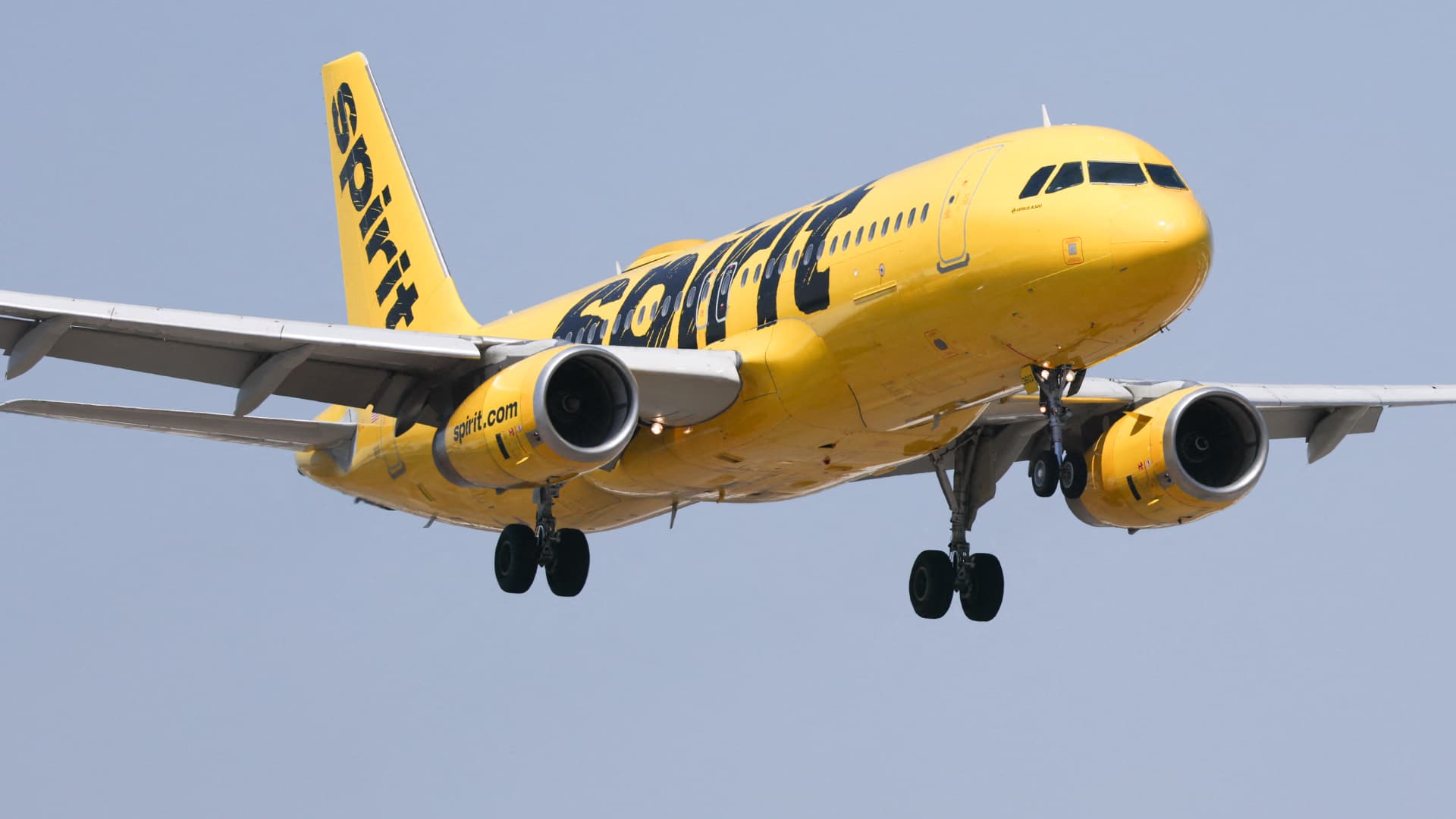
The Trump administration is in advanced talks for a financing package for Spirit Airlines as the carrier faces the risk of liquidation, according to a person familiar with the matter.
Iconic discounter Spirit has been grappling for years with rising costs, changing consumer tastes, an engine recall and a proposed acquisition by JetBlue Airways two years ago.
“Spirit Airlines would be on much stronger financial footing if the Biden administration had not recklessly blocked the airline’s merger with JetBlue,” White House spokesperson Kush Desai said in a statement to CNBC. “The Trump Administration continues to monitor the situation and overall health of the U.S. aviation industry on which millions of Americans depend every day for essential travel and livelihoods.”
Spirit was facing potentially imminent liquidation, people familiar with the matter told CNBC last week, speaking on condition of anonymity to discuss matters that had not yet been made public. The Dania Beach, Fla.-based carrier filed its second Chapter 11 bankruptcy in less than a year in August after struggling to increase revenue to cover rising costs.
President Donald Trump hinted Tuesday at potential government aid, telling CNBC’s “Squawk Box”: “Spirit is in trouble, and I wish someone would buy Spirit. That’s 14,000 jobs, and maybe the federal government should help that one out.”
The terms of the negotiations were not immediately clear and a deal could still fall through. The Wall Street Journal earlier reported that the talks were at an advanced stage.
“We hope the government will recognize the need for emergency funds, particularly in the current economic environment,” a spokesperson for the Association of Flight Attendants-CWA, which represents Spirit cabin crew, said in a statement. “The last thing our economy needs is tens of thousands more people out of work, and the last thing travelers need is fewer choices when it comes to air travel.”
The U.S. airline industry has accepted more than $50 billion in taxpayer aid to deal with the Covid-19 pandemic, which remains the largest crisis ever, but those funds have not gone to any specific airline. Part of the aid gave the U.S. government stock warrants for airlines.
Airlines also received a government bailout following the terrorist attacks of September 11, 2001, but that money was also intended for several companies. In 2008-2009, the United States also bailed out the auto industry during the financial crisis and took stakes in manufacturers.
The Trump administration took stakes in some companies it deemed essential to national security, such as Intel And Rare Earth from the United Statesalthough Spirit stands out because it is bankrupt.
In February, Spirit said it planned to emerge from bankruptcy in late spring or early summer, telling a U.S. court it would scale back operations and focus its planes on high-demand routes and travel periods. Pilot and flight attendant unions had also made concessions, including granting furloughs in recent months, in an effort to help Spirit survive.
But since then, jet fuel prices have nearly doubled in some parts of the United States, further complicating the challenges for Spirit and the rest of the airline industry.
As a low-cost airline that also faces competition from major carriers offering their own no-frills basic economy offerings, it has become increasingly difficult for Spirit to cover its expenses. Spirit had introduced more legroom seats and other premium options in an attempt to cater to higher-spending customers.
Spirit did not immediately comment.