
Close Menu
Crazy Peks NewsCrazy Peks News
  • Home
  • America
  • Asia
  • Europe
  • Business & Money
  • Politics
  • Technology
  • Sports
  • Entertainment
  • Privacy Policy
  • Get In Touch
Facebook X (Twitter) Instagram
Trending
  • AI will increase productivity in the short term, but only two expect job creation (Wall Street Journal)
  • Trump administration officials have asked CAISI to stop publishing its assessment models pending implementation of an EO signed by President Trump last week (Amrith Ramkumar/Wall Street Journal)
  • Seattle City Council votes 9-0 to enact a one-year moratorium on new large data centers and study their impact; Mayor Katie Wilson is expected to sign the bill (Greg Kim/The Seattle Times)
  • Super Micro Computer aims to raise $7 billion through equity and equity-linked financing transactions to fund the purchase of components needed to fulfill AI server orders (Harshita Mary Varghese/Reuters)
  • GM eyes new type of battery to expand data center and energy storage business
  • Apple says 79% of all iPhones and 86% of iPhones released in the last four years used iOS 26 as of June 7, compared to 82% and 88% for iOS 18 before WWDC 2025 (Joe Rossignol/MacRumors)
  • Republicans go off the rails and say they don’t need proof to say the election is rigged
  • LIV Golf CEO says to take PIF ‘at its word’ as funding cliff approaches
Facebook X (Twitter) Instagram
Crazy Peks NewsCrazy Peks News
Demo
  • America
  • Asia

    China’s maritime outposts could distract Taiwan’s allies in the event of an invasion from Beijing – Radio Free Asia

    June 8, 2026

    The Dalai Lama undergoes left knee surgery in New Delhi – Radio Free Asia

    June 8, 2026

    Satellite photos reveal Vietnamese construction boom in controversial Spratly channel – Radio Free Asia

    June 8, 2026

    Can ASEAN’s green goals survive the data center boom? – The diplomat

    June 4, 2026

    Hong Kong’s Victoria Park remains silent on anniversary of Tiananmen crackdown – Radio Free Asia

    June 3, 2026
  • Europe
  • Business & Money

    GM eyes new type of battery to expand data center and energy storage business

    June 9, 2026

    LIV Golf CEO says to take PIF ‘at its word’ as funding cliff approaches

    June 9, 2026

    Rivian is betting that R2 EV can make it a household name like Tesla

    June 9, 2026

    The bank will deploy more powerful agents this year

    June 9, 2026

    SpaceX Employees Create Low-Cost Choreo Wealth Management Plan for Post-IPO

    June 9, 2026
  • Politics

    Republicans go off the rails and say they don’t need proof to say the election is rigged

    June 9, 2026

    Top House Democrat demands answers about Trump’s health after he falls asleep during NBA Finals

    June 9, 2026

    BBC Scares Trump of His Own Defamation Lawsuit

    June 8, 2026

    Mike Johnson ceded his power as Speaker of the House to Trump

    June 8, 2026

    Hakeem Jeffries goes on Fox News and calls them out for ignoring GOP bigots

    June 7, 2026
  • Technology

    AI will increase productivity in the short term, but only two expect job creation (Wall Street Journal)

    June 10, 2026

    Trump administration officials have asked CAISI to stop publishing its assessment models pending implementation of an EO signed by President Trump last week (Amrith Ramkumar/Wall Street Journal)

    June 10, 2026

    Seattle City Council votes 9-0 to enact a one-year moratorium on new large data centers and study their impact; Mayor Katie Wilson is expected to sign the bill (Greg Kim/The Seattle Times)

    June 10, 2026

    Super Micro Computer aims to raise $7 billion through equity and equity-linked financing transactions to fund the purchase of components needed to fulfill AI server orders (Harshita Mary Varghese/Reuters)

    June 9, 2026

    Apple says 79% of all iPhones and 86% of iPhones released in the last four years used iOS 26 as of June 7, compared to 82% and 88% for iOS 18 before WWDC 2025 (Joe Rossignol/MacRumors)

    June 9, 2026
  • Sports
  • Entertainment
Crazy Peks NewsCrazy Peks News
Home » Explained: Four key questions about the American-Chinese Tariff War
Asia

Explained: Four key questions about the American-Chinese Tariff War

Frank M. EverettBy Frank M. EverettApril 11, 2025No Comments
Facebook Twitter Pinterest LinkedIn WhatsApp Reddit Tumblr Email
Share
Facebook Twitter LinkedIn Pinterest Email


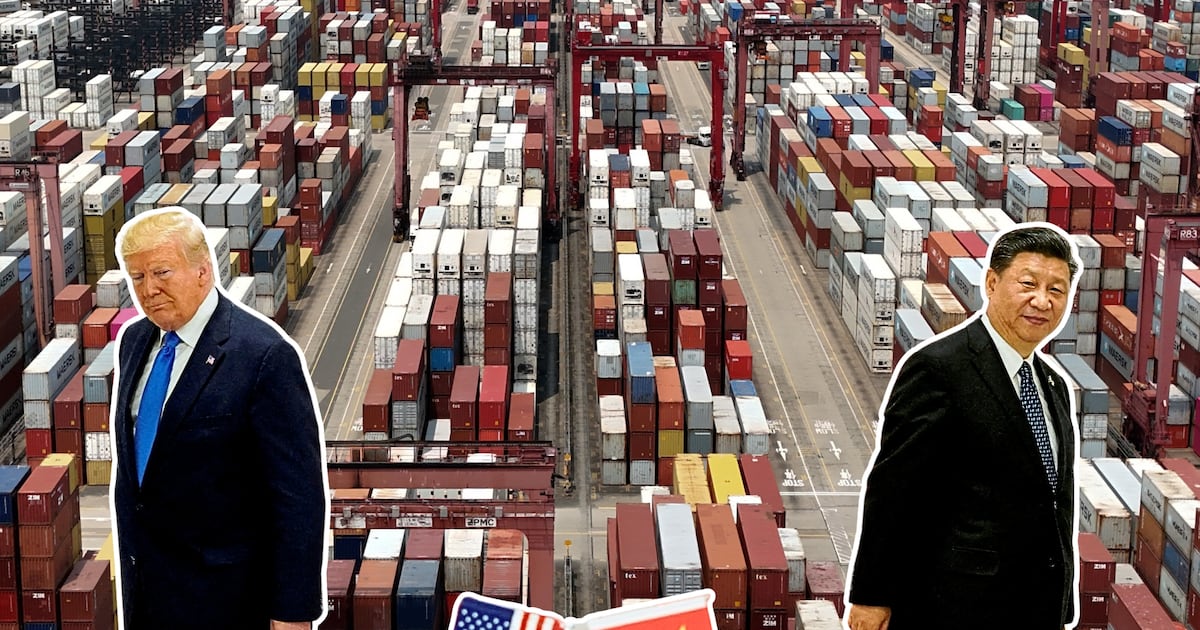
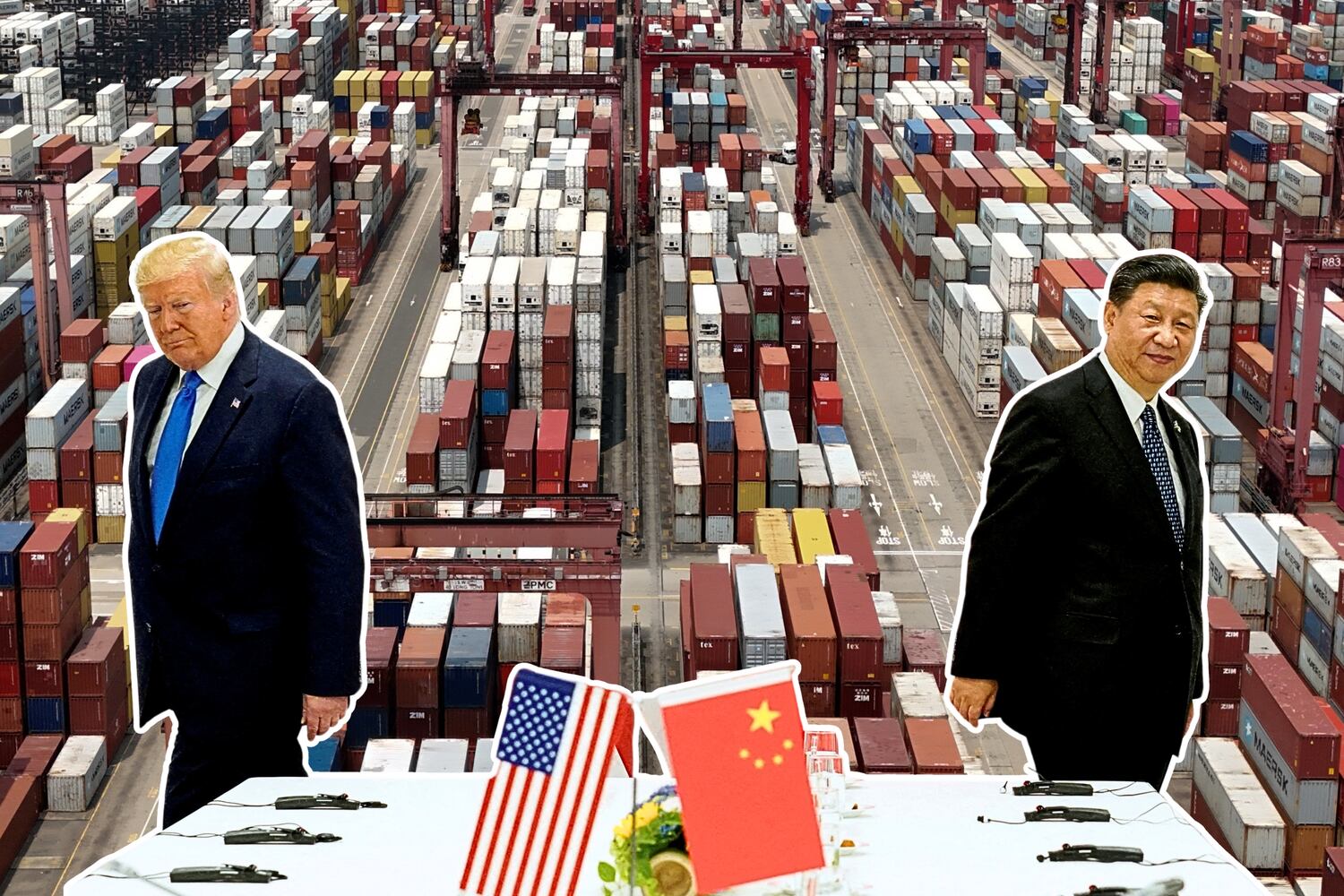
Bangkok – President Donald Trump has seized prices as an army to fold other countries, and in particular China, to his will when he tries to make campaign commitments to make America again large. A subject that generally occupies only the minds of economists and CEOs has been raised to the cooler conversation with water while stock market giations have suffered dollars of investment funds and workers’ retirement accounts. Despite the rapid growth of China since the 1990s, the American economy remains pre -eminent and its pricing policy is consecutive in everyone in the world.

Explained: Four key questions about the American-Chinese Tariff War

What is a price?

A price is simply a business tax and all countries impose prices on various degrees. The importer of goods pays the rate rate and this customs income goes to the government of the country where the importer is located.

Why are the prices imposed?

Historically, prices were an important source of income for governments. This role was reduced by income and consumption taxes and because countries have gradually lowered the prices to a time of world free trade after the Second World War. Prices can be used to protect emerging or significant industries – and jobs – from competition against cheaper imports, but this can also mean higher costs for consumers and businesses, and over time, reduced prosperity in the country that largely erects such barriers. Prices can also be a foreign policy tool, used by a country to punish another for policies or behaviors that lead to its national interest.

Why is China the main target of American prices?

In a superb occurrence, Trump interrupted highly higher prices this week against dozens of countries for 90 days, but increased a trade war with China, imposing a total tariff of 145% on its exports, after Beijing retaliated with increased prices on American products. The United States has a litany of complaints concerning China’s trade and industrial policies such as subsidies that create disloyal rules, obstacles to American societies operating in China, an intellectual property and its massive trade surplus. The United States also has mixed history in some of these areas such as subsidized farmers.

The Trump administration hopes that it will be able to injure the export of the Powerhouse China and force it to the concessions. It is not without risks because China, through its purchases of bonds from the US Treasury, plays a key role in the financing of the American government, which has spent more than it has won every year since 2001. This situation has been showing a fundamental interdependence between the United States and China despite a tense relationship. The Chinese central bank receives a torrent of US dollars from the country’s exports to the United States, then beware of these dollars in US state bonds.

What are the deep trends at work?

For decades, the global economy has been organized around the principle that free trade has stimulated economic growth and prosperity as a whole. The rapid increase in living standards for hundreds of millions of Chinese from abject poverty in the 1970s is often cited as proof of this theory. In global terms, the supporters of free trade seem to be correct, but the broad point obscures the mixture of costs and advantages. In the United States, manufacturing has decreased in proportion to the economy and employment since the 1990s.

Many Americans have benefited from cheaper goods such as televisions, clothing and iPhones made in China and elsewhere in Asia, but at the cost of other Americans losing stable factory jobs. It was the United States that paved the way for the entry of China into the world economy when President Richard Nixon established diplomatic relations in 1972, ending the quarter of Beijing. The fact of Make America a great moment in American politics is one of the long -term reverberations of these seismic changes.

AmericanChinese Explained key questions tariff War
Share. Facebook Twitter Pinterest LinkedIn Tumblr Telegram Email
Frank M. Everett

Related Posts

China’s maritime outposts could distract Taiwan’s allies in the event of an invasion from Beijing – Radio Free Asia

June 8, 2026

The Dalai Lama undergoes left knee surgery in New Delhi – Radio Free Asia

June 8, 2026

Satellite photos reveal Vietnamese construction boom in controversial Spratly channel – Radio Free Asia

June 8, 2026
Leave A Reply Cancel Reply

© 2026 Crazy Peks News | All rights reserved.
  • Home
  • Privacy Policy
  • Get In Touch

Type above and press Enter to search. Press Esc to cancel.