



Read the original version from this story on RFA Mandarin.
Hong Kong’s Victoria Park is now much quieter on the anniversary of the Tiananmen Square massacre, and residents told Radio Free Asia they found it shocking.
The park was once the epicenter of peaceful democratic resistance, as hundreds of thousands of people turned out each year for candlelight vigils to commemorate the victims of the Chinese government’s June 4, 1989, crackdown on pro-democracy protests in Beijing.
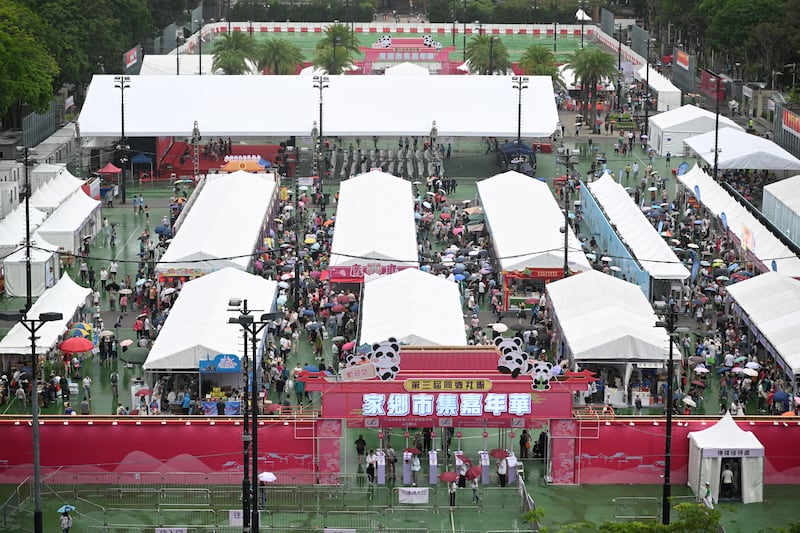
Today, on this day, pro-Chinese protests are taking place in the park and local media no longer make any mention of the massacre.
“It’s not that the Hong Kong media is unaware of the existence of June 4, nor that they don’t have the necessary information; on the contrary, they simply don’t dare to broach the subject anymore,” a veteran media professional who closely monitors press freedom in Hong Kong, identified only by his surname Chen, told RFA.
That day, in Beijing, the army, having been ordered to clear Tiananmen Square of pro-democracy demonstrators, shot hundreds, if not thousands, of them. The Chinese government has since erased the incident from public records and heavily censors public debate on the subject.
A year after the bloodshed, people gathered to pay their respects to the victims in Victoria Park in Hong Kong, then still a British colony. The park became ground zero for annual commemorative events, and even though the city returned to Chinese control in 1997, the gathering thrived because Beijing had agreed to preserve the civil liberties of Hong Kong residents. At its peak in 2019, attendance reached around 180,000 people.
But everything changed in 2020. That year, the government banned the June 4 vigil due to the COVID-19 pandemic. That same year, Hong Kong’s draconian national security law took effect, allowing the city’s Beijing-aligned government to begin restricting free speech and other rights. The 2021 event was canceled again due to the pandemic, but starting in 2022, authorities used the security law to keep it banned.
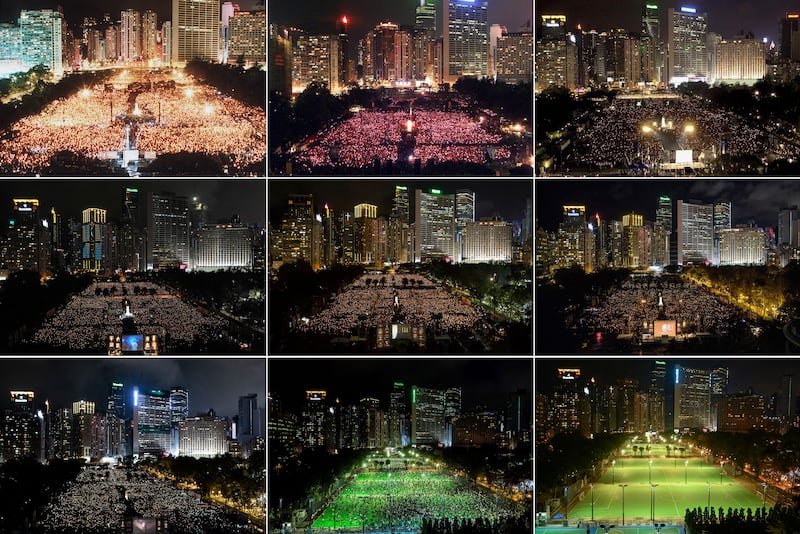
“In the past, around June 4, newspapers and television channels invariably reported on candlelight vigils in Victoria Park; some media outlets were publishing retrospective reports on the events of June 4, and journalists were even interviewing citizens attending the vigil in the park itself,” Chen said. “But today, with the entry into force of the national security law, such activities are defined as illegal acts and therefore the media is not allowed to report on them. »
The annual vigils were organized by the Hong Kong Alliance in Support of Patriotic Democratic Movements in China, a civil society organization established in 1989 that in subsequent years became an organization dedicated to preserving the history of the massacre. It was forced to disband in 2021 due to political pressure.
In recent years, Victoria Park has hosted “Local Market Carnivals”, events organized by pro-Beijing organizations that intentionally overlap with June 4.
But a Hong Kong resident, identified by her surname Li, told RFA that she stopped visiting the park on June 4 because there were no more vigils.
“In previous years, I would take my kids to Victoria Park every June 4.” she said. “However, in recent years, candlelight vigils were banned – labeled an ‘illegal activity’ – and so I stopped attending them. I heard that some Hongkongers living overseas were organizing small-scale commemorative events.”
Taiwan takes center stage
Overseas Hong Kongers and many Taiwan democracy civic organizations are preparing to hold commemorative events on Thursday to mark the 37th anniversary of the Tiananmen Square massacre, including one at Taipei’s Freedom Square.
Hong Kong communities are holding events in Taiwan, the United Kingdom, Canada, Australia and elsewhere because Victoria Park is no longer an option, Wu Renhua, a survivor of the massacre, told RFA.
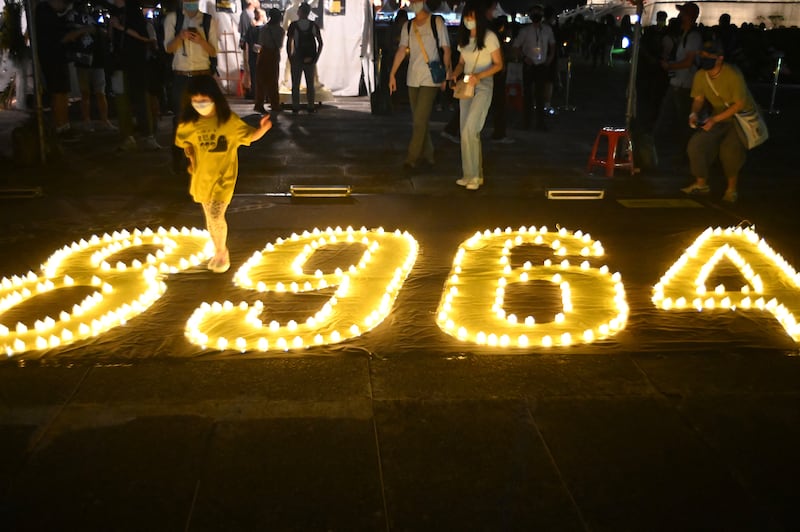
But the annual vigils in Hong Kong were a symbol of freedom that existed in the city during the “One Country, Two Systems” era, Tseng Chien-yuan, executive director of the Taiwan-based NGO New School for Democracy, told RFA.
“The fact that this massive protest – the largest in the global Chinese-speaking community and challenging the ruling party of the People’s Republic of China – could exist on the territory of the PRC fully embodies the spirit of Hong Kong’s high degree of autonomy,” said Tseng, who noted that Taipei now carries the torch. “That flame has been reignited here in Taipei and, significantly, it has been reignited by the people of Hong Kong. »
He said that in previous years, events were held mainly in the language of Taiwan’s Mandarin-speaking majority, but now Cantonese spoken by Hong Kongers in attendance is more common.
“All of this symbolizes the continuation of the spirit of Hong Kong’s Victoria Park, right here in Taiwan.”
Edited by Li Nuo in Mandarin and Eugene Whong in English.