


When Prime Minister Andrej Babiš returned to power in late 2025, many believed that Czechia’s unusually warm relations with Taiwan would cool down. Under the previous government, Prague had become one of Taipei’s most enthusiastic partners in Europe. Babiš had criticized this posture as an ideological indulgence that harmed Czech business interests in China, and signals since seem to confirm a retreat.
A closer look at what actually changed, rather than what was said, suggests a more accurate reading: Babiš’s government cooled the rhetoric while leaving much of the substance in place.
An illustration of this came when Senate President Miloš Vystrčil, a member of the opposition Civic Democrats (ODS), the party that led the previous government, planned to send a delegation to Taiwan in early June. Babis refused to provide government aircraftsaying it was an unnecessary expense and that he did not want the trip to be seen as an official endorsement that could damage Prague’s ties with Beijing. It was widely read at a time when Prague’s enthusiasm for Taiwan was reaching its new limits.
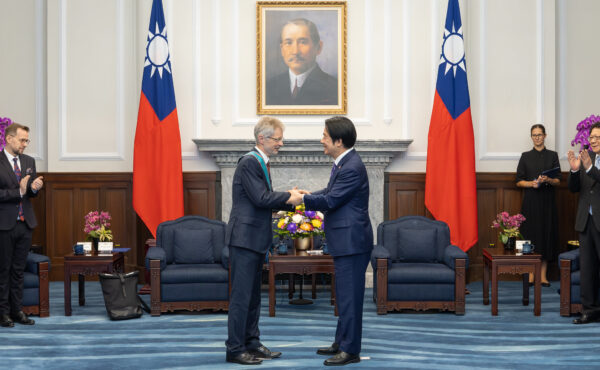
And yet the trip took place. Vystrčil, who had anticipated the refusal, led a delegation of around forty personalities from the business and academic world to Taipei on a commercial flight in early June. By his own account, the group was smaller than it could have been precisely because it lacked public transportation, but Vystrčil and the others still made the trip and met with Taiwanese officials. The visit coincided with Taiwan’s commitment to create a new fund, would be valued at 50 million eurosto encourage investment in both directions.
The economic core of the relationship has not only survived the change of government; based on available official figures, it is expanding. According to the Taiwanese Ministry of Economic Affairs, Taiwanese drone exports in the first quarter of 2026 exceeded $100 million in Czechia, making it Taiwan’s largest drone market. Czechia’s drone imports from Taiwan alone exceeded the value of Taiwan’s total global drone exports for all of 2025. Official trade data reported by international agencies place Taiwan’s small drone exports at the next level. more than 181,000 units in the first four months of 2026almost 20 times the figure for the same period a year earlier, with the Czech Republic and Poland being the main destinations.
Taiwanese analysts suggest that a substantial part of these systems are finally bound for Ukraine through charitable or government-related programs. If this is the case, the drone trade between Czechia and Taiwan is not an abstract token of political friendship. It is linked to the issue that most animates the current debate on Czech foreign policy: support for Ukraine. And it continued to grow thanks to a change in government that was supposed to be skeptical of precisely this type of engagement.
This is not to say that the change of government was without consequences. Marc Cheng, executive director of the European Union Center in Taiwan, observed that the new government is “not devoted to these bilateral relations as before,“Although the people-to-people foundations remain and maintain their own momentum. The tone of Prague has truly changed. The question is why the change has been so much stronger in rhetoric than in substance.
A government seeking to distinguish itself from its predecessor has a limited repertoire of foreign policy gestures. Taiwanese politics lends itself particularly well to symbolic recalibration: refusing a government plane is a clear, materially gratuitous and satisfactory decision for those parts of the coalition favoring warmer ties with Beijing. But trade, investments and delegations continued, because stopping them would have had a cost.
A similar instinct was evident in the debate over who would represent Czechia at the NATO summit in Ankara in July. Babiš’s government sought to prevent President Petr Pavel, a prominent supporter of Ukraine and the transatlantic alliance, from leading the delegation – a striking choice on two counts. Pavel is the constitutional commander-in-chief of the Czech Armed Forces and, before entering politics, he was a retired army general who chaired the NATO Military Committee from 2015 to 2018, making him arguably the most influential NATO figure in Czech public life. A The Constitutional Court’s injunction finally forced the government to include Pavelbut the Cabinet still designated the Prime Minister as head of the delegation. Here too, the struggle was largely over representation and optics rather than the underlying fact of NATO membership.
But the comparison also marks the limit of the argument. The Babiš government has not limited itself to symbolic change regarding Ukraine. Reuters reporting described the new government as reorienting several foreign policy commitments.including funding Ukraine’s war effort. This is a fundamental change, not just a change in tone. So the trend is not that this government never changes course, but that it does so selectively. When a commitment is materially costly or politically crucial, the Babiš government has shown its willingness to change policy itself. Where a relationship is commercially attractive and largely self-sustaining, as with Taiwan, it has so far been content to adjust the presentation.
For Taiwan and its partners in the Indo-Pacific region, the Czech case offers a useful indicator of the durability of European engagement once a more Beijing-friendly government takes office. Early evidence suggests that where ties are rooted in commercial interests and institutional dynamics – investment, manufacturing, drones, direct flights – they can absorb a considerable amount of rhetorical chill without rupturing.
Former Czech Foreign Minister Jan Lipavský, who oversaw much of the previous government’s outreach efforts to Taiwan, claimed that in Taipei in March that relations would likely not see much change under Babiš, although he predicted that the new government would likely focus on the commercial side of the relationship and practical issues rather than democratic values. He highlighted Taiwanese investments and jobs in Czechia, the established presence of Foxconn and the planned direct air link between Taipei and Prague by Taiwanese airline Starlux.
His advice to other small European states hoping to establish ties with Taipei also served as a diagnosis of why Czech-Taiwan relations have proven durable: “Symbolism should not precede practical cooperation. »