


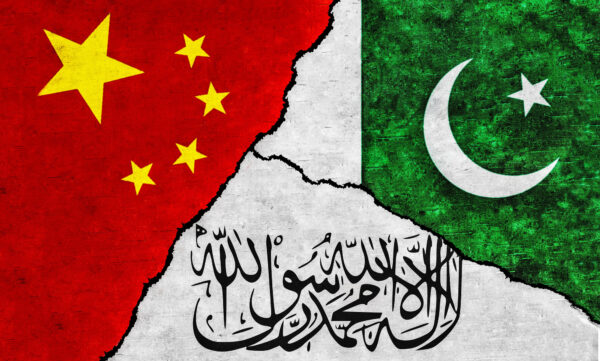
Since the Taliban returned to power in 2021, Pakistan has led several strikes in Afghanistan, claiming to have targeted Tehreek-e-Taliban Pakistan (TTP) terrorist bases. Growing distrust and tensions over the TTP escalated into full-blown conflict in October 2025, described earlier this year as “open war” by Pakistani officials. Despite several attempts at mediation by Qatar, Saudi Arabia, Turkey and China, tensions have not eased.
Last Sunday, Pakistan conducted its last strikes in Afghanistan.
According to the United Nations Assistance Mission in Afghanistan (UNAMA), at least 28 civilians were killed and 49 others, including women and children, were injured during the strikes. The Taliban said at least 36 civilians were killed and more than 160 injured in the strikes, which hit civilian homes. The Taliban called the attack “cowardly” and an “atrocity”.
Pakistan, for its part, said it carried out a ground operation along the border and airstrikes targeting militants’ hideouts in Afghanistan’s Paktia, Paktika and Kunar provinces. Islamabad claimed 29 militants were killed. Attaullah Tarar, Pakistan’s information minister, said the operation was in response to “recent terrorist attacks against innocent people.”
The Taliban launched retaliatory strikes in Pakistan, claiming to have carried out strikes along the Pakistani border, injuring several people in Balochistan province. After the Taliban strikes, the Pakistani military said it had shot down four crude drones and warned that any provocations would “receive an appropriate response.”
Pakistan’s latest strike came a day after a bomb and gun attack. attack on Ranger facility in Karachi, the capital of Sindh province. The Pakistani army said in a statement that militants from Jamaat-ul-Ahrar, a TTP splinter group, detonated an explosive at the entrance to the Rangers camp in Karachi’s Gulistan-i-Jauhar area before opening fire on the paramilitary troops. According to the Pakistani army, three paramilitary soldiers were killed and four injured, while three militants were killed in an exchange of fire and a fourth, an Afghan national, was captured. The Pakistan Army statement further added that “Pakistan will undertake retaliatory operations against the perpetrators of this attack.” The attack was one of the largest in Karachi since a 2024 blast targeting a Chinese convoy, in which two Chinese nationals were killed.
After the Chinese-mediated Urumqi talks in the first week of April, in which both sides agreed not to further aggravate the situation but did not necessarily conclude peace, there was hope that the conflict would subside.
However, the lull lasted only a few days, and on April 17, the Taliban-run Afghan Radio and Television reported that Pakistani artillery strikes with at least 10 rockets had destroyed a health center in Barikot village of Nari district in Afghanistan’s Kunar province. No casualties have been reported.
A major blow to the peace attempt came ten days later when the Taliban claimed seven people had been killed and 85 injured on April 27 in Pakistan. strikes against a university in Kunar province. Pakistani officials rejected Afghan media reports about the incident and said the Taliban’s official statements about the strike were a “blatant lie.” The strikes were seen as the first major incident after peace talks ended without a deal just 20 days earlier.
A few days later, on April 30, Pakistani military sources claimed that at least five people had been injured after the attack. Afghan Taliban bombed and targeted Pakistani civilian populations in the border areas of Khyber Pakhtunkhwa district of South Waziristan.
On May 4, the Taliban government accused Pakistan of carry out strikes in Afghanistan during which at least three people were killed and 14 others injured. Hamdullah Fitrat, a spokesman for the Taliban government, said that during the attacks two schools, two mosques and a health center in Kunar were destroyed. Pakistan’s Information Ministry has rejected the allegations.
On June 10, according to Zabihullah Mujahid, the Taliban’s chief spokesperson, Pakistan launched new airstrikes on three Afghan provinces, including Kunar, Khost and Paktika, in which at least 13 people, including 11 children, were killed and 14 people, all children and women, were injured. He said the strikes “violated Afghanistan’s airspace and bombed civilian homes.” Confirming the attack, Pakistan’s Information Ministry said 26 militants were targeted in the strikes. Pakistan’s information minister further said that “following the recent terrorist incidents in Pakistan…precise and calibrated strikes were carried out along the Pakistan-Afghan border areas against hideouts and safe houses”, without mentioning civilian casualties.
Despite Pakistani claims that terrorists are being targeted, the conflict has caused hundreds of civilian deaths, as well as the displacement of thousands of families within Afghanistan. According to UNAMA, between January 1 and March 31 of this year, more than 750 civilian deaths and injuries have been recorded in Afghanistan due to cross-border violence between Pakistani forces and the Taliban. The Taliban authorities estimate these figures at a higher level. In addition to the victims and injured, thousands of families have been internally displaced due to the ongoing conflict between the two countries. According to data collected through mid-March 2026 by the United Nations Office for the Coordination of Humanitarian Affairs (UNOCHA), “initial reports indicated that approximately 115,000 people (around 16,400 families) had been displaced by the conflict.”
While Pakistan and the Taliban are fighting, China is still trying to end their conflict. Beijing has started working towards a second round of negotiations to mediate the conflict. China’s special envoy for Afghanistan, Ambassador Yue Xiaoyong, met separately with Pakistani officials and the Taliban in May to assess progress after the Urumqi talks. China’s efforts appear to prioritize its regional interests, but the situation demands a more rigid and pragmatic solution that addresses the concerns of both sides. Otherwise, it is almost certain that the next round of negotiations will fail to produce concrete results.
The heart of the current conflict is the presence of the TTP in Afghanistan. For Pakistan, cessation of Taliban support for the TTP within Afghan borders is the only acceptable solution. The Taliban, on the other hand, deny the presence of the TTP and any involvement with this group in Afghanistan. If both sides are unwilling to address their common security through negotiations, no dialogue will lead to a lasting peaceful solution. The only result will be the continued suffering of civilians on both sides of the border.