


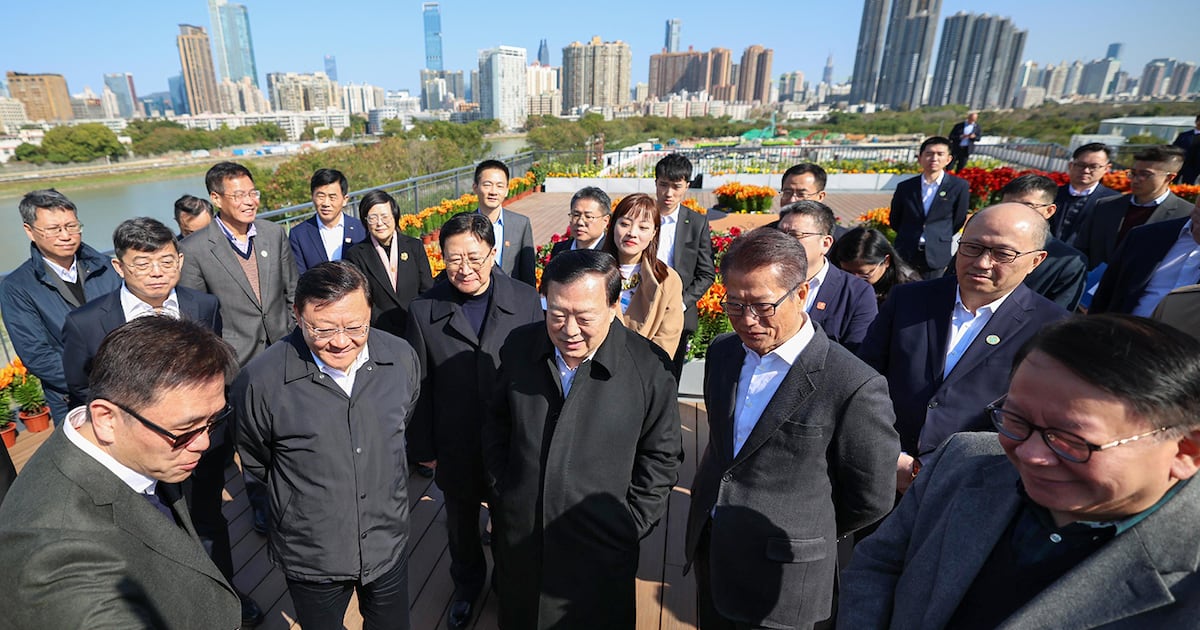
Chinese state-owned companies are winning contracts worth billions of dollars for work on huge China-linked development zones funded by the Hong Kong government, according to an investigation by RFA Cantonese.
The revelations come as the city government projects a budget deficit approaching HK$100 billion ($12.9 billion) as a result of public spending on COVID-19 measures.
A survey by RFA Cantonese on the Hong Kong government’s tender website showed that at least 14, or 30 percent, of the 45 contracts related to the Northern Metropolis Urban Expansion Project and the Hetao Shenzhen-Hong Kong Science and Technology Innovation Cooperation Zone were awarded to Chinese state-owned enterprises, including China Construction, China Railway Construction, China Geo-Engineering Group and China Road and Bridge Engineering.
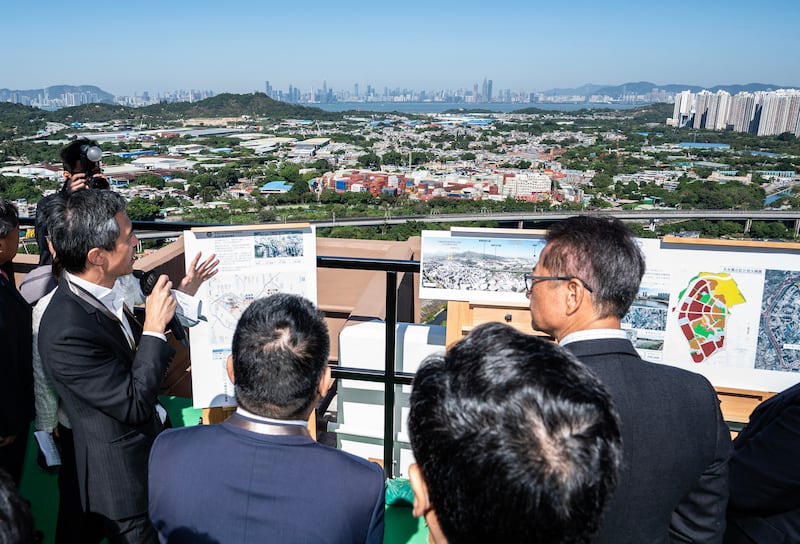
Chinese public sector involvement was also visible with the award of a contract to Hong Kong piling giant Tysan Foundation, acquired by Chinese conglomerate HNA Group in 2016, and in joint ventures with Hong Kong and foreign companies.
And despite only securing 30 percent of the contracts by number, China-backed bids won the lion’s share, winning bids worth nearly HK$79 billion (US$10.1), or about 80 percent of the value of all contracts awarded across the two development zones.
A significant deficit
The revelations come amid growing concern over the deficit ahead of the government’s budget on February 26.
Taking into account the proceeds from the government bond issuance, the latest consolidated deficit forecast for 2024-25 will be “less than HK$100 billion”, Financial Services and Treasury Secretary Christopher Hui told the city’s Legislative Council on January 22.
Hong Kong’s fiscal reserves stood at HK$591.4 billion as of November 2024, a sharp decline from HK$1,160.3 billion as of March 31, 2020.
But there are signs that Beijing wants public spending to continue.
Beijing’s top official in charge of Hong Kong affairs, Xia Baolong, paid a visit to the Hetao Shenzhen-Hong Kong science and technology innovation cooperation zone last week, just before the budget.
He gave Financial Secretary and Acting Chief Executive Paul Chan “very clear instructions” on exactly how Beijing hopes Hong Kong will contribute to national economic growth, Chan told reporters on Feb. 11, after accompanying Xia on his tour.
The instructions were “of great help in determining how to fully utilize the Northern Metropolis and Hetao cooperation zone in the future,” Chan said.
“A new engine for future development”
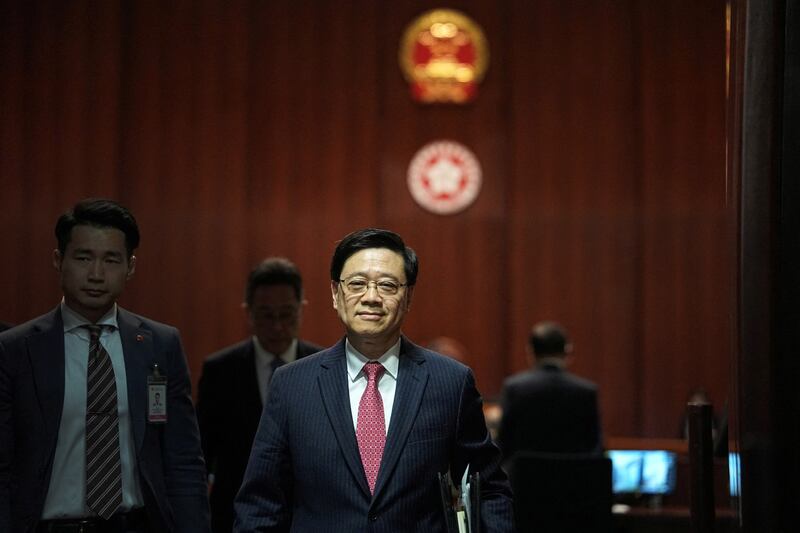
Meanwhile, Chief Executive John Lee said at a Lunar New Year reception for Chinese businesses on Feb. 14 hosted by Invest Hong Kong that his government would “boost the development of the Greater Bay Area and the northern metropolis to achieve economic growth.”
The government says the Northern Metropolis is “a new engine for Hong Kong’s future development”. [that] will inject new economic momentum into Hong Kong” by expanding the future supply of housing land.
The region, which the government hopes will become a metropolis of around 2.5 million people, is also intended to be integrated into China’s plan for a Greater Bay Area made up of interconnected cities around the Pearl River Delta region.
“The northern metropolis is close to the metropolitan core of Shenzhen and the I&T industry base with the greatest development momentum, and has seven land border checkpoints, forging a key platform for our cooperation with other cities in the Greater Bay Area,” according to its official website.
RELATED STORIES
Weak real estate revenues weigh on Hong Kong’s fiscal reserves
Trump’s China tariffs include Hong Kong, ending city’s separate status
EXPLAINED: How China hopes to revive its flagging economy
China calls on Hong Kong tycoons to help revive national economy
The government said it plans to issue bonds worth HK$95 billion to HK$135 billion ($12 billion to $17 billion) per year from 2024-25 to 2028-29 to finance the project, with a borrowing cap of HK$500 billion ($64 billion).
The company declined to reveal the total cost of the project, but a consultant linked to the project suggested it could cost at least HK$3 trillion, not including the cost of roads and railways connecting the area to other urban centers.
The Hetao Cooperation Zone has an estimated price tag of HK$75 billion ($9.6 billion), while the Kau Yi Chau island reclamation project, under the Lantau Tomorrow redevelopment project, will likely cost taxpayers around HK$580 billion ($74.5 billion), according to government figures.
Joseph Ngan, former deputy controller of Hong Kong’s i-CABLE News newspaper, said Xia’s “instructions” to Hong Kong officials could indicate a more interventionist role by Beijing in the city’s economic and financial affairs.
Fully intervened in Hong Kong’s policymaking
Qi Bin, deputy director of the Beijing Central Liaison Office in the Hong Kong Special Administrative Region, recently proposed measures to strengthen Hong Kong’s status as an international financial center, repeating this rhetoric as “friendly reminders” in private meetings with members of Hong Kong’s financial community, Ngan said in a recent commentary for RFA Cantonese.
“Xia Baolong’s instructions seem to go further, involving economic policy and people’s livelihoods,” he said.
The move shows that the central government has fully intervened in shaping Hong Kong’s economic policy, Ngan said.
“Judging from the current situation, Hong Kong’s budget is no longer just a matter of the Finance Secretary, but a political arrangement influenced by the instructions of the central government,” he said.
Going forward, “spending priorities will be more focused on supporting the national development strategy rather than simply guided by the needs of Hong Kong citizens,” Ngan said.
While Hong Kong real estate giant New World Development owns the largest land bank in the northern metropolitan area, it has also signed strategic cooperation agreements with China Resources Land, China Merchants Shekou and state-owned Shum Yip Holdings to develop properties in the area.
China Resources Land has entered into similar agreements with at least three other major Hong Kong developers, including Henderson Land, Ka Wah and Shun Tak, linked to projects in the northern metropolis and the Greater Bay Area.
China Construction alone won new Hong Kong government contracts worth HK$125.1 billion (US$16.8 billion) in the first half of 2024, including those related to the northern metropolis.
It also won the main contract for Phase 1A of the Hong Kong-Shenzhen Innovation and Technology Park.
The group reported sharply higher profits in the first half of 2024, with profits up 13% year-on-year, with Hong Kong revenue soaring 29% year-on-year over the same period to more than HK$18 billion (US$2.31 billion).
Meanwhile, Hong Kong property developers are struggling to pay salaries, and many older names have filed for bankruptcy in recent years, including Fung Cheung Kee and Hip Seng Construction.
Translated and edited by Luisetta Mudie. Edited by Malcolm Foster.