


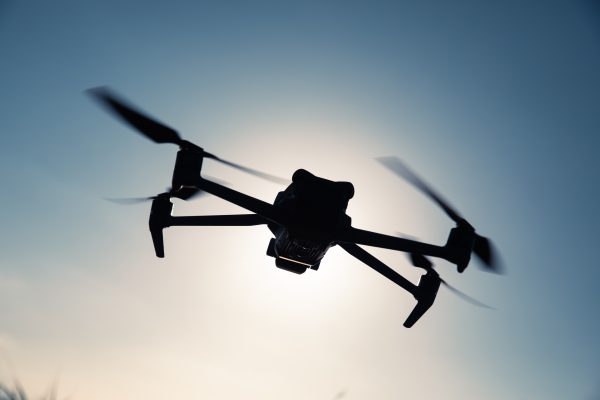
Lessons from wars in Russia, Ukraine, and the Middle East have led Southeast Asian countries to rapidly accelerate their efforts to invest in and adopt counter-drone systems.
Malaysia recently unveiled an indigenously developed interceptor drone, known as “The Ghost”.
Last year, Singapore announced that every recruit entering basic military training will learn how to operate drones and counter drone-related threats. It is also established the Singapore Armed Forces Unmanned Aerial Systems (UAS) Development and Operations Group.
Indonesia is pursuing defense collaborations with China Aerospace Long-March International Trade Co Ltd (ALIT), and this potential partnership could focus on drones.
Cambodia used fiber optic drones against Thailand during border clashes last year. Following this conflict, Thailand establish an unmanned aerial systems (UAS) warfare center and UAS battalion, responsible for directing, planning, controlling, supervising and integrating the Army’s drone operations.
This increased interest in anti-drone technology was also reflected during the Defense Services Asia (DSA) And Milipol TechX (MTX) exhibitions, which concluded in Kuala Lumpur and Singapore respectively in April.
While training staff and investing in equipment, such as sensors and jammersare important, lessons from the Russo-Ukrainian War, the Middle East, and the Thailand-Cambodia conflict highlight a more critical need: a multi-layered approach to countering drone threats.
Multi-layer defense
To effectively counter drones or drone swarms, Southeast Asian countries should consider adopting a defense framework that works at multiple levels.
The first layer of defense concerns drone detection. This can be achieved by deploying a combination of systems including sensors (radio frequency [RF]acoustic and radar) and cameras (electro-optical and infrared).
Once a drone is detected, the focus shifts to identification. Artificial intelligence (AI) systems, such as AI-based decision support systems (AI DSS), can be used to distinguish between friendly and hostile drones. AI DSS, such as Lavender And Maven smart systemare primarily known for their use in identifying targets during armed conflicts such as those in Gaza and Iran. However, these systems can also be used to distinguish drones, including by integrating and fusing data from sensors and cameras, and analyzing RF signals and other data points, helping the military identify drones. These systems can also help track and prioritize which drones should be neutralized first, based on factors such as distance and flight time.
The next level of defense is mitigating drone threats through non-kinetic measures. A primary non-kinetic measure is interference, such as global navigation satellite system (GNSS) interference. GNSS jamming involves broadcasting strong radio signals on the same frequency bands used by GNSS satellites, resulting in signal loss and causing drones to lose the ability to calculate precise positions or times.
Another non-kinetic approach is spoofing, which involves sending false GPS signals, thereby misleading drones into calculating incorrect positions. In particular, certain spoofed Russian drones were allegedly “redirected“either to their points of origin, or to Belarusian territory.
However, jamming and identity theft can have significant civil consequences, such as increased air risks and disrupt shipping And telecommunications. To mitigate these impacts, cyber takeover of drones can also be considered. This can be achieved through several methods, including hijack a drone’s control signals and forcing the drone to fly to a controlled landing zone.
The next non-kinetic measure is the use of high-energy weapons, such as lasers and high-power microwaves (HPM). Laser weapons burn or disable drone components with focused light, while HPM weapons work by emitting directed bursts of electromagnetic energy to disrupt a drone’s electronics. HPM weapons operate similarly to a home microwave oven, but operate over much greater distances. For example, the Hurricane 3000 – developed by Chinese state-owned company Norinco – can disable drones at distances greater than 3 kilometers. This system is already deployed in the field. The operational costs of an HPM weapon can be as low as a few yuan per shot. These low operational costs constitute an advantage in the context of drone warfare, which is increasingly characterized as a war of attrition.
The final layer of defense involves kinetic effects, using both conventional and unconventional projectiles. Concerning unconventional projectiles, two trends emerge. The first concerns interceptor drones, designed to crash into enemy drones. In pictures Published by the Ukrainian Ministry of Defense Ukraine recently launched an interceptor drone from an unmanned surface vehicle (USV) to engage a Russian Shahed aerial drone. This combination of maritime and aerial drones marks the first engagement of its kind, to strengthen Ukrainian air defense.
Another trend that has emerged involves the use of nets attached to drones to trap enemy drones. This was also observed in Ukraine, where fully autonomous DroneHunter F700 systems, developed by Fortem Technologies, were deployed to intercept the Shahed-131 and Shahed-136 kamikaze drones. These systems are also used in the Gulf region.
In terms of conventional projectiles, small arms as well as missiles launched from aircraft or ground-based air defense systems can be used to counter drones. However, these missiles often cost much more than the drones they target. For example, a Patriot missile costs approximately $4 millionwhile a Shahed drone can cost only between $20,000 and $50,000. Therefore, relying on such expensive missiles to target drones is simply not viable. Experts advocated the development of intelligent, low-cost missiles, following reports that Russian drones are equipped with turbojet engines. These engines allow drones to fly two to three times faster and at higher altitudes than interceptor drones, making them obsolete.
Looking to the future
Although the multi-layered defense network mentioned above is essential to countering drone threats, it is only part of the solution for Southeast Asian countries.
Ultimately, the successful implementation of a multi-layered defense network depends on the ability of Southeast Asian countries to adapt more quickly.
A good example is the inefficiency of the Thai system signal jammers against Cambodian drones equipped with optical fiber. Likewise, the emergence of drones equipped with turbojet engines highlights how quickly existing countermeasures can be overcome. Southeast Asian countries must therefore collaborate with technology companies and start-ups to ensure rapid adoption of emerging technologies, including those that drive drone and counter-drone systems.
The task for Southeast Asian countries is to understand the trajectory of drone and counter-drone technologies and continue to adapt more quickly. This way, these countries can ensure they are ready to face the next generation of drone warfare.