



Pokémon cards are no longer just childhood collectibles.
Some owners are increasingly treating popular trading cards from the 1990s and 2000s as alternative assets, with some of the rarest cards outperforming traditional benchmarks like S&P500 over the last few years.
During key periods like the pandemic boom and another sharp rise in 2025, trading card indexes tracking Pokémon sales saw gains that far outpaced the S&P 500’s long-term average annual return of 10 to 12 percent, according to trading card valuation tool Card Ladder. The comparison isn’t perfect — stock market data spans decades, while trends in trading card values are shorter and more volatile — but the outperformance in certain windows is still striking.
The price rise is driven by scarcity, quality and a wave of deep-pocketed buyers seeking a limited supply of prime assets.
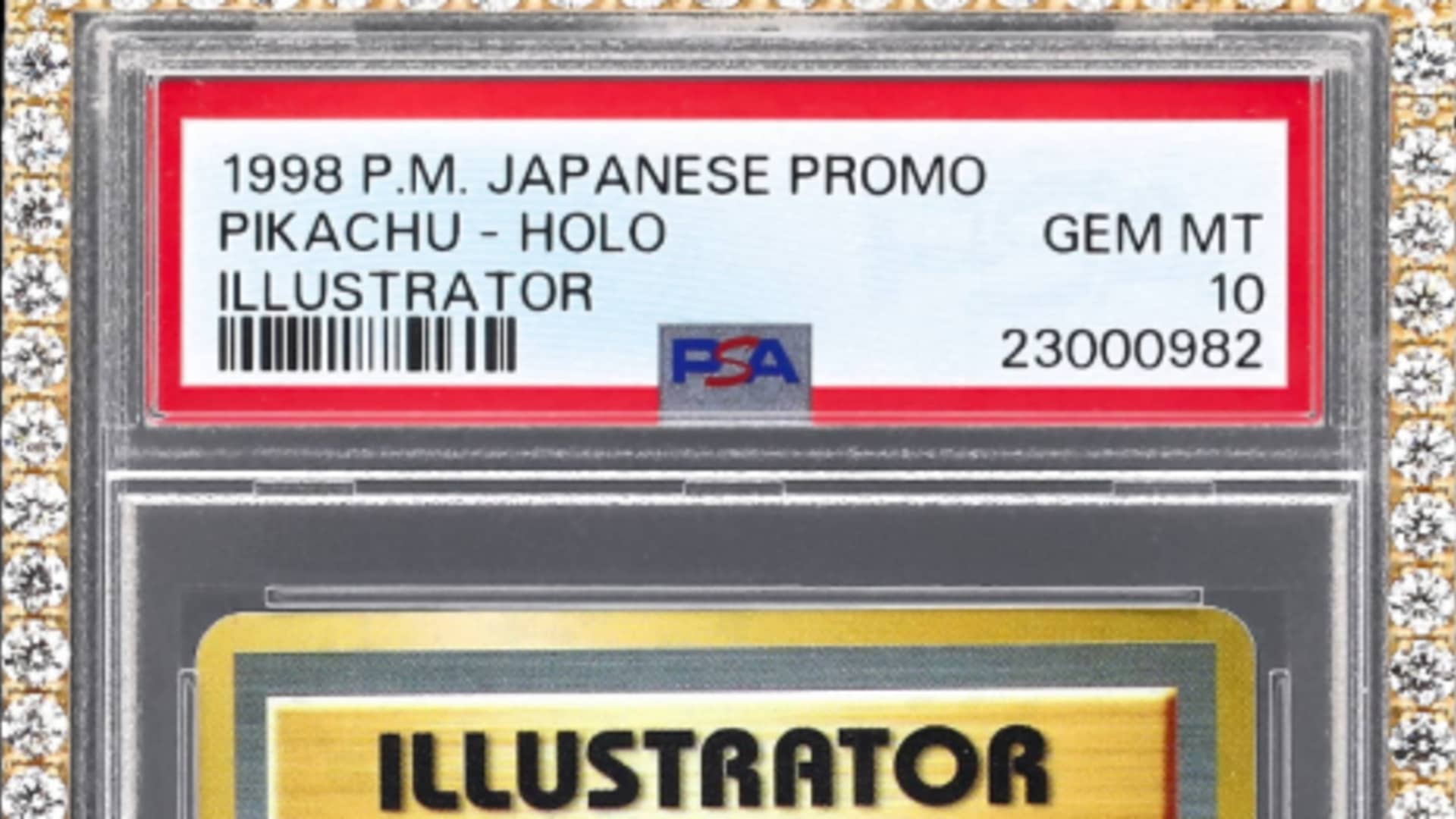
At the high end, this dynamic is clear. A rare Pikachu Illustrator card, owned by influencer and wrestler Logan Paul, sold for more than $16 million in February, setting the record for the most expensive trading card ever sold at auction.
“Some people try to acquire the rarest, highest quality cards and take them off the market for as long as they can,” said auctioneer Ken Goldin, whose online marketplace, owned by eBayconsigned and sold Paul’s rare Pokémon card. “You may never see this card come up for sale again in our lifetime.”
Rare Pokémon card designed by Atsuko Nishida.
Courtesy of Goldin
This supply squeeze partly explains why prices can skyrocket and why a small part of the market generates the bulk of the gains.
The condition of a particular card, which determines its rating on a scale of up to 10, can make or break the value, Goldin added.
“You can have a card rated 10 [perfect score] and no one cares if the underlying card isn’t important,” Goldin said. “But when you have the right card, the condition becomes critical, especially in Pokémon, where there’s a huge bounty for a 10.”
That premium can be extreme, Goldin said. A $100,000 card in mint condition graded by Professional Sports Authenticator, the premier authentication and grading company, might get only 1% or 2% of that value in much lower condition.
Aside from the handful of rarest cards, retail investors and collectors are once again opening their dusty collectible books from 20 or more years ago and hoping to strike gold. The card sales boom accelerated during the pandemic as stimulus funds and interest in alternative assets increased. Spending on non-sports trading cards, including Pokémon, jumped 350% between 2020 and 2025, according to market research firm Circana. At the same time, celebrities like Post Malone, Steve Aoki and Kevin O’Leary fueled mainstream attention.
“We see people using it as an alternative asset and wealth allocation,” Goldin said. “Whether this will become more institutional over time remains to be determined.”
But the risk remains for hopeful investors in the market. The same forces that lead to gains also create risks. Prices are volatile, heavily influenced by hype, and card prices lack the stability and track record of traditional markets.
Yet, some highly sought-after Pokémon cards continue to outperform the market.