


Key Points
- Family office dealmakers have yet to pick up the pace, even as the end of the year approaches.
- But billionaire investment companies, notably those of Jeff Bezos and Bernard Arnault, are still banking on AI startups in the health field.
- For family offices looking to take advantage of the artificial intelligence boom and make an impact, investing in health technology is an attractive strategy.
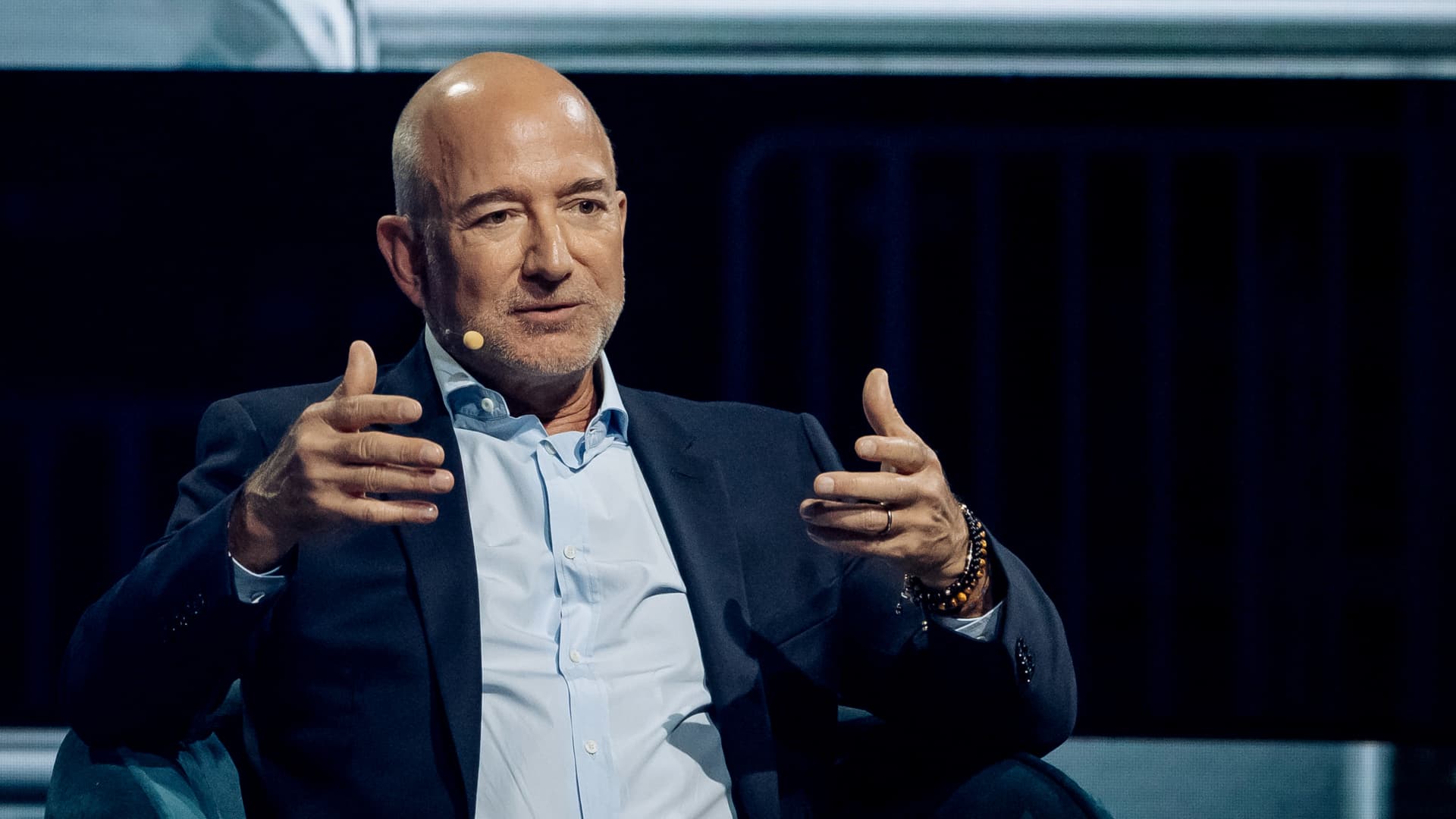
A version of this article first appeared in CNBC’s Inside Wealth newsletter with Robert Frank, a weekly guide for wealthy investors and consumers. Sign up to receive future editions, straight to your inbox. While trading on Wall Street typically picks up in the fourth quarter, investment firms of the ultra-rich appear in no rush to close deals by the end of the year. In November, family offices made 55 direct investments in companies, down 5% from the previous month, according to data provided exclusively to CNBC by private wealth platform Fintrx. This figure also represents a decline of 37.5% on an annual basis, in line with this year’s low-key negotiations as family offices grapple with pricing uncertainty and geopolitical conflict. That said, November was a busy month for Jeff Bezos’ eponymous family office. Bezos Expeditions has made at least four direct investments, including co-leading a $106 million round for Profluent. The biotech startup uses generative artificial intelligence for gene editing. A large number of billionaire family offices are also investing in the potential of AI to improve the way diseases are tracked and treated. Aglaé Ventures, the company of LVMH CEO Bernard Arnault, has joined a $298 million Series B round for Function Health, which offers regular laboratory tests for health monitoring and early disease detection. Billionaire Roku founder Anthony Wood and retired NBA star Blake Griffin also participated in the fundraiser. John Doerr’s Foris Group and Kleiner Perkins, the venture capital firm he led until 2016, have invested in a $126 million seed round for Hippocratic AI. Now valued at $3.5 billion, Hippocratic AI develops AI agents that provide non-diagnostic services such as medication reminders and surgical follow-ups. The namesake family office of Indian tech mogul Azim Premji was also part of the Series C round. For family offices looking to capitalize on the AI boom and make an impact with their investments, backing health tech companies is an interesting strategy. In a UBS survey of 317 global family offices, 65% identified the pharmaceutical and biotechnology sectors as the top sectors benefiting from AI, just behind banking and financial services, selected by 75%. Health care equipment and services was the third most popular beneficiary, at 62%. Nearly half of the sample reported having health technologies and innovations in their portfolio. At a panel in October, Bezos warned of an AI bubble, but said scientific and technological advances would support the burst. He compared it to the biotech bubble of the 1990s. “When the dust settles and you see who the winners are, society benefits from these inventions. They continue to get these life-saving drugs,” he said. “And that’s what’s going to happen here too. It’s real. The benefits of AI for society are going to be gigantic.”