


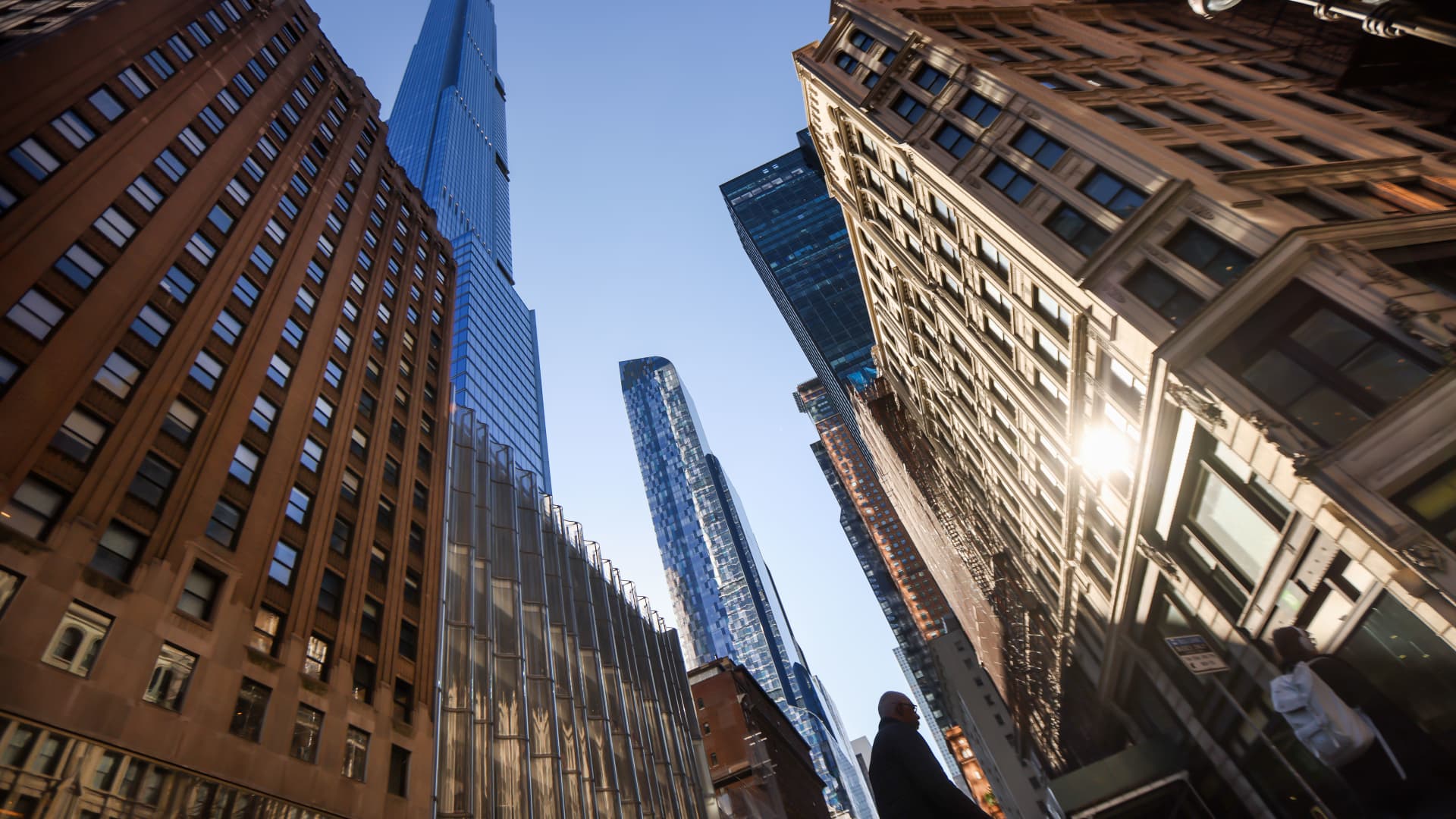
Central Park Tower, left, and One57, center, along Billionaire’s Row in New York on May 1, 2026.
Michael Nagle | Bloomberg | Getty Images
A version of this article first appeared in CNBC’s Inside Wealth newsletter with Robert Frank, a weekly guide for wealthy investors and consumers. Register to receive future editions, straight to your inbox.
A month after New York passed a second-home tax, luxury real estate sales remain strong and inventory is down, according to brokers and analysts.
When New York Gov. Kathy Hochul and the state Legislature approved the so-called pied-à-terre tax on May 27, real estate agents and developers predicted an immediate impact. Brokers said New York’s wealthy would flee to Florida, developers said they would halt new projects, and real estate lobbyists predicted a decline in employment. Many cited what they called the “Mamdani Effect,” referring to New York City Mayor Zohran Mamdani and the potential drain of tax wealth.
“The second home tax will dampen market activity, reduce property values, harm new development and weaken the city’s economy,” the Real Estate Board of New York said in a statement shortly after the measure passed.
However, sales of luxury apartments show few signs of weakness. According to Olshan Realty, 126 contracts were signed for apartments worth $4 million or more in June, compared to 124 during the same four-week period last year.
The average price of an apartment in Manhattan reached its second highest level on record during the second quarter, rising 5% over the past year to about $2.2 million, according to Brown Harris Stevens. Sales of condos valued between $10 million and $20 million jumped 55%, according to Compass. Sales of condos over $20 million increased 33%, with average asking prices up 14%, the real estate brokerage said.
June deals included an $80 million duplex penthouse in a new apartment building near Manhattan’s West Village, a $26 million condo downtown and a $22 million co-op on the Upper East Side. Brokers say that while some buyers were initially frightened by the tax, the influx of cash from recent IPOs and the surge in wealth driven by asset prices have overwhelmed their fears.
“The amount of money available is insane,” said Lauren Muss of Douglas Elliman, who signed contract for a $17.5 million condo listing in June. “We see great things happening to us every day. It only gets stronger.”
It is of course too early to judge the long-term impacts of this tax. And real estate lawyers say there will be years of litigation related to assessments, co-op boards, residency status and other issues related to the new tax. While Hochul and Mamdani said the tax would raise $500 million a year, New York City’s comptroller estimates it would raise between $340 million and $380 million.
Still, top brokers said the pied-à-terre’s tax fears are quickly easing. The surcharge, imposed on non-primary residences assessed by the city at more than $1 million, was first proposed in April, approved in May and officially took effect this week. It applies to residences that meet the tax criteria as of January 5, 2026. Therefore, any buyer of an expensive pied-à-terre this year will be subject to the tax.
Some buyers initially held off on transactions when the tax was first proposed, according to agents. Scott Hustis, of Paradigm Advisory at Compass, said he listed a $16.5 million duplex penthouse in Madison Square Park Tower on April 8. A buyer immediately expressed interest and was close to making an offer, he said, but when Hochul announced the proposed fee a week later, the buyer backed out.
However, in late May, as the details of the tax began to become clearer, buyers returned to the market. The penthouse was put up for rental on June 6.
“There’s a lot of trust,” Hustis said. “The markets are strong. More and more New York buyers are coming out of the woods.”
Hustis declined to comment on the buyer of the $16.5 million penthouse or whether it will be a primary residence. Otherwise, the apartment would be subject to a pied-à-terre tax bill of more than $98,000 this fiscal year, on top of property taxes, according to city assessments.
But Hustis said ultra-wealthy buyers are more concerned with buying at the right time in the market cycle rather than paying an additional tax.
“Right now, they see that things are being done in contracts and prices are not going down, and they decide to execute,” he said.
Low inventory adds pressure on buyers. Jonathan Miller, CEO of valuation and research firm Miller Samuel, said luxury goods inventories are down 40% from last year and are now at the lowest level he has seen since he started tracking them in 2004.
Marc Palermo of Douglas Elliman has a listing for a 4,700-square-foot apartment worth $19 million at 565 Broome St., the glass condo tower whose buyers include tennis great Novak Djokovic, Uber co-founder Travis Kalanick and niece of President Mary Trump. In fall 2025 and early 2026, the listing attracted several offers at 20 or 25 percent below the asking price, Palermo said. Yet the building held up for its price.
In late spring, as markets overcame fears of the Iran war and the SpaceX IPO and other offerings created massive liquidity events, the Manhattan market came alive, brokers said. Palermo said it received a “strong offer” for the $19 million apartment and contacted it in late June. Although he declined to comment on the buyer, he said the buyer already owns a unit in the building and wants to expand it. Since the buyer is not a primary tax resident of New York, they will likely have to pay a pied-à-terre tax.
“People took a breath, they adapted to the new reality and the smartest took action,” Palermo said.
He said the other two initial bidders for the Broome Street listing also ended up closing on other apartments recently – one for a $15 million apartment and the other for a $17 million apartment. He said virtually all high-end buyers in Manhattan pay cash, with no mortgage.
Along with stock market gains and the financial boom, the so-called great wealth transfer is also driving demand in Manhattan. Palermo said he does a number of high-end deals with buyers under 40 in which parents, a family office or trust are the underlying buyer.
“We get a lot of gifts from parents,” he said. “If you’re under 40 and buying in New York, chances are you don’t earn enough to buy on your own.”