


Recent conflicts have triggered a palpable increase in drone production, particularly in countries like the United States, China, Israel, Turkey, Ukraine and Iran. Mainly driven by the private sector, with the exception of China, drone production allows states involved in active combat to meet their own operational needs on the battlefield. For states not engaged in active conflict, local drone production provides a pathway to industrial development and increased export potential beyond military self-sufficiency.
New Delhi has jumped on the bandwagon. The Indian government has tried to encourage the private sector to scale up drone production. As it gathers pace, the Indian drone industry appears to be following a hybrid model in which it seeks to combine the mature commercial feedback loop of the Israeli industry with the innovation and scalability of the wartime Ukrainian drone industry.
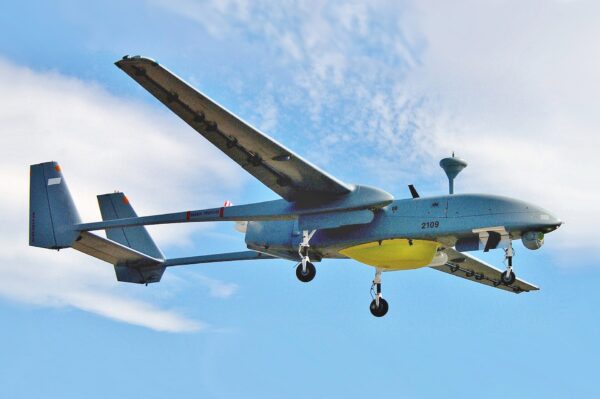
India has a long history of importing drone technology. During the 1999 Kargil conflictthe indian army deployed IAI Heron and Searcher drones of Israeli origin for the first time. Although ambitions for local drone manufacturing remained latent, they were significantly limited by New Delhi’s operational and tactical requirements. India’s ambitions to become a producer of drones have truly come to fruition following its military confrontation with Pakistan in May 2025. The four-day conflict fundamentally changed the role of drones from intelligence, surveillance and reconnaissance (ISR) to strike. As the U.S.-brokered ceasefire brought an end to kinetic hostilities, a security-focused technological arms race took off.
This is not to say that New Delhi’s transition from drone importer to drone producer began in 2025. Instead, this transition was already underway through a sequence of state-led structural policy interventions.
In 2021, the Indian government had imposed restrictions on the import of drones for create a protected market space for domestic manufacturers. Likewise, the 2021 Production-linked incentive programlaunched by the Indian government, has catalyzed private investment in drone manufacturing at the component and systems level. THE Mission Shakti by drone of 2022 articulated an ecosystem-building vision that treated drones as dual-use infrastructure rather than niche defense equipment.
On the demand side, the Defense Acquisition Procedure (DAP) 2020 created a structural demand for locally produced drones in to book the “Buy IDDM” (Indigenously Designed, Developed and Manufactured) procurement category exclusively for Indian suppliers with less than 49 percent foreign direct investment and requiring at least 65 percent local content.
Collectively, these structural interventions have translated into more than 600 drone and drone component manufacturing companies in India, of which more than 100 companies particularly specialize in their defense applications.
However, after the 2025 showdown, Indian demand for drones has intensified. For example, Zuppa Geo Navigation Technologies would have experienced a 10-fold increase in its order pipelines in May 2025 alone. The company has since announced plans to expand its geographic presence to Africa and the Middle East, positioning itself as an exporter of electronic warfare-resistant systems.
At the same time, private companies are also using the emergency procurement mechanism provided under the DAP to accelerate drone production. In June 2025, immediately after the India-Pakistan confrontation, ideaForge Technology Limited secure an emergency order for military-grade mini unmanned aerial vehicles. The order was worth $16 million and the drones were to be delivered within a year. Subsequently, the Indian Army placed another emergency order estimated at approximately $11.3 million for Zolt tactical drones and long-range vertical takeoff (VTOL) SWITCH 2 drones. In addition to this, the Indian government is also preparing to place an order for military drones worth more than $2 billion from domestic manufacturers, including major companies like Adani Group, Tata Advanced Systems and Larsen & Toubro, and startups like ideaForge and Asteria Aerospace, marking the largest purchase of unmanned systems ever.
The increase in drone production has also been accompanied by an increase in drone testing. In September 2025, Rajesh Kumar Singh, Indian Defense Secretary, said that while a few drone systems had passed government testing to obtain contracts with the armed forces, many other drones developed by private companies have undergone rigorous testing since Operation Sindoor. He emphasized that post-operational assessments focused on reliability in contested environments, integration with existing systems and resistance to electronic warfare.
Indian drone production appears to follow a hybrid model in which it seeks to combine Israel’s mature commercial feedback loop with Ukraine’s wartime innovation and scalability. Israel has a considerably mature and well-established drone production infrastructure, characterized by deep integration across ecosystems. Israeli defense producers (both public and private) such as Rafael Advanced Defense Systems, Israel Aerospace Industry and Elbit Systems operate simultaneously as defense contractors, commercial exporters and laboratory users of their own combat systems. For example, the Harop loitering munition which proved decisive for India during Operation Sindoor is of Israeli origin and is a product of this model.
India appears to be replicating the same pattern of generating a commercial-military feedback loop. During Operation Sindoor, New Delhi deployed drones product by private companies, such as the Skystrikers drones produced by startups. The battlefield itself was treated as a validation environment, which philosophically fits with an Israeli approach to procurement – that is, real-world testing is the highest form of qualification. Pakistan’s retaliatory drone offensive has provided a dynamic testing environment for Indian air defense.
Ukraine’s drone industry, on the other hand, is relatively nascent, having been born out of existential necessity rather than the result of a planned industrial policy like India’s. However, it offers greater innovation in wartime. The Ukrainian drone industry has experienced an exceptional situation sensitive to the requirements of the battlefield, with military units in direct contact with developers.
Ukraine’s drone industry is also designed to be scalable. In 2024 alone, Ukrainian manufacturers have produced more than 2 million drones. Their Ministry of Defense together an ambitious target of 4.5 million units for 2025. The number of Ukrainian drone companies pink from 41 in 2022 to 132 in 2023 and 183 in 2024. These have been supported by both government funding and Western allies. As a result, more than 96% of drones currently used by Ukrainian forces are produced domestically, a stark change from the early days of the war, when Ukrainian forces relied heavily on imported drones. In terms of wartime innovation and scalability, this is the model that New Delhi apparently seeks to apply.
From a broader perspective, New Delhi appears to be following a three-pronged approach. It seeks to use drones against its western neighbor Pakistan, reduce its dependence on foreign suppliers and position itself as a credible alternative supplier of drones to the South, a market largely dominated by China.
Regionally, this accelerates the drone arms race, as it forces Pakistan to consider drone sufficiency as a critical security imperative. This becomes all the more evident in light of increased funding and procurement by the Indian government following the May 2025 conflict, indicating that Pakistan is a central driver of India’s expanding drone ecosystem. Therefore, New Delhi’s sustained investment in the production of innovative and scalable drones could also significantly change the air war between India and Pakistan.
Stray munitions and drone swarms, in particular, can easily saturate and overwhelm air defense systems due to their sheer quantitative force, thereby complicating interception, both technically and in terms of cost effectiveness. The use of drones also lowers the threshold for the use of force, making an escalation of conflict more likely. This is particularly alarming given that India and Pakistan are both nuclear-armed neighbors and crises and conflicts between the two are becoming increasingly recurrent and episodic.
As for New Delhi becoming a supplier and potentially penetrating southern markets, the task could prove daunting. Structurally, global drone supply chains remain heavily dominated by China. Chinese dominance is not simply a function of exports of finished products. This problem runs deeper because China also controls critical segments of drone component supply chains, including motors, electronics and batteries. DJIChina’s largest drone producer, alone dominates 70% of the global commercial drone market. Chinese companies also dominate rare earth processing, battery chemistry and major electronics inputs. Ironically, so does India’s drone manufacturing sector account on components of Chinese origin through gray markets. Therefore, for New Delhi to penetrate China-dominated drone supply chains would require not only competitive finished products, but also the ability to adapt to China’s cost structures, manufacturing scale, and years of accumulated industrial learning.
Amid India’s drone revolution, Pakistan must prioritize cost-effective and scalable counter-drone capabilities within its air defense architecture. It must also strengthen its local drone production ecosystem and rely on profitable foreign supply options. However, unlike New Delhi, which has a relatively larger budget and defense industrial base, Islamabad faces considerable budgetary and financial constraints. Pakistan needs to focus on affordability as much as innovation.
New Delhi’s accelerated militarization of drone technologies not only risks exacerbating existing asymmetries, but will also fuel a regional drone arms race, with detrimental implications for regional stability.