


Japan is considering what could become one of its most significant defense industrial reforms since easing restrictions on arms exports in 2014: the creation of a Japanese version of the U.S. Foreign Military Sales (FMS) system.
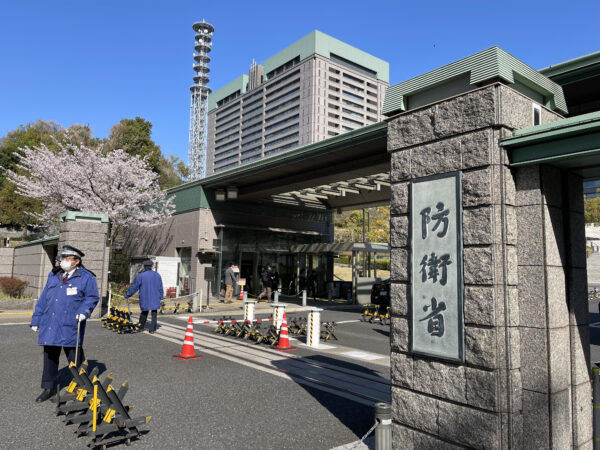
Defense Minister Koizumi Shinjiro recently confirmed that the government is considering measures including a Japanese-style FMS framework and a new organization to support defense exports and industrial development. While stressing that no final decision has been made, Koizumi acknowledged that relevant ministries are engaged in what he described as “continuous deliberations” on concrete measures and institutional arrangements.
Such carefully worded language often precedes major policy changes in Japan’s security policy.
The proposal would mark a notable departure from Japan’s traditional approach to defense exports. Under the current system, Japanese companies are largely responsible for negotiating and managing overseas sales. A Japanese-style FMS would significantly increase government involvement by allowing the state to serve as the primary contracting window for foreign clients.
According to Japanese media reports, the government is considering creating a new organization – possibly in the form of an independent administrative agency – to manage a Japanese-style FMS system and promote defense exports. The organization would also help strengthen Japan’s defense industrial base and support the development of dual-use technologies, including artificial intelligence, drones and autonomous systems.
The initiative is expected to be incorporated into revisions to Japan’s three key national security documents later this year, and implementing legislation could follow in 2027.
Koizumi framed the question in strategic terms. Defense equipment transfers, he argued, help strengthen the deterrence and response capabilities of allies and like-minded countries, while strengthening Japan’s own production base.
He described the defense industrial sector as a “defense capability itself” and summed up the government’s emerging philosophy with a succinct phrase: “Production capacity itself is a deterrent.”
This view reflects the lessons Japanese policymakers learned from Russia’s invasion of Ukraine. The war showed that military power is not measured solely by advanced weapons platforms. Countries must also have the industrial capacity to replenish munitions, replace losses, provide maintenance and continue production during protracted conflicts. Japanese defense planners increasingly refer to this requirement as “sustained combat capability,” a concept that has gained prominence in recent strategic discussions.
However, for decades, Japan’s defense industry faced strict export restrictions and a relatively small domestic market. Limited production runs have driven up costs, while some companies have scaled back or abandoned defense-related businesses due to low profits and reputational concerns.
Although Tokyo has gradually eased its export controls since 2014, Japanese companies have often struggled to compete internationally with companies backed by governments with more established export support mechanisms.
The proposal comes at a time when Japan’s defense sector is gaining momentum, as Tokyo seeks to strengthen defense industrial cooperation with its allies and partners.
Japan would not entirely innovate by creating a new organization to streamline and support defense exports. Many major defense exporting countries already have specialized organizations responsible for managing government-to-government defense transactions and supporting foreign arms sales. South Korea relies on the Korea Trade Investment Promotion Agency (KOTRA) and the Defense Acquisition Program Administration (DAPA), France has the International Directorate (ID), Israel manages the Directorate of International Defense Cooperation (SIBAT) under its Defense Ministry, and Sweden plays a similar role through its Defense Materiel Administration (FMV).
The existence of such institutions has strengthened the argument among Japanese policymakers that defense exports require a dedicated government framework rather than relying primarily on private industry.
Foreign defense acquisitions typically involve much more than the sale of equipment. Buyers often expect long-term maintenance support, training programs, logistical arrangements, financing mechanisms and government commitments that span decades.
Many Japanese manufacturers – particularly diversified conglomerates for which defense represents only part of the overall business – have limited capacity or little incentive to manage these responsibilities independently.
Government involvement could give foreign customers greater confidence that Japan will remain a reliable partner in the long term. It would also allow Tokyo to more closely integrate defense exports into broader foreign and security policy goals.
This is particularly relevant as Japan deepens its security cooperation with countries in the Indo-Pacific region.
Tokyo has expanded defense ties with partners such as Australia, the Philippines and other regional states seeking to bolster their maritime security capabilities amid growing concerns about China’s military modernization and increasingly assertive behavior in the East and South China Seas. A more robust export framework could make Japanese radar systems, naval platforms, drones and other defense technologies more accessible to these countries.
At the same time, Japanese policymakers increasingly view defense-industry cooperation as a governance tool rather than just a business activity. A Japanese FMS system would do more than help Japanese companies win overseas contracts. This would fundamentally reshape how Tokyo uses its defense exports to support broader security objectives.
Yet the creation of a Japanese FMS system will not automatically replicate the success of its American counterpart.
The United States’ FMS program is built on decades of institutional experience, a vast defense industrial base, sophisticated financing arrangements, and an extensive global logistics network. Japan lacks many of these advantages.
Tokyo will still need to resolve difficult questions regarding contract management, liability, technology protection, pricing, after-sales support and long-term sustainment responsibilities.
Domestic political sensitivities also remain. While public attitudes toward defense exports have become more favorable than in the past, debate continues over the appropriate balance between industrial competitiveness, alliance commitments, and Japan’s long-standing postwar restrictions on arms transfers.
However, the importance of the current debate should not be underestimated.
It remains to be seen whether a Japanese-style FMS will ultimately see the light of day. But the fact that senior officials are openly considering such a framework suggests that Tokyo is entering a new phase of its defense export policy.
A decade ago, the political debate in Japan focused on whether defense exports should be allowed. Today, policymakers are debating how government should promote and support them. This alone marks a historic transformation.