


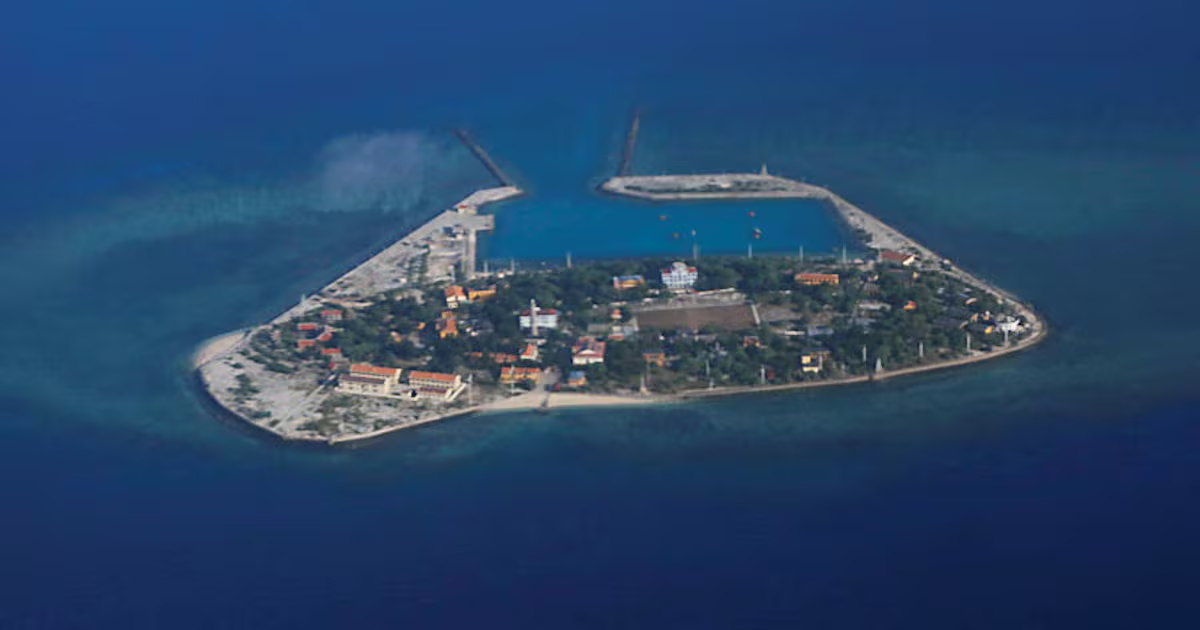
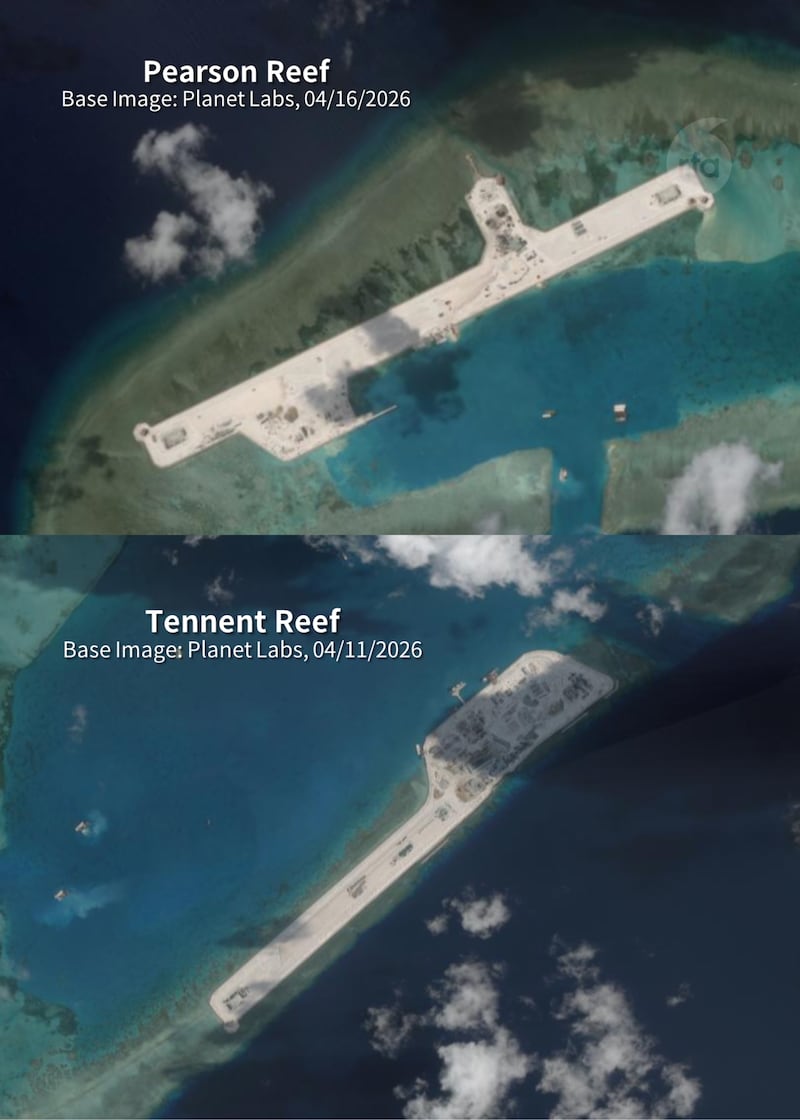
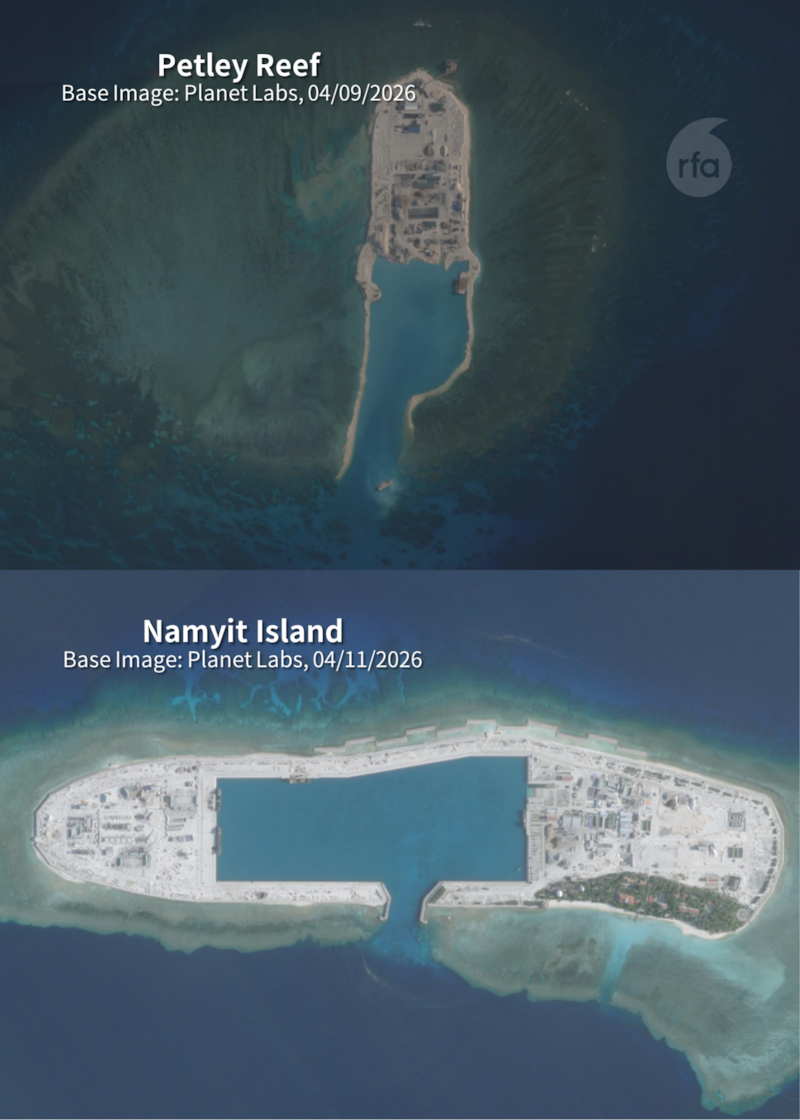
Vietnam is building military and maritime infrastructure at 27 sites across at least 18 reefs in the disputed Spratly Islands in the South China Sea, satellite images analyzed by Radio Free Asia have revealed.
The improvements include ports, runways, military installations and communications networks that will improve Hanoi’s awareness of maritime and airspace, experts told RFA.
“Hanoi likely hopes that this development will deter Chinese action against Vietnamese economic activity at sea, including fishing and offshore oil and gas,” Harrison Prétat, deputy director of the Washington-based Asia Maritime Transparency Initiative, or AMTI, told RFA.
The Spratlys are a strategically critical and highly contested archipelago comprising more than 100 small islands and reefs claimed in whole or in part by China, Vietnam, the Philippines, Malaysia and Brunei. The region is vital to global trade and is rich in fishing grounds and potential oil and gas reserves. No single nation has universally recognized sovereignty over the islands.
Hanoi’s objectives
Over the past decade, claimant countries – notably China and, more recently, Vietnam – have embarked on large-scale dredging and construction to increase their footprint in the disputed territories and strengthen their claims.
Vietnam has been particularly aggressive in its reclamation efforts, creating 534 acres (216 hectares) of additional land across the archipelago over the past year, according to AMTI. This was in addition to 2,237 acres (905 hectares) already reclaimed over the past five years. New reclamation areas undertaken during the second half of 2025 are on a much smaller scale, as recoverable areas become rarer.
More than one project is active on some of the Vietnamese holdings in the Spratlys, including Cornwallis South Reef, Alison Reef and East London Reef.
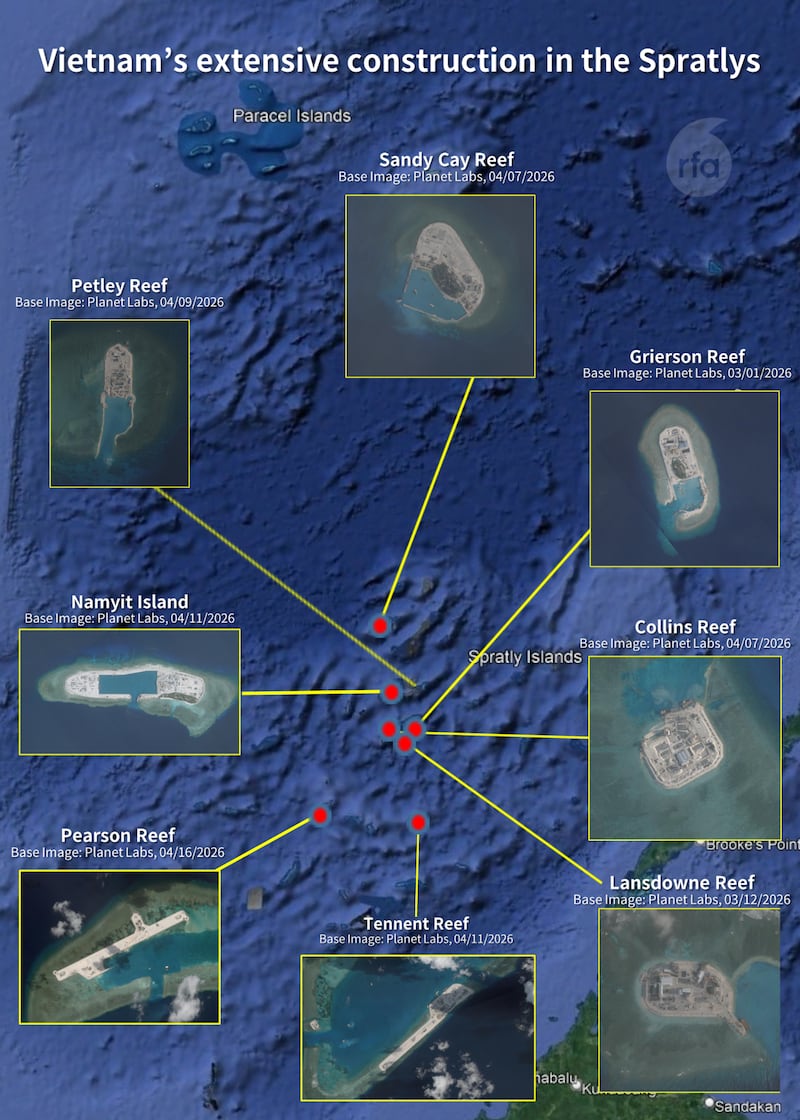
Aggressive expansion in the Spratlys is Hanoi’s attempt to improve its ability to operate there, Lynn Kuok, Lee Kuan Yew Chair in Southeast Asian Studies at the Washington-based Brookings Institution, told RFA.
“Vietnam is strengthening the logistical foundations of its presence in the South China Sea,” she said. “By expanding its network of ports across the Spratlys, Hanoi is facilitating the movement of personnel, supplies and equipment between occupied areas and the mainland to support operations over longer periods of time.”
Airspace surveillance
A key part of the new construction will help Hanoi patrol the skies. Currently, Vietnam has a single 4,000-foot (1,200-meter) airstrip on Spratly Island, the fourth-largest island in the Spratly chain, from which the archipelago takes its name.
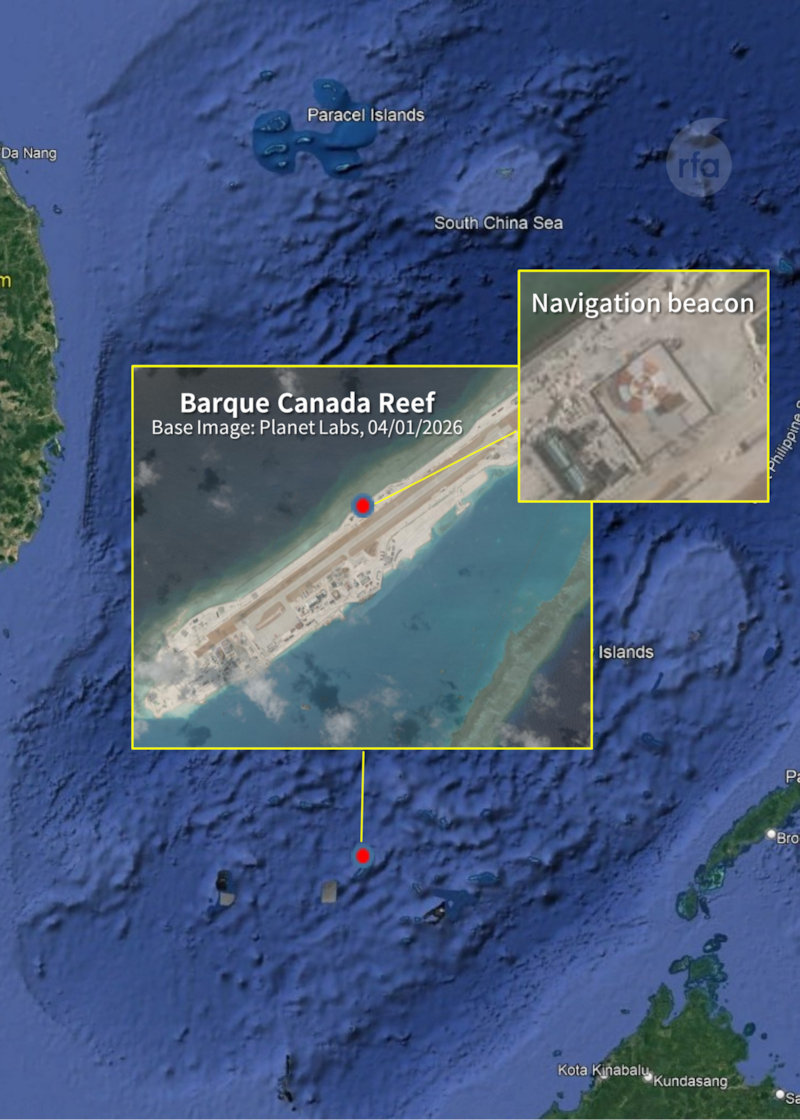
A new, much larger runway at Barque Canada Reef will span approximately 13,000 feet (4,000 meters) when completed.
In addition to the runway, satellite imagery also confirms that a new communications structure has been installed – according to AMTI, it appears to be a Doppler VHF Omnidirectional (DVOR) navigation beacon that will likely provide precise navigation to Vietnamese aircraft within a 100 nautical mile radius of the island.
AMTI said similar beacons could be seen on Spratly airstrips controlled by China.
“The Barque Canada navigation beacon is mainly used to support Vietnamese aircraft navigating the surrounding areas of the South China Sea,” Prétat said. “I would only expect to see another DVOR beacon if they build another new airstrip, but we will likely see other types of communications and sensor facilities built on all the new outposts.”
Improvements in airspace infrastructure indicate a change in the development of Vietnam’s Spratly, Kuok said. The first phase consisted of land reclamation, and now the second phase, which involves adding infrastructure to the expanded islands and reefs, is underway.
“The installation of communications and navigation infrastructure is expected to improve connectivity between areas occupied by Vietnam and support aircraft operating in the South China Sea,” she said.
Insurmountable disparity
Despite the construction boom, Vietnam has no realistic path to match China’s air capabilities, Prétat said.
Beijing already has four airstrips – at Fiery Cross Reef, Subi Reef, Mischief Reef and Woody Island – and will likely add a fifth at Antelope Reef. Additionally, Vietnam’s air force is much smaller and less technologically advanced than China’s.
“Hanoi likely hopes this will improve its ability to monitor its maritime zones and deter Chinese activities in the gray zone, but it will not change China’s overwhelming military dominance in the South China Sea,” Prétat said.
China therefore retains substantial advantages in the Spratlys, with about twice as much reclaimed land, more extensive military infrastructure and overwhelming advantages in naval, coast guard and maritime militia capabilities, Kuok said.
Tit for tat?
RFA recently reported that Vietnam had protested China’s land reclamation activities at Antelope Reef, but Prétat said China may have initiated these activities in reaction to Vietnam’s Spratly expansions.
China’s construction of a new facility at Antelope Reef suggests that Beijing wants to keep this gap wide enough – perhaps to signal to Vietnam and other Southeast Asian claimant nations that “catch-up” is not an option. Beijing will do what it takes to maintain its dominance in the South China Sea, he said.
Kuok expressed concern that Vietnam’s fortification of elements it occupies could create additional points of friction with Chinese forces and therefore increase the possibility of incidents or clashes.
But the disputes between China and Vietnam are less of a flashpoint than those between Beijing and the Philippines, she noted, adding that Vietnam and China both have strong incentives to prevent tensions in the South China Sea from spilling over into broader bilateral relations, which remain economically and politically important.
Prestat said Vietnam’s position in the conflict was complicated by its broader relations with China.
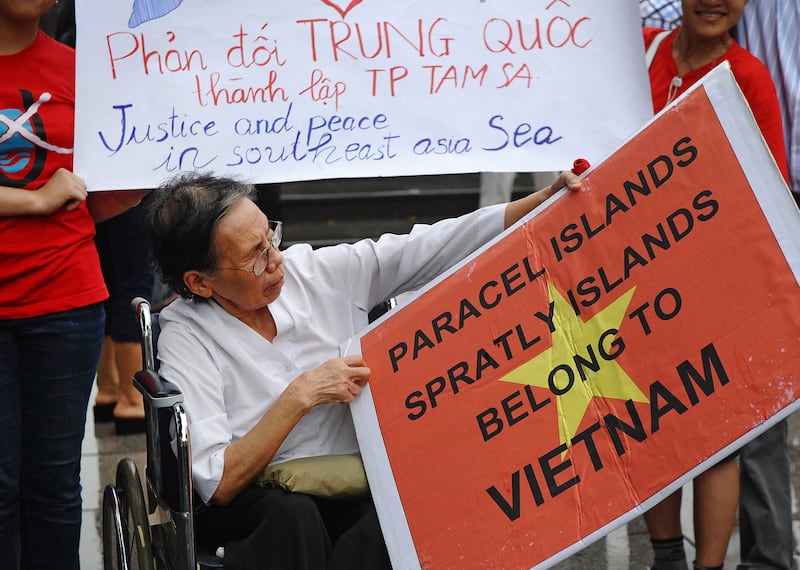
“Vietnam has been very proactive. They have fought battles with China in the South China Sea, but they also have a very different set of international relations,” he said. “On the one hand, they are one of the loudest voices in the South China Sea disputes, but on the other hand, they have a unique relationship with China that they must maintain. »
RFA attempted to contact the Vietnamese and Chinese governments for comment on ongoing construction work in the Spratly Islands, but neither responded.
Edited by Eugene Whong.