


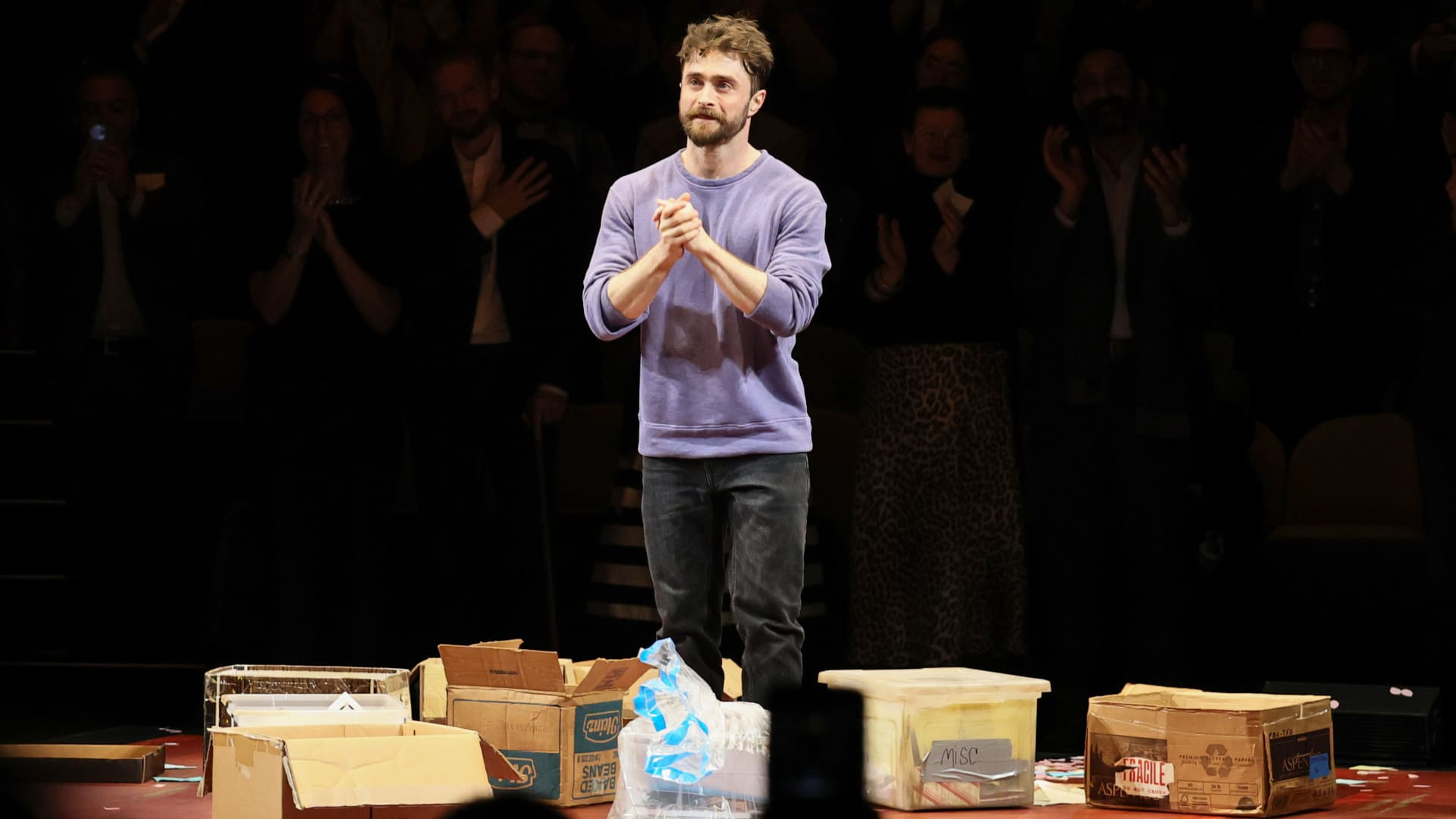
Daniel Radcliffe bows on stage during the encore during opening night of “Every Brilliant Thing” at the Hudson Theater on March 12, 2026 in New York City.
Theo Wargo | Getty Images
Broadway just completed its highest-grossing season on record, offering another sign that consumers are willing to spend on experiences even as concerns about inflation and economic uncertainty persist.
The 2025-2026 performance season surpassed the previous year’s record and generated nearly $1.91 billion in ticket sales, according to industry data from the Broadway League.
“Even in a challenging economic environment, Broadway remained much the same as last season, reflecting both the resilience of this industry and the connection audiences feel with these productions,” Jason Laks, president of the Broadway League, said in a press release.
Taking into account the extra week included in the previous season, Broadway gross revenues this year increased by 3.5%, attendance increased by 1.8% and average ticket prices climbed by 1.7%.
This comes ahead of Sunday’s Tony Awards, setting a high-stakes backdrop for the industry’s biggest night. Awards often result in new ticket sales for the winning shows.
While consumers have retreated into some discretionary categories, demand for live entertainment has remained remarkably strong – from concerts and sporting events to theaters.
The New York Fed’s Beige Book has explicitly mentioned Broadway nearly a dozen times over the past two decades as an economic indicator, most recently in April saying “ticket sales remained strong.”
But Broadway’s banner year highlights a growing question: Have live shows become too expensive to offset rising production costs?
The average Broadway ticket costs $131 this season. For a family of four attending a musical, tickets alone can easily exceed $500 without accounting for transportation, meals and other expenses. In many cases, premium seats cost significantly more. At higher rates, total spending begins to rival a day trip to Disney Lots of people for a family of four.
Rising prices on Broadway
The industry’s growth is increasingly driven by high-priced plays starring big celebrities rather than traditional hit musicals.
The 2025-2026 season opened 35 new productions: 12 musicals, 21 plays and two specials. Existing intellectual property accounts for three of the four best new musicals nominated, including an adaptation of the Apple TV series “Schmigadoon,” the cult 1980s film “Lost Boys” and a parody of the Oscar-winning film “Titanic,” titled “Titanic.”
(L-R) John Riddle, Layton Williams, Constantine Rousouli, Jim Parsons, “Titanic” star Victor Garber, Frankie Grande, Marla Mindelle and Melissa Barrera pose backstage at the hit Broadway musical “Titanic” at the St. James Theater on June 1, 2026 in New York City.
Bruce Glikas | Wireframe | Getty Images
“Producers are becoming more and more selective about the economics of a project,” said Broadway producer Jim Kierstead. “There is more emphasis on recognizable titles, built-in audiences, limited series, strategic casting and productions that can generate additional life beyond Broadway through touring, licensing or international productions.”
The final week of the current season, which ended May 24, brought in $40.7 million across 40 productions, according to the Broadway League. A revival of “Every Brilliant Thing” featuring Tony nominee Daniel Radcliffe led ticket sales.
It’s a similar trend to last season’s box office, which was dominated by limited-run pieces starring Hollywood names like George Clooney, Denzel Washington and Jake Gyllenhaal. Star titles allow producers to charge higher prices while avoiding the enormous costs and risks associated with launching a new musical.
And it is plays, rather than musicals, that generate greater attendance. This season, attendance at plays jumped nearly 14%, while attendance at musicals fell 4.7%.
That’s good news for sales, since plays generally cost more on average, at $139.55 per ticket, compared to $128.83 for musicals.
The 21 plays released this season grossed about $463 million in total, more than double the category’s revenue from just two seasons ago and the second straight year the plays topped $400 million in revenue.
Experts say rising ticket prices reflect not only demand, but also the costs needed to put on a good show.
“The financial hurdles are significant,” Kierstead said.
“Ultimately, the industry understands that long-term sustainability depends on keeping Broadway both economically viable and culturally accessible. If audiences feel left out, everyone loses,” he added.
— CNBC’s Robert Hum contributed to this report.