


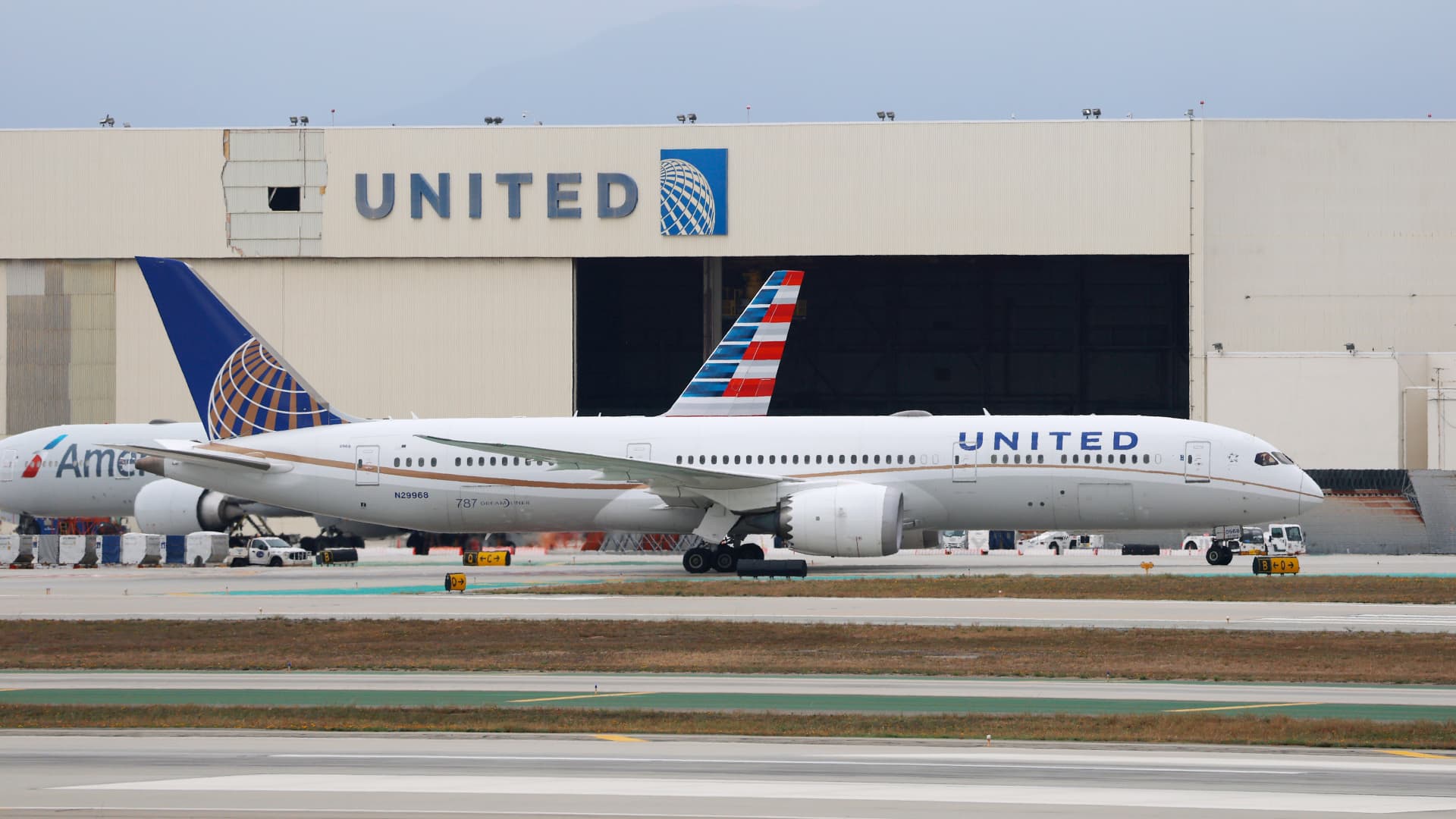
A United Airlines plane taxi at Los Angeles International Airport on April 21, 2026 in Los Angeles, California.
Justin Sullivan | Getty Images
RIO DE JANEIRO — United Airlines CEO Scott Kirby said he did not expect more airline consolidation in the United States and was not interested in merging his airline after American airlines rejected the idea of a combination earlier this year.
“United is not going to make a deal just for the sake of making a deal,” Kirby told reporters Sunday on the sidelines of the International Air Transport Association’s annual meeting.
When asked about the wave of consolidation that brought together Allegiant and Sun Country this year, and Alaska Airlines and Hawaiian Airlines in 2024, Kirby said further tie-up opportunities seemed unlikely: “There’s nothing,” he said.
“It’s a lot harder,” he said. “I was… one of the main architects of consolidation in the United States. I’ve been involved in many deals. It’s difficult, and you shouldn’t make deals that don’t make economic sense.”
Kirby repeatedly rejected the idea of buying his new partner, JetBlue Airways.
But earlier this year, Kirby discussed the possibility of partnering with American, where Kirby previously worked, and pitched the idea to the Trump administration, CNBC previously reported.
Kirby later said in a statement that he had hoped a combined airline would compete with larger foreign rivals, although some analysts said the tie-up would face insurmountable regulatory hurdles.
A merger “requires everyone’s support,” Kirby told reporters at the IATA conference. “We would need the unions, we would need the customers, the shareholders, the regulators and the management team.”
He said, however, regarding American’s management team, “we clearly don’t have that, so we can’t do it without them.”
Delta Airlines President Peter Carter also told CNBC on Saturday that he doesn’t see a merger or acquisition in Delta’s future. He said the carrier’s long-standing strategy was based on partnerships and joint ventures, including in South Korea, Mexico and Europe.
Because the U.S. domestic air travel market is very mature, international travel is the future, Carter said. He added that he wanted to take on United, the second-most profitable airline in the United States, in the lucrative trans-Pacific market.