


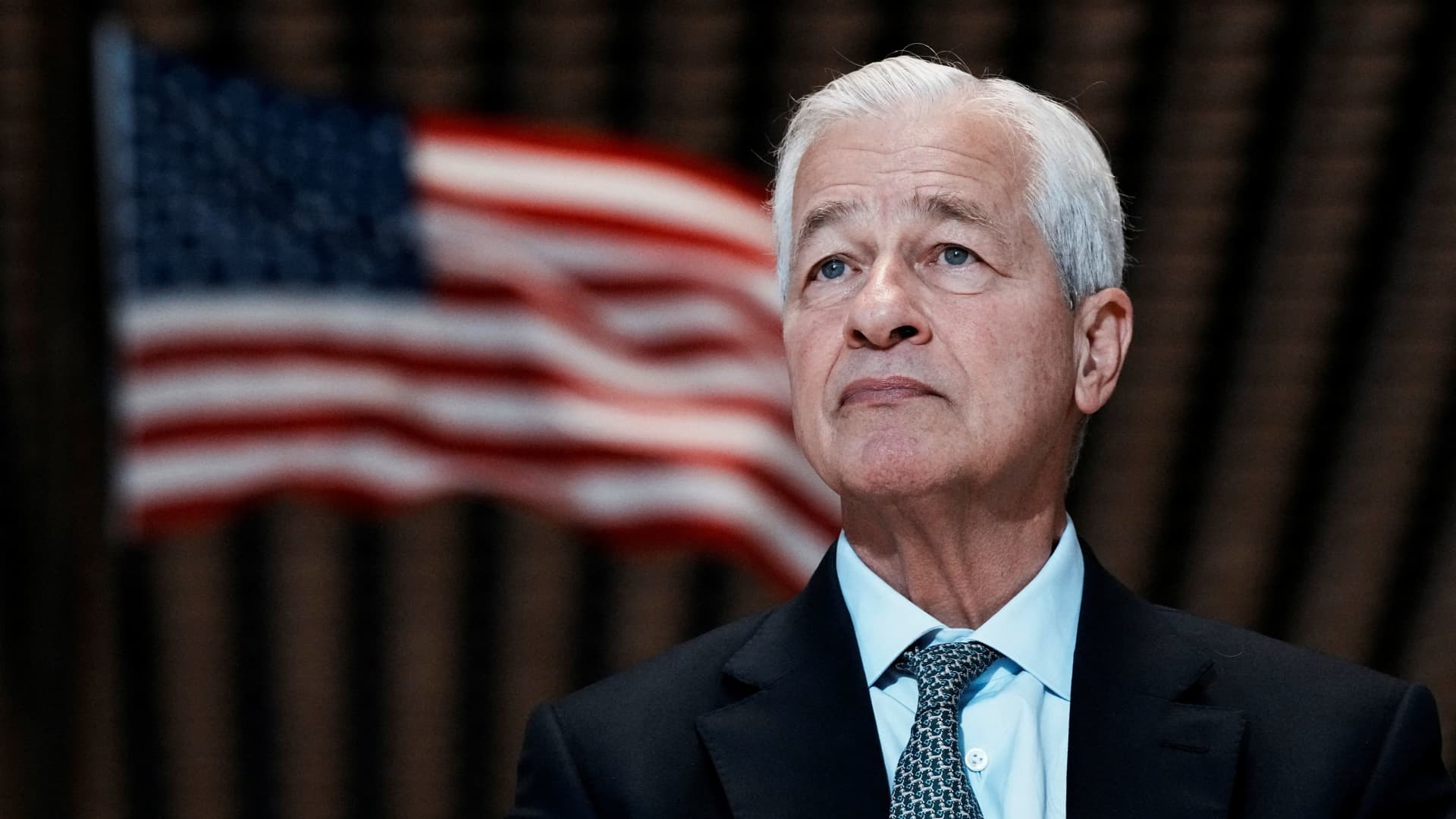
Jamie Dimon, Chairman and CEO of JPMorgan Chase & Co., attends the groundbreaking ceremony for the company’s new headquarters at 270 Park Avenue in New York, United States, October 21, 2025.
Eduardo Munoz | Reuters
JPMorgan Chase CEO Jamie Dimon warned Tuesday that rising government debt levels could trigger a crisis in the bond market, urging policymakers to act before markets force their hand.
Dimon’s statement responded to a question about whether he was concerned about rising public debt levels “around the world and in your country.”
“At the current pace of things, there will be some sort of bond crisis, and then we will have to deal with it,” Dimon told an investment conference hosted by Norway’s sovereign wealth fund, the world’s largest.
“I’m not afraid we can handle it,” Dimon said. “I just think maturity should say you have to deal with this, rather than letting it happen.”
Dimon, who runs the world’s largest bank by market capitalization, said history has shown that today’s growing mix of risks can combine in unpredictable ways. Even if the timing is uncertain, failure to respond to these pressures increases the chances that adjustment will come after upheavals rather than deliberate policy actions.
“The level of factors that add to the risk column is high, like geopolitics, oil, government deficits,” Dimon said. “They may disappear, but not necessarily, and we don’t know what confluence of events is causing the problem.”
A bond crisis would likely lead to a sudden rise in yields and a breakdown in market liquidity, where investors would rush to sell and buyers would retreat, typically forcing central banks to step in as buyers of last resort.
A recent example is the UK Gilts crisis of 2022, when yields surged and the Bank of England had to intervene to stabilize the market.
In this wide-ranging interview, Dimon discussed the risks he’s seen in the credit cycle and the pace of AI adoption, as well as his thoughts on defining company culture.
Although he didn’t think private credit, amounting to about $1.7 trillion, was large enough to pose a systemic risk to the U.S. economy, he nonetheless said the bigger risk was that a downturn in all categories of lending would be more severe than expected.
“We haven’t had a credit recession in so long, so if we did have one, it would be worse than people think,” Dimon said. “It could be terrible.”