


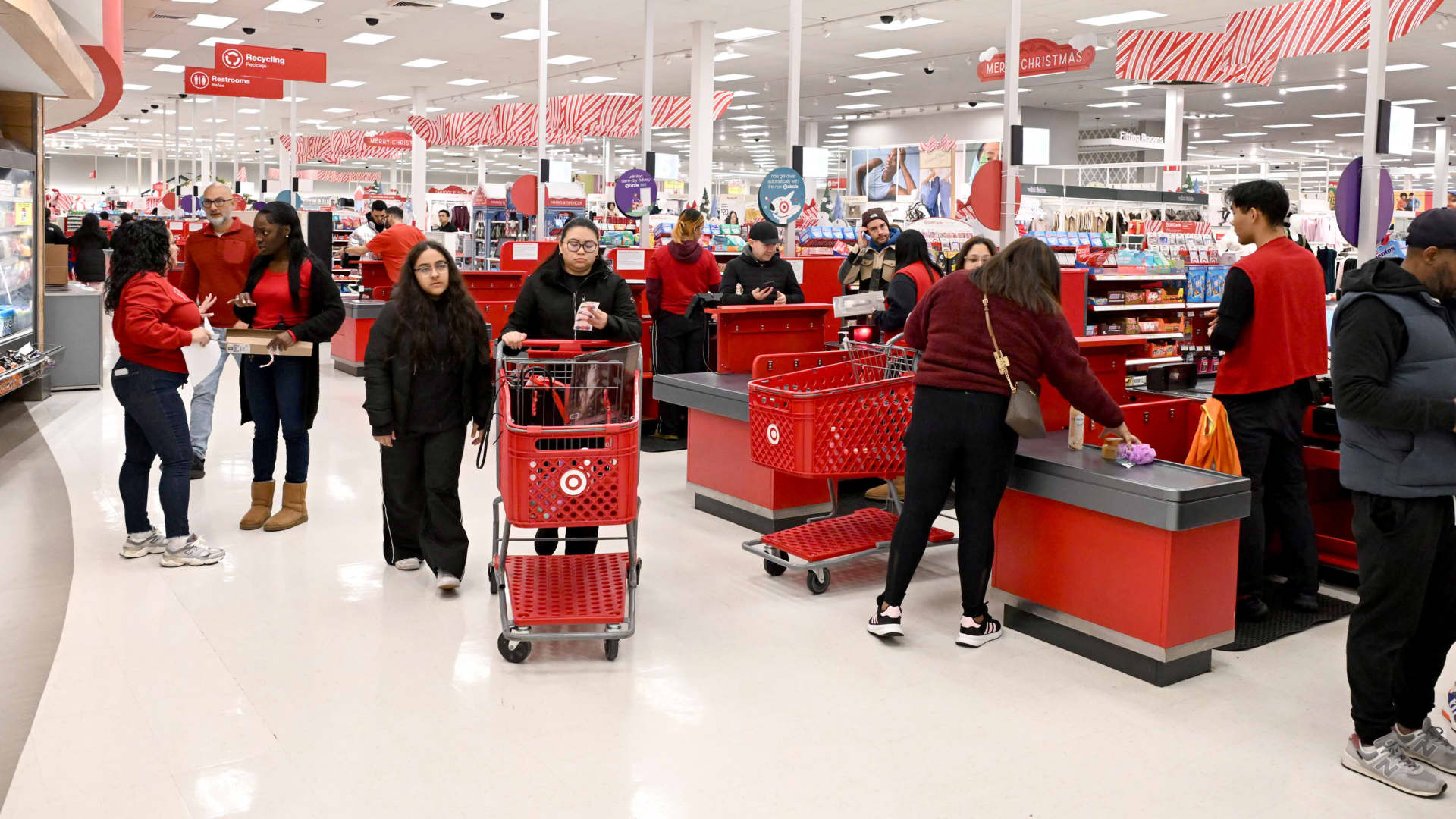

Target said Monday it was beefing up store staff but eliminating about 500 jobs at distribution centers and regional offices as it tried to win back shoppers who complained of less tidy shelves, out-of-stock items and longer checkout lines.
In an internal employee memo obtained by CNBC, the big-box retailer said it is making changes to how it manages and oversees stores to improve the customer experience, one of the main goals of the company’s new CEO, Michael Fiddelke.
To do that, Target said it would reduce the number of store districts — the geographic areas in which its nearly 2,000 stores are located and which have dedicated staff — and devote money to more hours for front-line store employees.
As part of the changes, Target is laying off about 500 people, including about 100 at the store district level and about 400 across its supply chain locations, the internal email said.
“This change also strengthens our ability to significantly increase payroll in our stores – primarily in labor and overtime where it is most needed, but also in new customer experience training for every team member in every store,” the email said.
The email was written by Adrienne Costanzo, director of stores, and Gretchen McCarthy, director of supply chain and logistics, and sent to Target employees within its corporate headquarters and store field teams Monday afternoon.
A Target spokesperson declined to specify how much additional investment is planned for Target stores, but said the announcement would not change starting salaries for store employees, which range from $15 to $24 an hour depending on location.
For Target, this organizational change marks one of the first changes under the leadership of Fiddelke, the company’s former CFO and COO, who took office on February 1.
Fiddelke took the helm as the company aims to return to growth. Its annual revenue has remained roughly flat for four years and the company cut 1,800 positions across the company last year, its first major layoffs in a decade.
Customers, sellers and investors say the company has weakened in some of the key areas where it previously excelled. For example, some shoppers said Target lost its edge with attentive customer service and trendy, fashion-forward products that earned the company its nickname “Tarzhay.”
The company has also faced backlash and boycotts from its customers due to a series of political and social stances in recent years, including its decision to sell and then remove certain Pride Month products, its adoption and reversal of major diversity, equity and inclusion initiatives and, most recently, for failing to speak out against rising immigration enforcement in its hometown of Minneapolis.
Along with Target’s self-inflicted struggles, the company has faced stiffer competition from peers like Walmart and a more difficult economic context. Consumers have been more selective in recent years about discretionary purchases and impulse items — Target’s sweet spot — while paying more for necessities like groceries and rent.
In an interview with CNBC at Target’s Minneapolis headquarters in October, Fiddelke said his top priorities as CEO would be restoring Target’s reputation for style and design, providing a more consistent customer experience and using technology to accelerate the business.
But he said Target had to simplify an operation that had become more complicated for store managers and employees in recent years because they not only stocked shelves, but also prepared orders for curbside pickup or packed boxes headed to customers’ homes.
“If you’re a store manager now, yes, you’re supporting your customers in store and you’re also running a fulfillment business that has become quite large,” he said in the October interview. “And I think we totally understand now: ‘All right, we need to make sure we both do really well and it’s more complex than it was before.'”
Last year, the company made another change to the store in an attempt to clean up and streamline its operations. Nearly all of Target’s online orders are fulfilled in stores, taking more time from store employees and backstage staff. In response, the company overhauled its online strategy, designating some stores as places where employees pick and pack online orders to ship to customers’ homes and abandoning them at other locations altogether.
Target is expected to share more details about its turnaround strategy, as well as its holiday quarter results and full-year guidance, on March 3. It will host an investor event at its Minneapolis headquarters.