


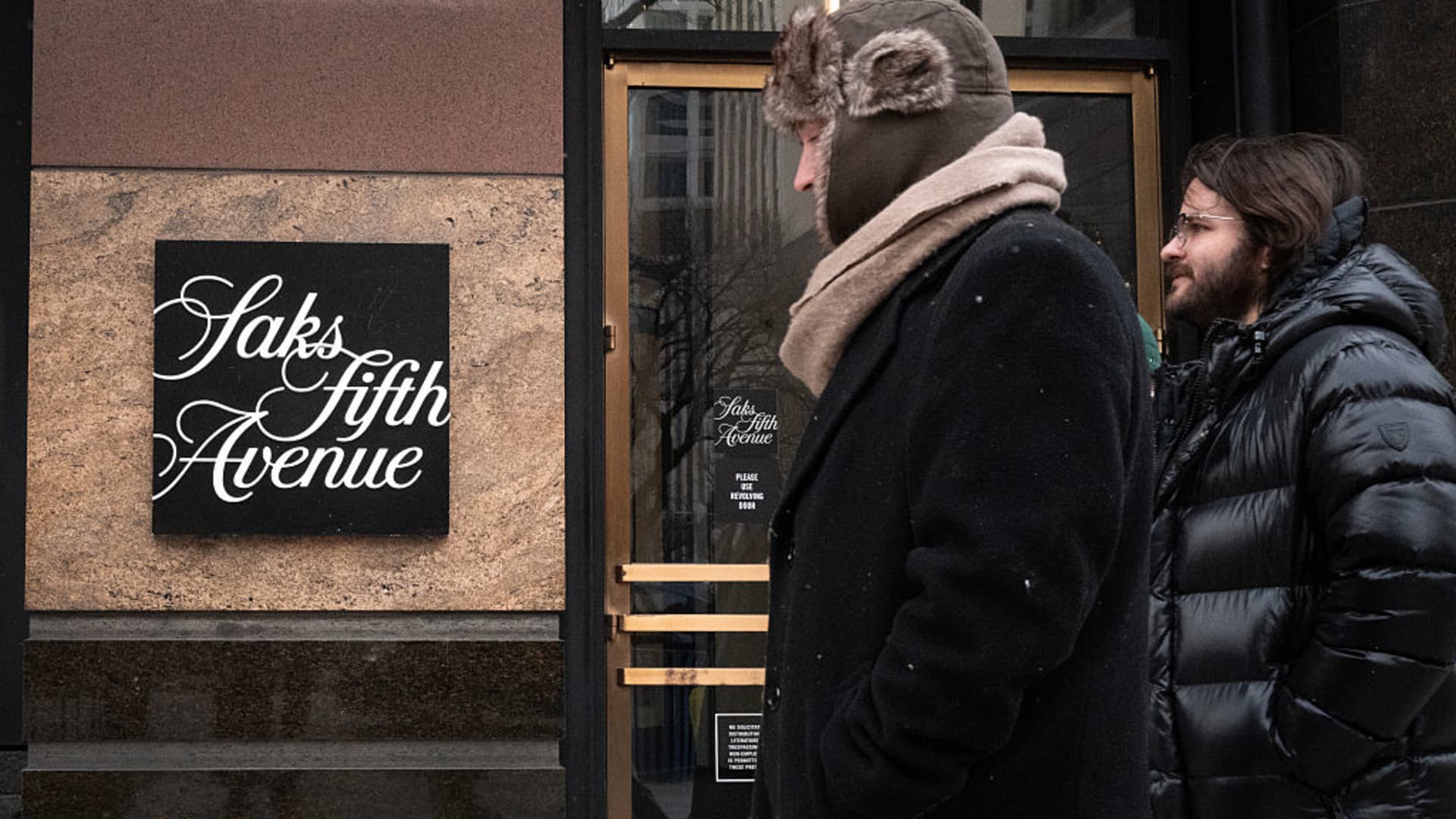
Pedestrians walk past a Saks Fifth Avenue store in Chicago on December 30, 2025.
Scott Olson | Getty Images
Embattled retail chain Saks Global is struggling to scrape together as much as $1 billion in financing to keep its business afloat during a possible Chapter 11 bankruptcy filing, CNBC has learned.
The luxury chain is working to obtain a “debtor-in-possession” loan, which would allow it to finance its operations in the event of a possible declaration of bankruptcy, sources familiar with the matter said. But investors have so far shown little interest in lending Saks money because they are skeptical the company will be able to reorganize and repay them, said the sources, who spoke on condition of anonymity because the discussions are private.
Even if DIP lenders are repaid before other creditors during bankruptcy proceedings, they don’t always get back their full investment, and some investors fear that could happen if they financed Saks, the sources said.
The historic 159-year-old department store, which now owns Neiman Marcus and Bergdorf Goodman, is both a destination and a symbol of luxury fashion, known for stocking big brands like Chanel and Dior alongside newcomers like Good American. Across the company, Saks Global has more than 70 luxury stores offering a full range of products and approximately 100 off-price locations.
Since Saks failed to pay interest to bondholders late last month, only a “limited number” of investors have expressed interest in financing the DIP loan, while a number of others have declined to get involved, the sources said.
Saks declined to comment on investor interest in its fundraising efforts.
A wide range of companies invest in companies that may be on the verge of bankruptcy, including large banks and private equity firms. However, the only firms likely to be interested in investing in Saks at this stage are either liquidators who also have investment vehicles or alternative asset managers with experience in distressed retail, a source said. Yet even some of those investors declined to get involved in Saks’ DIP loan, the sources said.
Liquidation is one of several potential outcomes currently facing Saks. However, if he is unable to obtain a DIP loan, which would be used to pay for essential expenses such as payroll, rent and inventory, this scenario would be more likely. The retailer is already struggling to pay these costs.
Failure to find financing would prevent Saks from filing for Chapter 11 bankruptcy, giving the company a chance to reorganize and potentially find a buyer willing to resume continued operations. It could then be faced with bankruptcy (Chapter 7), reserved for liquidation.
It could mean the end of one of the most legendary department stores in history, whose Fifth Avenue flagship store, considered by some to be its most valuable asset, became a global destination.
Meanwhile, Saks is also in talks with liquidators for a number of stores being closed, but not yet for the entire chain, the sources said.
Saks’ problems have grown since it acquired longtime rival Neiman Marcus in a $2.7 billion deal in 2024, largely financed by debt.
The tie-up between the two rivals was expected to create a luxury retail powerhouse capable of better rationalizing costs and better negotiating with sellers.
Instead, Saks struggled to pay its suppliers on time, leading to stock shortages and lower sales. The slowdown in the overall luxury market, whose growth has stagnated in recent years, has compounded the problems.