


Trans-Pacific View author Mercy Kuo regularly engages subject matter experts, policy practitioners, and strategic thinkers from around the world for their diverse perspectives on U.S. Asia policy. This conversation with Winston Ma, Esq. — investor, lawyer, author and adjunct professor in the global AI and digital economy; partner of Dragon Global, an AI-focused family office; and Assistant Professor and Executive Director of the Global Public Investment Funds Forum at NYU School of Law – is the 515th in “The Trans-Pacific View Insight Series.”
Describe the reasons for excluding investors from China and Hong Kong in SpaceX’s IPO.
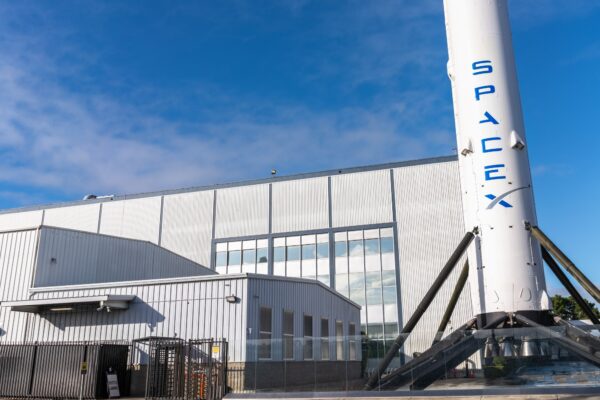
The most striking fact about SpaceX’s exclusion is that it came from the American side and not from Beijing. Underwriters led by Goldman Sachs and Morgan Stanley were instructed in early June to reject all orders from mainland China and Hong Kong, citing the ITAR. [International Traffic in Arms Regulation] defense-adjacent aerospace technology compliance. That order came a full week before the June 11 offering priced at about $135 per share, valuing the company at nearly $1.8 trillion and raising about $75 billion, the largest IPO in history.
In our 2020 interview, we discussed my book “The Unicorn Hunt“, where I documented how CFIUS [the Committee on Foreign Investment in the United States] and FIRRMA [the Foreign Investment Risk Review Modernization Act of 2018] has gradually developed what is considered sensitive technology. Rather than risk a drawn-out, retrospective national security challenge that could complicate the deal after closing, SpaceX voluntarily executed an aggressive jurisdictional preclearance — a private review done before a regulator imposes it. An American company voluntarily excluding the second largest pool of investable capital in the world shows you how self-restraint on national security has become normal for any American company with dual-use technology and global capital ambitions.
Explain the importance of Beijing State Council Decree 837 and Trade Secret Regulations.
Executive Order 837 grew out of the Meta-Manus affair – the first time Beijing has ordered the unwinding of a transaction made under its Foreign Investment Security Review Framework, establishing that redomiciliation to Singapore does not cut off China’s regulatory reach over technology it considers strategically of Chinese origin. Signed on June 1 and entered into force on July 1, it now codifies this principle in a formal structure of 34 articles governing outbound technology transfer. A parallel trade secrets regulation, the first major revision since 1998, again classifies AI model weights, algorithms and training data as protectable state assets.
As a lawyer admitted in both New York and China, I consider that China’s “CFIUS moment”: the same basic logic on form that Washington has long used to block incoming agreements, now deployed by Beijing to control outgoing agreements. The “Singapore washing” strategy – offshore, reincorporate, then sell to an American buyer – is now formally dead. Decree 837 is this conclusion which takes the form of law.
Examine the content and impact of Xi Jinping’s January 30 Politburo speech published in Qiushi.
If Decree 837 constitutes the defensive architecture, Xi’s Qiushi directive is the offensive model. Published by the CCP magazine Qiushi on May 31, five months after his speech, his speech cited quantum technology, biomanufacturing, hydrogen and fusion energy, brain-computer interfaces, embodied intelligence and 6G as China’s “new economic growth points” to be cultivated through “extraordinary measures.”
This is not a model-level discourse; it directs state resources to the layers below and alongside AI models – energy, human capital, embodied intelligence – on the same foundation on which the National AI Fund’s subsequent DeepSeek investment rests.
Sequencing tells you that Beijing’s AI strategy is architectural. As I argued in The Diplomat in 2021it builds the entire stack, layer by layer, with the legal framework and capital deployment evolving in a coordinated sequence.
What is the Chinese public’s perception of SpaceX’s IPO?
This is the question that Western media coverage answers least well, because the framework inside China differs fundamentally. The exclusion was interpreted domestically less as a punishment than as a confirmation — proof that pioneering Chinese companies must develop comparable capabilities rather than wait for access to U.S. capital markets. It’s the same logic that drove DeepSeek’s decision to run its V4 model natively on domestic Huawei Ascend silicon rather than restricted Nvidia chips, at about a seventh the price of comparable Western models.
Having spent a decade within China’s sovereign capitalist system, I would describe the mainstream reaction as tone-deaf rather than aggrieved. Domestic capital markets already viewed advanced technology assets as strategic infrastructure rather than common stock before the exclusion was announced. The SpaceX restriction does not introduce a new grievance; this closes a loop that both sides had already started to close on their own.
Assess the implications of SpaceX’s IPO on the Sino-US competition for AI sovereignty and dominance.
As I observed in a recent Financial Times editorialTrump is inspired by the Chinese model of sovereign AI. The headline is that both countries are now actively pursuing sovereign AI strategies. In June, China’s National AI Fund secured the only voting stake in DeepSeek’s first round of external financing – a 50 billion yuan raise in which the Fund’s own position featured voting rights and no lock-ups, a structure that all other investors were denied. That same month, the Trump administration considered taking an equity stake in OpenAI, building on the precedent of its $8.9 billion stake in Intel last year.
Excluding the SpaceX IPO is the same sovereign logic expressed as restriction rather than acquisition: controlling who is allowed inside the stack, not just who owns it. Every institutional investor with cross-border exposure to AI or hard technologies now operates under two regimes that are simultaneously hardening. The competition for AI sovereignty is no longer about who builds the best model, but rather who controls access to capital, chips and now public markets that finance future growth.