


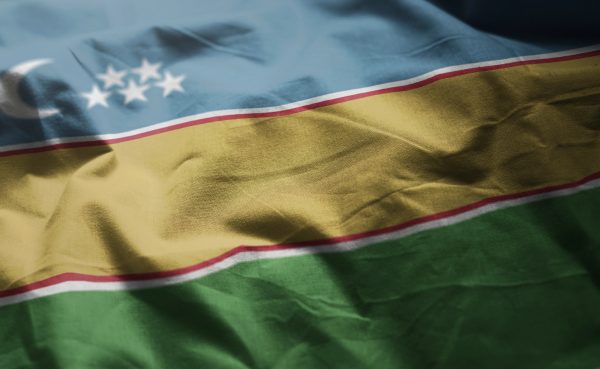
Four years after security forces opened fire on largely peaceful protesters in Nukus, the capital of Karakalpakstan, the truth about one of Central Asia’s deadliest episodes of political violence remains obscured. The Uzbek government’s investigative committee never published its findingsand the identities of those killed have not been officially revealed.
As a result, independent verification of the death toll remains impossible. Families continue to wait for answers, while the international community still does not have a full accounting of what happened during the July 2022 crackdown in Karakalpakstan.
Washington is, however, preparing to deepen its economic relations with Uzbekistan.
Uzbekistan is expected to join the World Trade Organization (WTO) this year. And once that happens, the U.S. Congress should consider granting Permanent Normal Trade Relations (PNTR) to Tashkent, thereby permanently lifting the remaining trade restrictions associated with the Jackson-Vanik Amendment.
Before taking this step, lawmakers should ask a simple question: What happened in Karakalpakstan and why has the Uzbek government still not fully accounted for it?
A PNTR designation is different from annual waivers (as Uzbekistan was granted under Jackson-Vanik) or temporary trade preferences. Once granted, it definitively normalizes commercial relations according to American law. Congress therefore has a rare opportunity to question whether one of Central Asia’s most serious unresolved human rights crises has been adequately resolved before permanently removing one of the few remaining points of influence in bilateral relations.
The July 2022 protests began after authorities proposed constitutional amendments that would have removed Constitutional recognition of Karakalpakstan as a sovereign republic in Uzbekistan and removed its constitutional right to hold a referendum on independence. Thousands of residents gathered in Nukus to oppose the changes. Security forces responded with a force that United Nations experts described as excessive and unjustified. An unverified number of people were killed, hundreds were injured and hundreds more were arrested. Reports of torture and ill-treatment soon followed.
What happened next is less widely understood. Facing widespread domestic unrest and international criticism, President Shavkat Mirziyoyev withdrew proposed amendments regarding Karakalpakstan.
Broader constitutional reform, however, continued. A few months later, Uzbekistan resumed the process of constitutional reform and, in April 2023 voters approved a new constitution that resets presidential term limits, allowing Mirziyoyev to start counting his years in office again and potentially remain president until 2040.
The amendments affecting Karakalpakstan were only withdrawn after security forces had already suppressed the protests. Broader constitutional reforms, however, remained intact, including provisions that reset presidential term limits. This contrast has received far less attention than the protests themselves, but it speaks volumes about the direction of political reforms in Uzbekistan.
If constitutional reforms aimed to modernize governance, why did political power become more centralized? Why are significant opposition parties still absent from the Uzbek political system? Why do journalists, lawyers, bloggers and peaceful activists continue to face criminal prosecution? And why, four years later, do so many fundamental questions about the events in Nukus remain unanswered?
Among those imprisoned after the events was Dauletmurat Tajimuratov, a lawyer, journalist and human rights defender who peacefully opposed the constitutional amendments. In February 2023, he was sentenced to 16 years in prison following procedures criticized by international observers. In 2026, his sentence was extended after new criminal proceedings which raised new concerns about the due process and the independence of the judiciary.
United Nations experts and the United Nations Working Group on Arbitrary Detention concluded that Tajimuratov’s detention was arbitrary and called for his immediate release. Reports of torture, deteriorating health, denial of adequate medical care and increasingly harsh conditions of detention continue to cause concern among citizens. international human rights organizations.
Tajimuratov’s case illustrates a broader pattern. Rather than greater openness after the tragedy of 2022, independent observers continue to document arbitrary detentions, restrictions on civil society, and pressure on independent journalists and activists.
None of this constitutes an argument against closer U.S. engagement with Uzbekistan. Central Asia is of growing importance to Washington’s economic and strategic interests. But deeper engagement must not come at the expense of accountability for serious human rights violations.
The issue before the US Congress is not limited to trade. The PNTR is not just another step in expanding economic ties; it is an enduring expression of the relationship between the United States and Uzbekistan.
Congress should consider whether PNTR should be granted before Uzbekistan demonstrates significant progress toward accountability for the July 2022 crackdown. Publish the findings of the commission of inquiry; identify those who were killed; credibly investigate allegations of torture and excessive use of force; freeing political prisoners, including Dauletmurat Tajimuratov; and allowing meaningful access to independent international observers would demonstrate that the government is prepared to address the consequences of repression rather than leaving them unresolved.
In the aftermath of the July 2022 crackdown, Michelle Bachelet, then UN High Commissioner for Human Rights, called for a transparent and independent investigation, warning that “people should not be criminalized for exercising their rights.”
The United States has every reason to pursue a constructive partnership with Uzbekistan, but stronger economic ties should be accompanied by significant progress in transparency, accountability, and the rule of law. These objectives are not contradictory; they reinforce each other. Before granting permanent and normal trade relations, the US Congress should ensure that the unresolved legacy of Karakalpakstan is not treated as a closed chapter simply because it has become a troublesome chapter.