


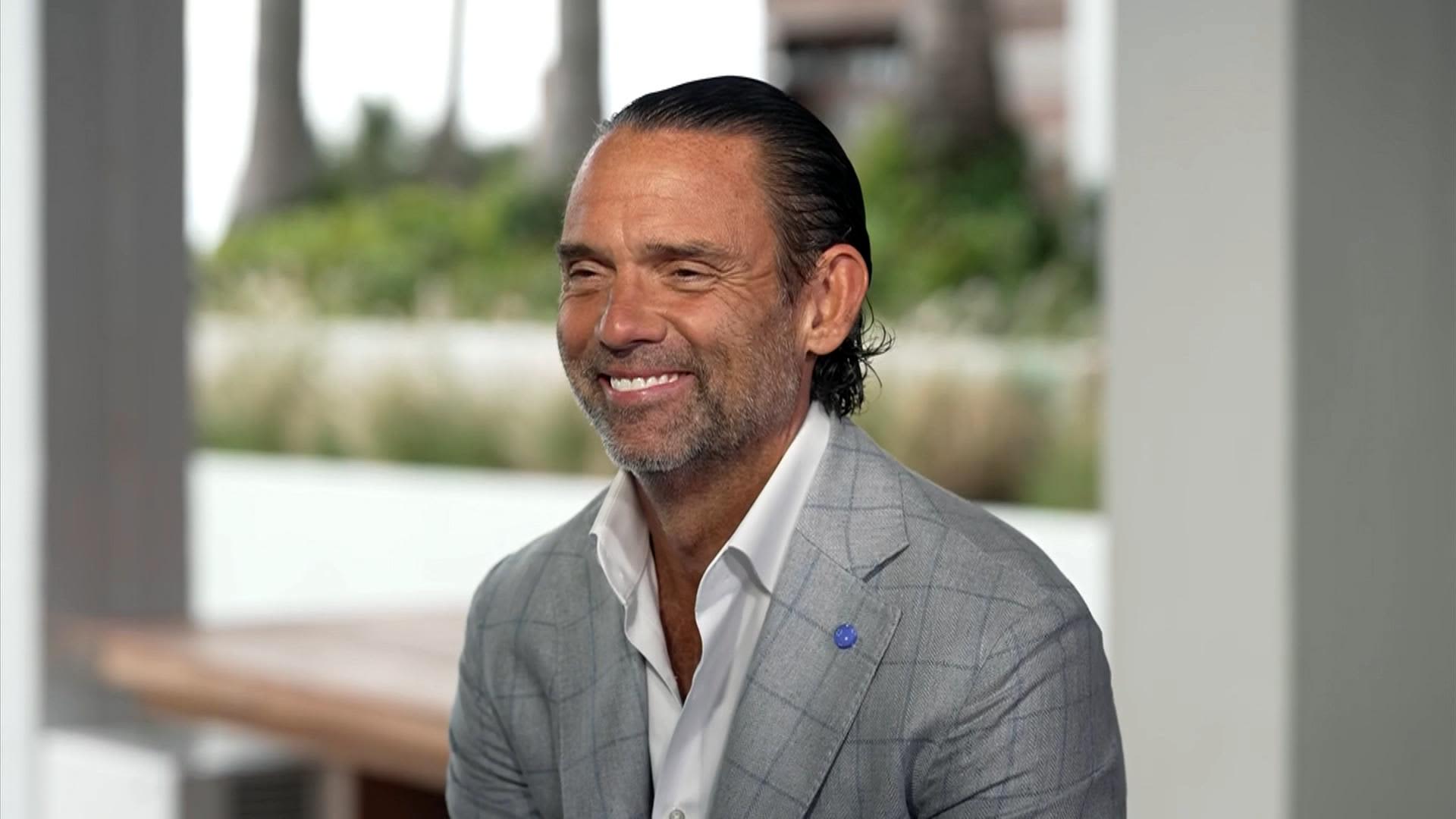

A potential withdrawal of Middle East sovereign wealth funds could drain hundreds of billions of dollars from the artificial intelligence boom and threaten key data center projects, according to tech investor Jack Selby.
Middle Eastern investors – including sovereign wealth funds and government entities – will account for about a quarter of global investment in AI over the next five years, said Selby, managing director at Peter Thiel’s family office, Thiel Capital. If the war in Iran drags on and the United Arab Emirates, Saudi Arabia and other countries divert investments toward national reconstruction, lost capital could spill over to data centers as well as public and private technology companies, he said.
“I think markets have underestimated the importance of the Middle East region for AI-related capital spending and AI infrastructure,” Selby told CNBC in an interview. “If the Middle East starts taking some of these projects offline or canceling them, the impact on the market could be much, much, much greater than what they are currently suggesting.”
Selby’s warning has implications for wealthy investors, family offices and funds betting on the AI business. A Wall Street Journal report this week on OpenAI’s missed revenue targets has roiled tech and chip stocks. Selby said the Middle East poses another funding risk as AI companies have become more dependent on the region for capital.
Oracle, Nvidia And Cisco are part of the OpenAI campus in the United Arab Emirates to develop 5 gigawatts of capacity. Microsoft plans to invest $15 billion in the UAE by 2029. Sovereign wealth funds from the UAE and Saudi Arabia have become key investors in private AI companies, with OpenAI reportedly seeking $50 billion from the region’s big funds earlier this year.
Selby estimates that half of AI funding in the Middle East goes to data centers located in the region. The other half is allocated to projects and data centers around the world. Middle Eastern funds and companies have already started canceling various shipping and commercial contracts citing force majeure, he said. The big risk is that they also start to take out data centers.
“The markets don’t seem to understand that this is a very real situation,” he said. “It’s very volatile. I hope and pray that it returns to some semblance of normalcy soon. But it seems to me that the markets are undervaluing this volatility and this risk.”
Beyond war, AI also faces a broader risk of overinvestment and speculation, Selby said. Like the dotcom bubble, he said investors and founders are indiscriminately driving up the values of AI and infrastructure companies. He said the AI boom is consuming much more capital, with major hyperscalers expected to spend more than $700 billion this year. The destruction of wealth will therefore eclipse the losses caused by the collapse of Internet companies.
“AI is a revolutionary technology, make no mistake,” he said. “But it can also be an exceptional bubble. There will be extreme winners and there will also be real losers. And those losers will be an order of magnitude larger than any losers we’ve seen before. The AI bubble, when it bursts, will have at least one more zero, probably two or three more zeros than the Internet bubble. It will be tens, if not hundreds, of billions of dollars.”
He cited Google as an example of the dot-com era. Just as investors were driving up the values of Ask Jeeves, Infoseek, AltaVista, and other early search features, Google came along and upended all of their business models. He said similar disruptions could come to current AI leaders.
Selby’s AI strategy is to avoid crowds. With a second fund he’s launching at Copper Sky, his Arizona-based venture fund, Selby is targeting tech companies outside California, New York and Massachusetts. He said tech companies in those three states — particularly the clusters at Stanford University and the Massachusetts Institute of Technology — are attracting all the capital and attention. The best values are therefore elsewhere, he says.
“Probably over 90% of all venture capital investments went to California, New York and Massachusetts, an all-time high,” he said. “The good news is if you go out of those three states and go to the other 47 states, the transactions and investment opportunities are much, much, much cheaper, and that’s what we’re doing.”
Selby declined to give many details about Thiel’s family office, saying only that Thiel invests in big founders rather than specific industries. Thiel Capital, which made the Inside Wealth Family Office 15 list of most active family office investors, has invested in everything from German drone maker Stark and gene therapy startup Kriya Therapeutics to AI staffing firm Mercor and space research firm Varda.
Yet as a director of a family office and head of a venture capital fund that raises money from family offices, Selby said the biggest mistake many family offices make today is making their own direct investments. A Citibank survey last year found that seven in 10 family offices invested directly in private companies, without going through a fund.
Selby said he understands why family offices are striking out on their own, given the dismal performance of private equity and venture capital funds and the lack of distributions. He said two-thirds of venture capital firms are “zombie venture capital firms,” which neither raise nor return money and are expected to close their doors.
“Family offices are so frustrated with people like us not returning their capital, so why shouldn’t they try it themselves?” » said Selby. “They couldn’t do much worse than a lot [VCs] “I made in terms of investments, without giving back money, by having marks on paper.”
At the same time, however, he said typical family offices are not adequately trained to evaluate, value and restructure private companies. Many ultra-wealthy investors are more motivated by status and peer pressure than by disciplined returns.
“When these fancy people go to their cocktail parties in Manhattan, they must have something interesting to talk about,” he said. “All their friends talk about some version of [direct investments]. So they must have something to add to the conversation. So they do the same thing. The Greek shipping magnate who lives in Manhattan knows nothing about rockets. So why is he investing in SpaceX? Because he just wants to have something fun to say at the fancy cocktail party. »