


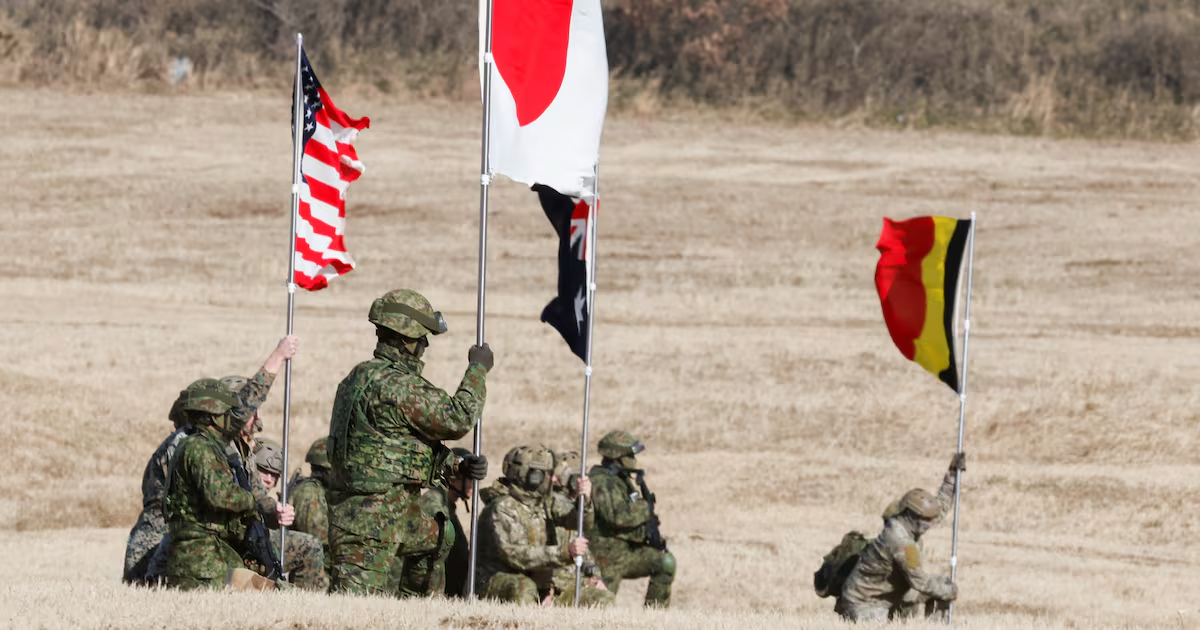
Japan’s dispatch of combat troops to participate in upcoming exercises in the Philippines is a sign of a shift toward a tiered, more networked security structure in the South China Sea, still anchored by the United States, region analysts told Radio Free Asia.
At least 1,000 Japanese troops are expected to participate in Balikatan exercises in April alongside Philippine and U.S. forces, in a move that carries historic weight but is increasingly viewed through the prism of changing regional security dynamics.
The South China Sea has become one of Asia’s most controversial strategic hotspots in recent years, with overlapping territorial claims and frequent maritime clashes. China’s use of so-called “gray zone” tactics – coercive actions that fall short of open conflict – has increased pressure on smaller Southeast Asian states, pushing them to strengthen their external security ties.
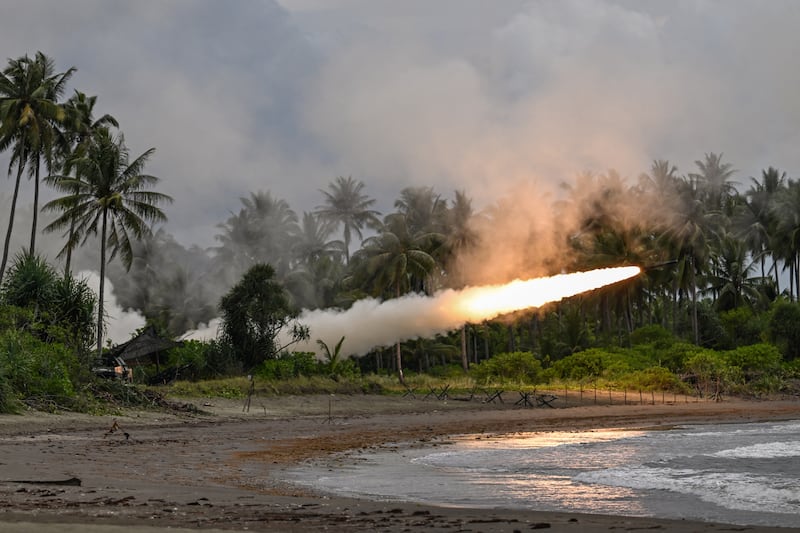
“Japan’s involvement in Balikatan and the broader move toward minilateral cooperation suggest a gradual shift toward a more networked security system in the Indo-Pacific,” Joseph Kristanto, a research analyst at the S. Rajaratnam School of International Studies in Singapore, told RFA.
This change is visible in the way the exercises themselves have evolved. Balikatan began in the 1990s as a relatively small-scale bilateral training exercise focused on counterinsurgency and disaster response.
But now it involves thousands of troops and simulates large-scale conflict scenarios, including amphibious operations, missile defense and critical infrastructure protection.
The exercise also expanded beyond its initial format between the United States and the Philippines.
In recent iterations, countries like Japan and Australia have taken a more active role, with Japan participating as an observer since 2012 and last year sending a single frigate and about 150 non-combat personnel.
The increased participation of several countries reflects a broader desire to strengthen interoperability between like-minded partners.
New areas such as cyber warfare, space warfare, and information warfare have been incorporated, reflecting how regional planners now view potential conflicts as spanning multiple fronts rather than being limited to conventional naval or territorial conflicts.
Regional anxiety
Yet the emergence of these overlapping partnerships does not signal a post-American security order.
“This doesn’t replace the traditional U.S.-led hub-and-spoke system. Instead, it adds another layer to it,” Kristanto said.
The “hub-and-spoke” model – in which the United States maintains bilateral alliances with countries like Japan, South Korea and the Philippines – has underpinned Asia’s security architecture for decades.
What’s changing, experts say, is the growing number of connections between these “spokes,” as countries deepen cooperation with each other through joint exercises, intelligence sharing and defense agreements.
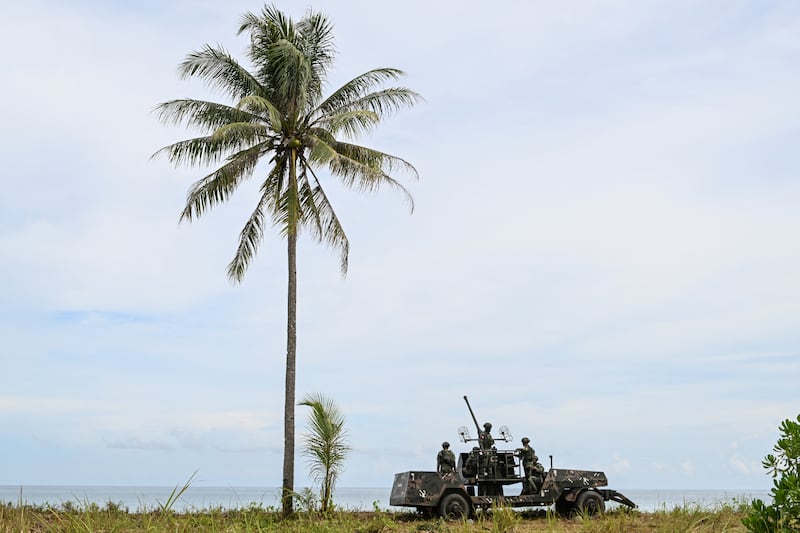
This stratification is partly due to uncertainty about Washington’s long-term capacity in the region, even if Washington remains the primary guarantor of security.
U.S. security commitments in Europe and the Middle East, alongside domestic political debates over defense spending, have prompted some regional governments to protect themselves by strengthening ties with other partners.
“This latest move comes amid growing regional concern over U.S. defense engagement and capability in the Indo-Pacific region,” William Yang, a Northeast Asia analyst at the International Crisis Group, told RFA.
Countries like Japan are therefore stepping up their efforts – not to replace the United States, but to strengthen deterrence and share the burden.
“These measures are certainly not intended to take away from the central role that the United States plays in terms of regional deterrence,” Yang added.
Concretely, this change results in deeper operational integration. The exercises are no longer just about presence or signaling, but aim to test how forces coordinate across multiple domains and contingencies, Yang said.
“The participation of more partners such as Japan could lead to real operational changes over time, not just symbolic changes,” Kristanto said, noting that exercises are becoming “more integrated and more multilateral.”
Japan’s participation also builds on a steady expansion of defense ties with the Philippines, including joint maritime exercises and the provision of coastal radar systems.
These capabilities are aimed at improving Manila’s ability to monitor its waters, particularly in disputed areas where Chinese vessels have maintained a persistent presence.
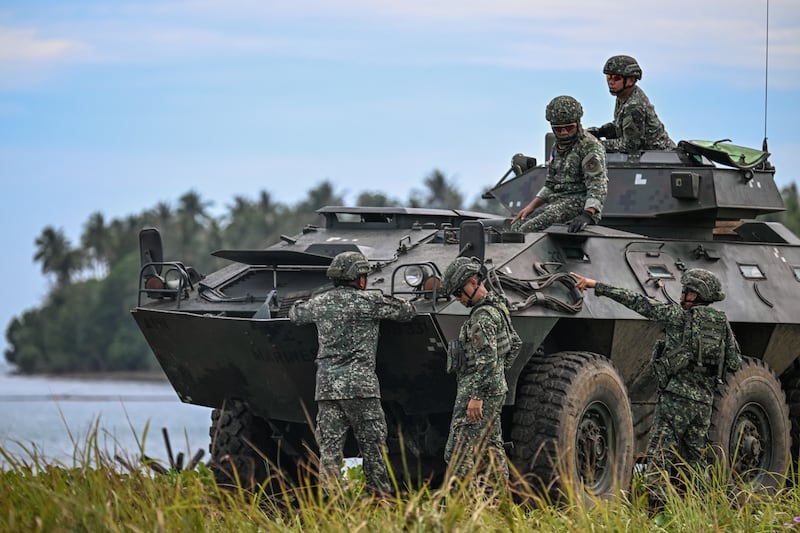
“Japan’s more proactive participation in bilateral military exercises and patrols as well as multilateral military exercises could help strengthen regional coordination and capacity building in areas such as countering Chinese operations in the gray zone and strengthening the maritime domain awareness of Southeast Asian states,” Yang explained.
“A more connected network”
What would be the first deployment of Japanese combat troops to the Philippines since World War II — when Imperial Japan occupied what was then U.S. territory — is not lost on public opinion.
Protesters in the Philippines say Tokyo has unresolved war grievances with Manila, while demonstrators in Japan fear the move is part of a broader trend of increased militarism contrary to the spirit of their pacifist constitution.
Experts told RFA that Japan’s participation reflects a broader effort to link security arrangements across the Indo-Pacific into a more coherent framework.
For Shen Ming-Shih, a researcher at Taiwan’s National Defense and Security Research Institute, this is seen most clearly along the so-called first island chain — a strategic arc stretching from Japan through Taiwan to the Philippines.
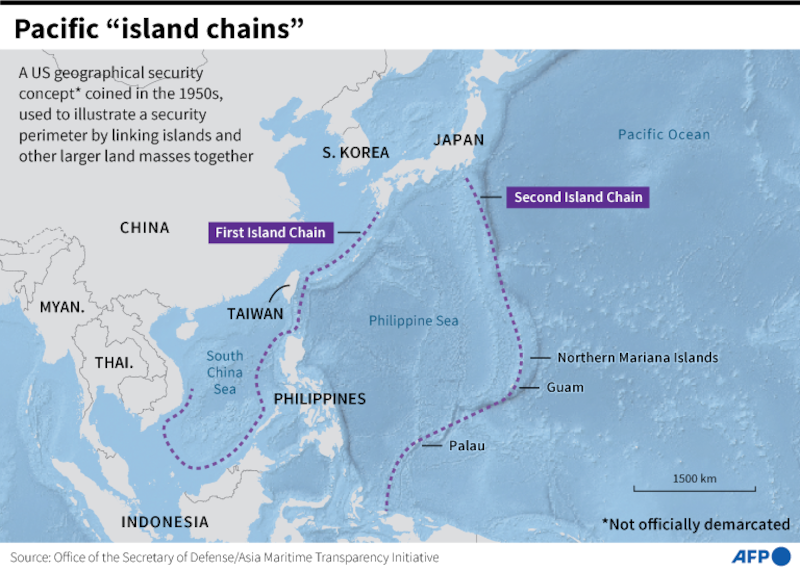
“Japan is now participating with ground troops in addition to warships this year, indicating a growing possibility of joint responses by the United States, Japan and the Philippines to conflicts in the South China Sea,” Shen told RFA, highlighting “an increasing likelihood of alliance-based joint operations and defense industry cooperation.”
Although no formal multilateral alliance exists, these overlapping partnerships are beginning to resemble a more connected network.
“Through the alliances between the United States and these countries, a U.S.-centered alliance network will be formed,” Shen said.
For Beijing, this growing coordination is likely to be viewed with concern, especially as exercises become more frequent and more operationally substantial.
“The expansion of these minilateral groupings will likely be viewed with concern,” Kristanto said, warning that it “increases the risk of misperception and sharper responses in contested areas.”
Edited by Eugene Whong.