


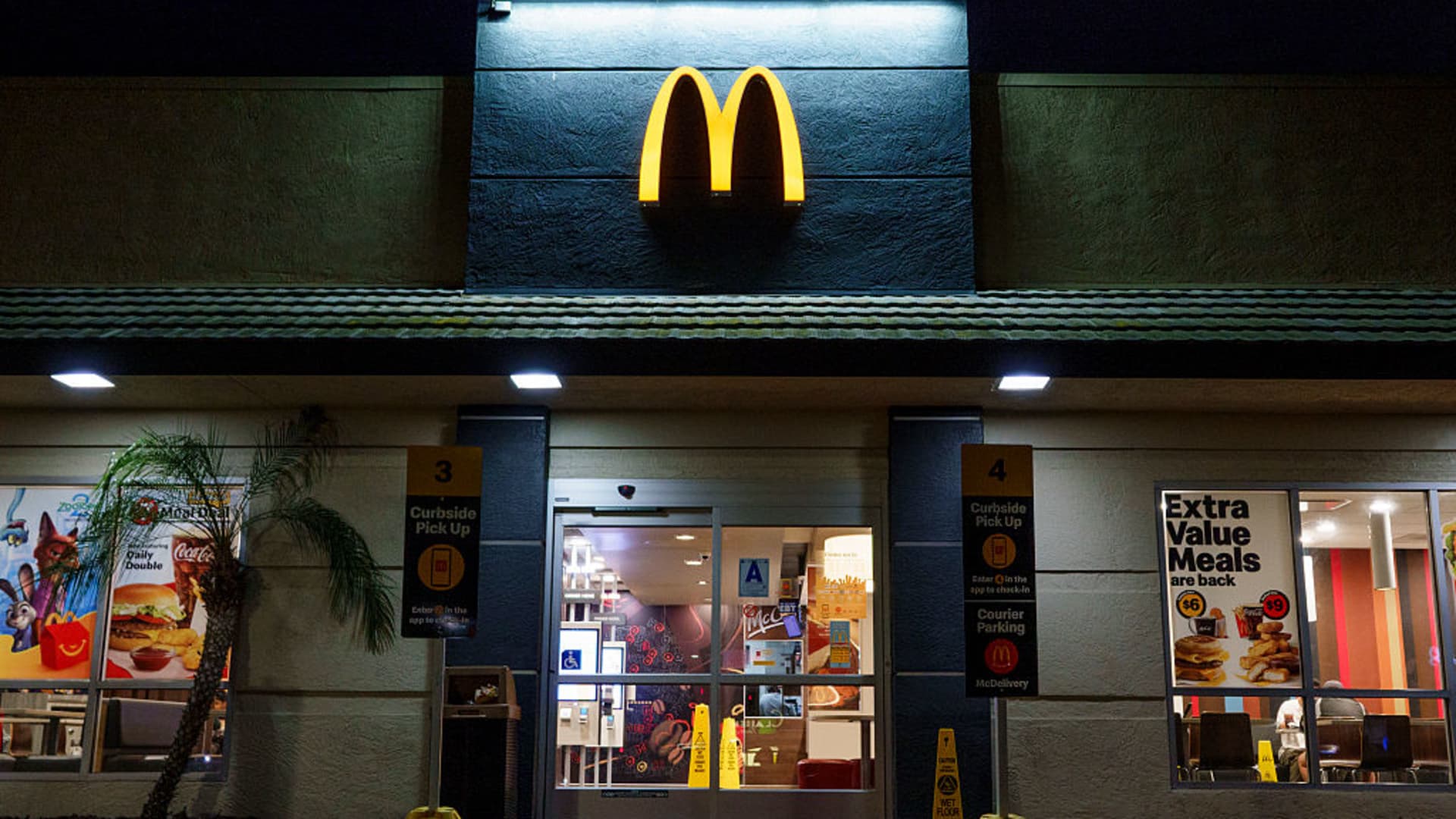
The restaurant industry has spent the last 18 months trying to figure out how to reach consumers in a hypercompetitive and unequal economy. McDonald’swhich is expected to report results after the bell on Wednesday, has doubled down on its value messages to customers via extra-value meals and snack wraps, which will likely help boost sales this quarter.
But the focus on value has sometimes led to frustrations among some operators in the chain.
The company rolled out new franchise standards for McDonald’s operators on Jan. 1, including evaluating locations on how their prices provide value. McDonald’s said its owners are still able to set their own prices, but the standards nonetheless shape and define how franchisees — who operate 95% of McDonald’s restaurants — run their stores.
A cohort of operators are asserting themselves in their ability to set prices independently.
The National Owners Association, an independent franchise advocacy group, adopted a Franchisee Bill of Rights in August and distributed it in an email to members last month as the standards took effect, according to a copy of the message viewed by CNBC.
The final right in the bill is the “right to set prices without fear of recourse,” which states that “franchisees, as independent owner/operators, have the right to set menu prices for their restaurants based on their own business judgment and market conditions.” This right exists regardless of the pricing decisions of any national, regional or local cooperative or franchisor initiative. affiliated entities.
It also lists the “right to renew and transfer,” giving owners the “absolute right to a fair and reasonable opportunity to renew franchise agreements… subject only to objective and clearly stated approval standards.”
In December, McDonald’s told operators it would begin assessing value as part of updating its franchise standards. Continued non-compliance could result in sanctions or even dismissal.
At the time, the company said its new standards would provide “greater clarity…to ensure that every restaurant delivers consistent and reliable value across the entire customer experience,” according to a memo reviewed by CNBC.
In a statement, McDonald’s told CNBC that the business model creates the opportunity for entrepreneurs to be in business “for themselves, but never by themselves,” adding: “As a franchisor, we have a responsibility to protect the strength and integrity of the brand and ensure that every owner/operator upholds the standards that make McDonald’s successful, for the benefit of all.”
Some traders have bristled at the changes in recent Wall Street research. In a two-part survey of 20 McDonald’s operators released last month, Kalinowski Equity Research wrote that it asked franchisee contacts whether they supported changes to national franchise standards. For context, McDonald’s said it has some 2,000 owner/operators in the U.S. franchise system.
“It turns out that every single franchisee who answered this question said ‘No.’ This is the first time in the more than 20-year history of our McDonald’s franchisee survey that everyone responding to a yes or no question all provided the exact same answer,” Kalinowski wrote.
Kalinowski also asked operators to quantify their relationship with McDonald’s corporate arm on a scale of 1 to 5, with 1 being poor and 5 being excellent. The average response received was 1.37, a “fairly notable drop from the October 2025 average response of 1.71,” the survey said.
This is not the first time that certain operators and McDonald’s have clashed. Tensions have emerged in recent years over the coming into force of a restaurant rating system and changes to the way restaurant agreements are renewed.
Still, McDonald’s stock was one of the best performers during a terrible year for the restaurant industry in 2025, rising 5%.
Kalinowski’s respondents also rated their business prospects for the next six months on a scale of 1 to 5, with 1 being poor and 5 being excellent. The average response was 2.58, the best of the 11 quarters. Last quarter, CEO Chris Kempczinski said full-year cash flow should be strong for operators alongside value investments being made.
“Throughout the quarter, McDonald’s appears to be doing a better overall job of promoting value to quick-service consumers, or at least it is doing it significantly better than some other major quick-service burger concepts,” Kalinowski wrote.
Likewise, another company, BTIG, recently upgraded the stock.
“We expect the shift in strategy and value perception to lead to the most significant earnings growth for the company since 2023,” BTIG wrote.