


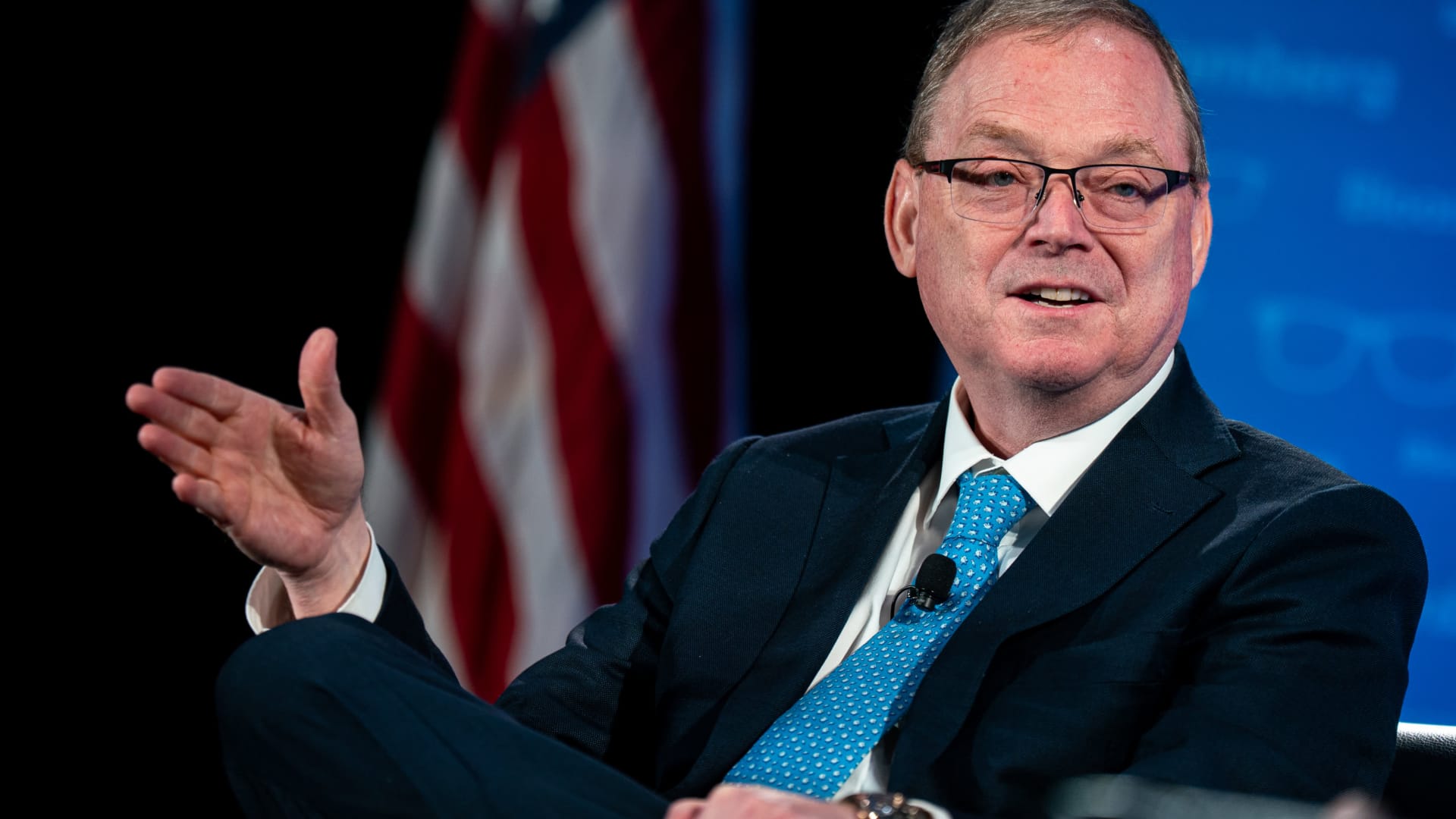
Kevin Hassett, Director of the National Economic Council, speaks to the media outside the White House in Washington, DC, U.S., Friday, October 24, 2025.
François Chung | Bloomberg | Getty Images
White House economic adviser Kevin Hassett said Friday that major U.S. banks could voluntarily provide credit cards to underserved Americans to meet President Donald Trump’s affordability push.
A week ago, Trump called on banks to cap credit card interest rates at 10 percent, an idea that was roundly rejected by industry executives and their lobbyists this week.
Now Hassett, who is director of the National Economic Council, is proposing a different plan, one more narrowly focused on consumers who don’t have access to credit but have the income to justify lines of credit.
“They could potentially voluntarily provide for people who are in an ideal situation, because they don’t have a lot of financial leverage because they don’t have access to credit, but they have enough income and stability in their lives to be credit worthy,” Hassett told Fox Business host Maria Bartiromo.
“We hope this won’t necessarily require legislation, as great new ‘assets’ will be introduced to people and provided voluntarily by banks,” he said.
These comments could indicate that the administration is scaling back its push for sweeping changes to the card industry that would be difficult to implement and could hurt consumer spending and the economy.
This week, bankers discussing fourth-quarter results said that instead of offering cards at a 10% interest rate, as Trump announced by Jan. 20, banks would simply close many customers’ accounts.
Hassett’s statement responded to a question about whether bankers would be forced to comply with Trump’s interest rate cap, a move that would likely require new legislation.
The administration has spoken with “CEOs of many major banks who think the president is right,” Hassett said.
A major credit card issuer and a bank lobbyist representing major lenders told CNBC they have not yet had discussions with the administration about the “Trump card” concept.
