



The executive director of the WNBA Players’ Association told CNBC she remains “frustrated” by the lack of progress toward a new collective bargaining agreement as the league’s new deadline to reach an agreement approaches.
“We are a little frustrated with the current situation, but we remain true to our principles,” Terri Jackson, executive director of the WNBPA, told CNBC Sport in an interview. “We remain open to the fact that these negotiations will continue, because they must. We will stay at the table as long as it takes, and we hope that there are enough people on the team’s side to start moving these things forward.”
Jackson told CNBC Sport that she continues to negotiate with WNBA Commissioner Cathy Engelbert, her counterpart in the talks, on a new labor agreement for the league. The CBA, or employment contract, between the WNBA and its players expired on October 31, but the deadline to reach a new agreement was extended to January 9 when the parties failed to reach an agreement.
WNBA players are seeking significant salary increases to get a larger share of the league’s revenue growth. The WNBA signed a media rights deal last year that amounted to a six-fold increase in revenue. The league and its players have been actively negotiating for months on issues related to salaries, benefits, working conditions and revenue sharing.
Jackson declined to elaborate on where negotiations have stalled, citing his nondisclosure agreement, but added: “Everything still seems to be a sticking point.”
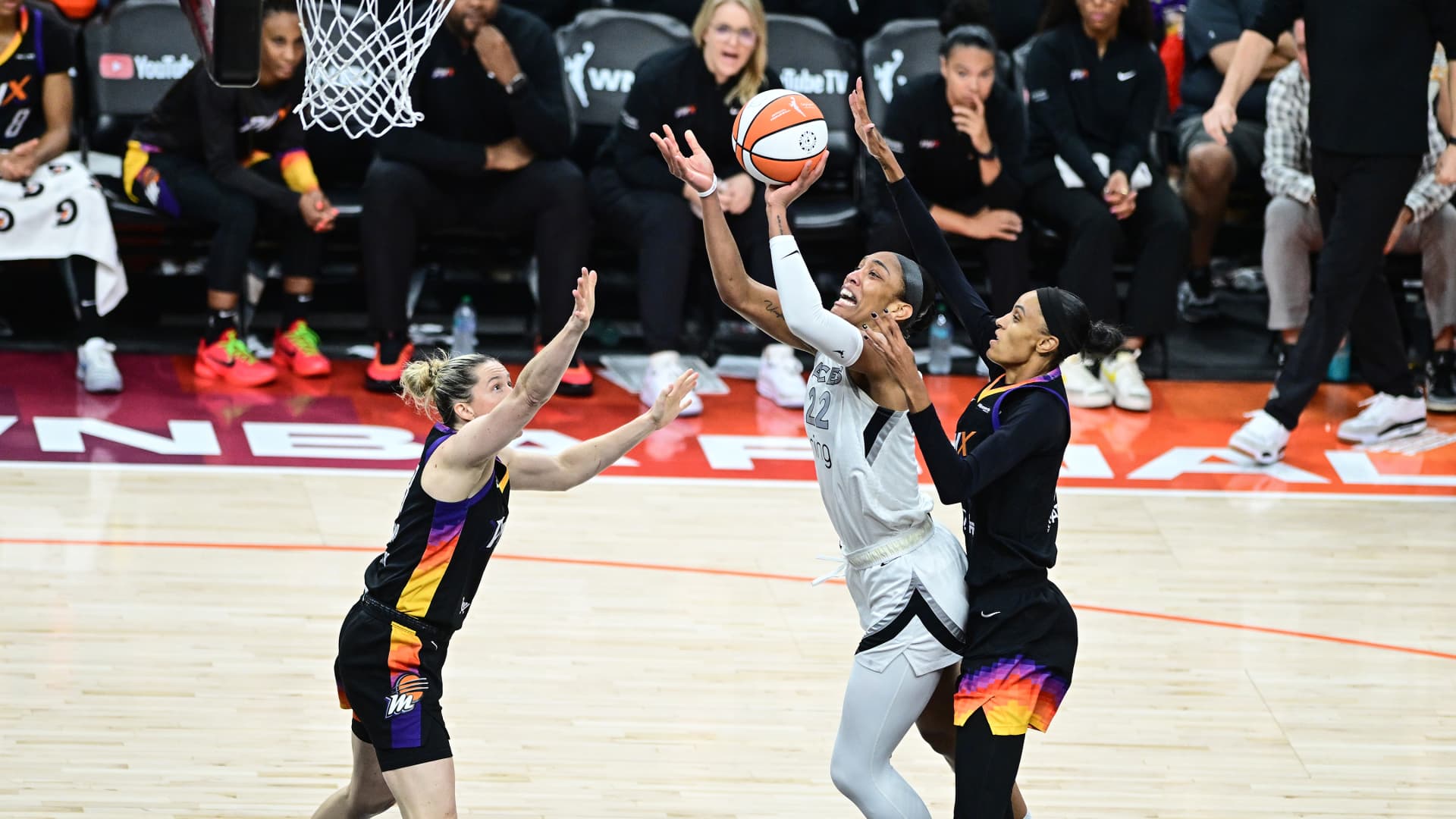
A’ja Wilson of the Las Vegas Aces drives to the basket against the Phoenix Mercury during Game 4 of the 2025 WNBA Finals at PHX Arena in Phoenix on October 10, 2025.
Mike Lawrence | National Basketball Association | Getty Images
The WNBA’s latest proposal to the union includes an increase in the maximum salary to $1 million per season, with revenue sharing that could raise that figure to more than $1.2 million, according to a person familiar with the matter. The current supermax contract is just under $250,000 per year.
The new proposal would also increase the average annual salary to more than $500,000, with the league minimum salary expected to be more than $225,000, the person said. Currently, the league minimum is just over $66,000.
Under the proposed revenue-sharing deal, players would see salary increases built in each year. The terms of revenue sharing were a point of contention during negotiations. The WNBPA recently proposed that players receive 30% of total league and team revenues, more than double what the league proposed, The Athletic reported.
Jackson, who is leading negotiations on behalf of the players, said that despite the frustrations, the union remained hopeful of reaching an agreement before the imposed deadline.
“It’s hard for us to understand why we’re so far apart on things that we should be getting close to that should be so easy, but it seems like sometimes the league and the team come into the bargaining room with a mentality that pay equity is optional and pay equity is not optional,” Jackson said.
Jackson stressed that she is working hard to reach a deal by January 9.
“Will there be another extension? There should not be another extension,” she said. “There is no need for another extension. We understand their position and their point of view. They understand our position and our point of view.”
While the WNBA enjoys record growth in viewership, attendance and sponsorship, the only thing that could dampen that momentum would be a work stoppage if the parties can’t reach an agreement, Jackson said. Several WNBA stars have already expressed their desire to avoid any missed games. The WNBA season begins in May 2026.
Engelbert said in October that the league wanted to avoid a lockout.
“Caitlin Clark, Angel Reese, Nneka Ogwumike and Napheesa Collier … have all said it and that a work stoppage would be catastrophic,” Jackson said. “No one wants this to happen.”