


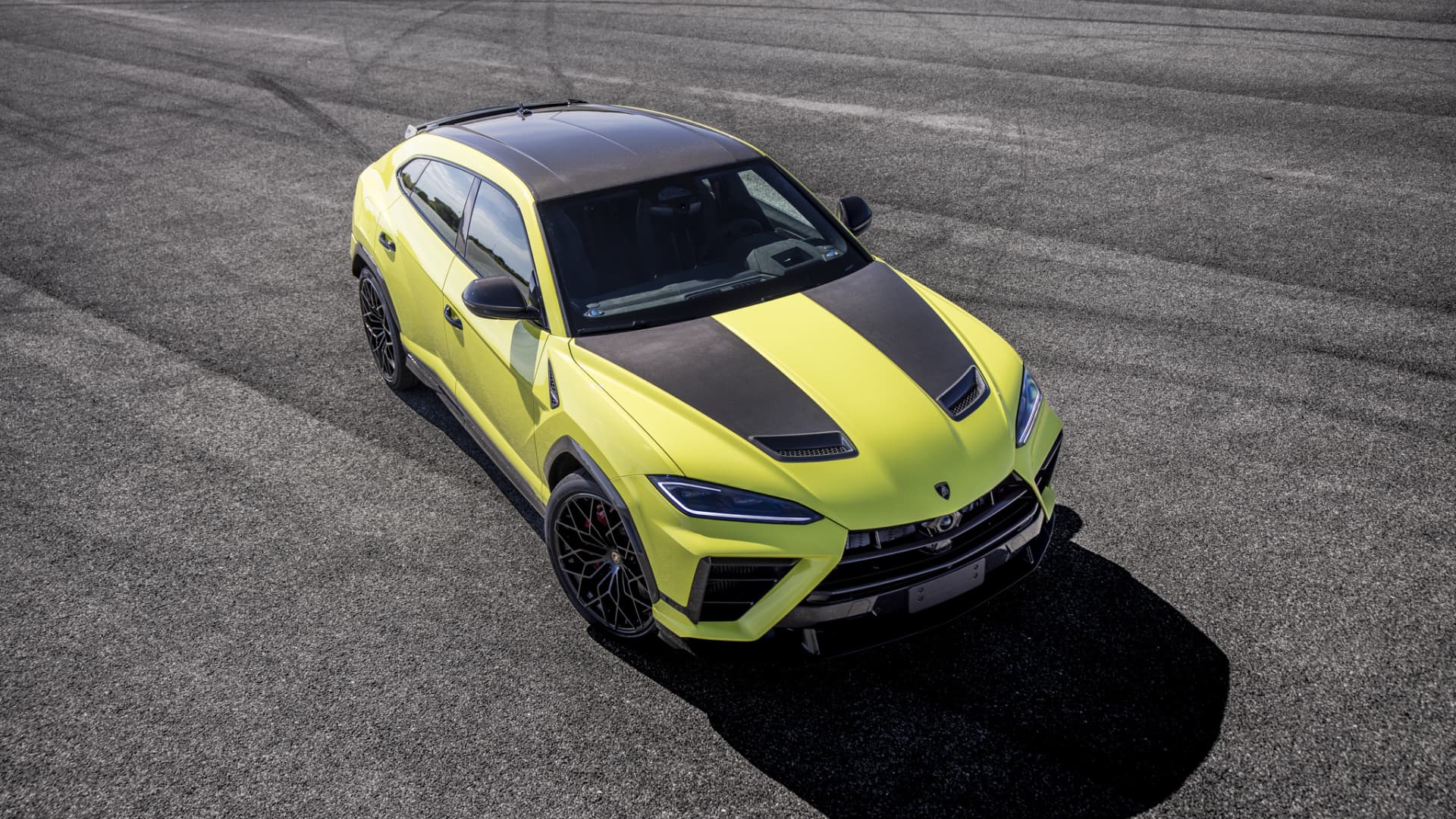
The Lamborghini Urus SE Performante.
Courtesy of Lamborghini
Lamborghini unveiled a new hybrid model with the performance of its Urus SUV on Wednesday, as the Italian automaker continues its shift toward gasoline-powered electric vehicles after abandoning its pure electric vehicle plans.
The Urus SE Performante features a more aggressive exterior design, including a larger grille and hood vents, as well as interior upgrades over current models of the SUV.
Lamborghini calls the new Urus SE Performante the “world’s fastest super SUV,” capable of reaching 0 to 100 km/h, or approximately 0 to 60 mph, in 3.3 seconds and reaching a top speed of 312 km/h, or 194 mph.
The vehicle is a plug-in hybrid electric vehicle, meaning it has a gasoline engine as well as an outlet to charge a battery for enhanced electric performance. It is powered by an electric motor and a 4.0-liter twin-turbo V8 engine, producing 812 horsepower and about 738 foot-pounds of torque, Lamborghini said.
“It’s very important. It’s a game changer,” Lamborghini CEO Stephan Winkelmann told CNBC.
The interior of the Lamborghini Urus SE Performante.
Courtesy of Lamborghini
Lamborghini, which belongs to Volkswagen AGsaid it would release pricing for the Urus SE Performante closer to the arriving vehicle for U.S. customers. The 2026 Urus SE starts between $250,000 and $280,000, depending on the model.
The Urus has played a crucial role in Lamborghini’s success since its introduction almost a decade ago. The vehicle accounts for about 50 percent of the brand’s annual global sales, according to Winkelmann, with Lamborghini’s total sales approaching 11,000 vehicles last year.
The reveal of the new performance PHEV comes months after the company confirmed plans to abandon electric vehicles to continue focusing on hybrid models. Winkelmann declined to say whether Lamborghini would return to gas-only models, but said “never say never” when CNBC asked him about such vehicles.
Lamborghini canceled its electric vehicle plans before rival Ferrari unveiled its first fully electric vehicle, the Luce, in late May. The Luce was met with backlash.
Winkelmann previously declined to comment directly on Luce or the responses it received, but said “innovation is paramount” to success. However, he said innovation should not be done for innovation’s sake or forced on customers.
“By observing the market… we saw that the acceptance curve [of EVs] for our type of customers does not increase, and that is why we decided to move from a fully electric car to a plug-in hybrid car,” he said.
