


Although the 1982 United Nations Convention on the Law of the Sea (UNCLOS) established the fundamental legal framework governing maritime rights and jurisdiction, the absence of judicial interpretation on key issues such as historical rights, the legal status of maritime features, and the basis for generating maritime rights has allowed competing legal narratives to persist and evolve in different directions.
One of the most important legacies of the 2016 South China Sea arbitral award has not been the final resolution of maritime disputes in the region. On the contrary, it has fundamentally clarified the interpretation of maritime rights under UNCLOS. In other words, the award changed the way states formulate and justify their maritime claims under UNCLOS. Thus, the complex and overlapping maritime claims in the South China Sea began to be slowly reframed into a more transparent and clear legal framework.
Reinterpreting maritime rights in the South China Sea
In the South China Sea before 2016, disputes were not only about competing sovereignty claims and overlapping maritime zones, but also about different interpretations of the legal basis for establishing and justifying maritime rights.
Taking advantage of these ambiguities, China adopted a strategy of calculated ambiguity through its “nine-dash” claim, citing historical evidence to justify its claims in the South China Sea. Beijing has highlighted so-called “historic rights” over waters that it says have long been used and exploited by Chinese nationals. Nevertheless, the ambiguous legal meaning and vague geographic scope of the “nine-dash line” have created large gray areas in disputes between China and other claimant states.
The 2016 arbitration award significantly clarified these ambiguities. Rather than addressing questions of territorial sovereignty or maritime delimitation, the court focused on clarifying a number of fundamental legal questions under UNCLOS. In particular, he do influential interpretations on two fundamental questions.
First, with regard to historical rights, the court ruled that the exception regarding “historic title” under Article 298 of UNCLOS could not be used to justify the ill-defined “historical rights” claimed by China. Furthermore, the court confirmed in paragraph 246 of the award that, for States parties to UNCLOS, all pre-existing historical rights incompatible with the convention are replaced by maritime rights established under UNCLOS.
This meant that historical arguments alone could not support an independent legal claim to maritime rights beyond those permitted by the convention. The tribunal therefore concluded that China’s claims regarding historical rights had no legal basis because they were incompatible with the regime of maritime rights and interests established in UNCLOS.
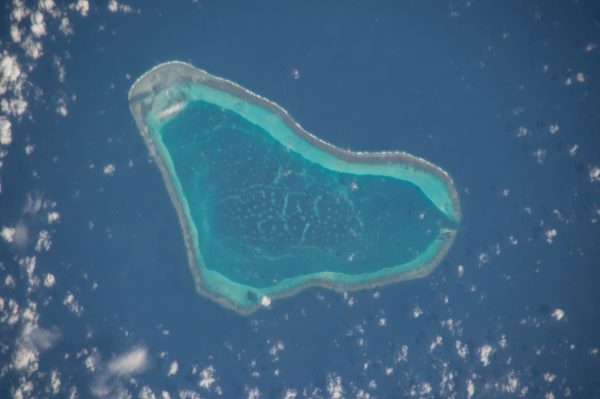
Secondly, the award provides significant clarification of the legal status of maritime formations within the meaning of Article 121(3) of UNCLOS. Prior to this award, although the convention distinguished between islands and rocks, the criteria for determining whether an item could generate an exclusive economic zone (EEZ) and continental shelf had not been fully developed in international practice. This was particularly the case in the South China Sea.
For the first time, Article 121 and paragraph 3 of Article 121 were interpreted in detail by an international tribunal. The court ruled that only those capable of supporting “human habitation” or “an economic life of their own” are entitled to an EEZ and continental shelf under Article 121(3). Elements that do not meet this threshold are only entitled to a territorial sea of up to 12 nautical miles.
The court’s interpretation was based on natural ability of an element intended to support human habitation and economic life, rather than the presence of military personnel or economic activities dependent on external support. Even if this interpretation remains the subject of academic debatethe 2016 award nevertheless provided a much more concrete framework for interpreting article 121(3) than that which existed previously.
Why the arbitral award is not a dead letter
Despite Beijing’s continued adherence to its “Four no’s” policy towards the 2016 Prize (no acceptance, no participation, no recognition and no implementation), the legal significance and practical impact of the decision has never been diminished. Rather, the award has become a framework that is reshaping the broader landscape of disputes in the South China Sea. Over the past decade, coastal states in the region, including China, have been increasingly forced to adjust and reinterpret their maritime claims in light of the legal standards established by the court.
Even if China continues to characterize this reward as “null and void,” it nevertheless modified the legal justification for its claims in the South China Sea. Since 2016, Beijing has gradually reduced its use of the “nine-dash line” while placing increasing emphasis on the “Four Shas” doctrine (referred to by China as Nanhai Zhudao, the South China Sea Islands).
China’s change of course was an attempt to redesign its maritime claims by adopting terminology more closely aligned with that of UNCLOS. This development is evident in China’s official statements since 2009, 2014, 2016, 2020Or 2025which reveal a growing tendency to avoid explicit references to the “nine-dash line” after sentencing.
At the same time, China’s continued efforts to discredit the sentence paradoxically underscore its continued relevance. Beijing would not have invested significant diplomatic, legal and media resources to counter the Prize if it had no value. Such efforts show that the award dealt a direct blow to the legitimacy of China’s maritime claims.
Meanwhile, the Philippines codified key aspects of the award in national law until its 2024 Maritime Zones Actwhich recognizes that high tide features in the Spratly Islands are only entitled to a territorial sea of 12 nautical miles measured from appropriate baselines. This legislative step contributes to ensure continuity in the application of the price regardless of future political changes.
Malaysia’s cautious approach to the award is partly because some of the tribunal’s findings could affect its claims in the South China Sea. Nevertheless, Malaysia’s December 2019 report submission to the Commission on the Limits of the Continental Shelf (CLCS) regarding its extended continental shelf in the northern South China Sea demonstrated that Kuala Lumpur determined its rights to the continental shelf on baselines drawn from its continental coast in accordance with UNCLOS. Malaysia’s approach appears to significantly involve fewer legal uncertainties that affirming extended continental shelf rights to the disputed elements of the Spratly Islands.
Likewise, Indonesia has used legal arguments based on the price at dismiss China’s vague “historical rights.”
The 2016 arbitral tribunal ruling is of great significance to Vietnam. During the arbitral proceedings, Vietnam proactively asserted its legal position through a position statement submitted to the court in December 2014, reaffirming its legitimate rights and interests under UNCLOS. Over the past decade, Vietnam has actively applied the legal principles set out in the award to support its position in the South China Sea. This was particularly evident in the exchange of diplomatic notes at the United Nations between 2019 and 2020.
For example, Vietnam has recognized the award’s conclusion that submerged features and low tide shoals (LTE) cannot be subjected to claim territorial sovereignty and are unable to generate their own maritime zones. This position establishes a solid legal basis for Vietnam to assert its sovereign rights and jurisdiction over entities such as Vanguard Bank, Rifleman Bank, Alexandra Bank and Grainger Bank, and to dismiss attempts to associate these characteristics with the Spratly Islands to fabricate sovereignty conflicts. Vietnam maintains that these features fall exclusively within its jurisdiction as a natural extension of its continental shelf and are not linked to possible territorial claims based on offshore rocks.
This systemic change is proof that the 2016 Prize is not a “dead letter”. Rather than existing solely as a legal document, it has increasingly become an influential legal framework shaping the evolution of disputes in the South China Sea. By redefining the rules of the game, the award encouraged parties to more closely align their positions with international law. Therefore, China’s “four no” policy cannot diminish either the finality or the legally binding nature of the award.
The decision does not lose its validity over time. On the contrary, as it approaches its tenth anniversary, the 2016 Prize has become an integral part of contemporary international law. China’s failure to comply with its obligations simply reflects its continued violation of international law.
The central question for the coming decades is whether this legal and normative influence will ultimately be strong enough to bring China closer to the UNCLOS framework, or whether the centrifugal force of China’s growing power and presence on the ground will prevail. The answer may depend largely on the ability of smaller claimant states, including Vietnam, the Philippines, Malaysia and Brunei, to maintain and strengthen their UNCLOS-based legal positions in an increasingly complex geopolitical environment.