


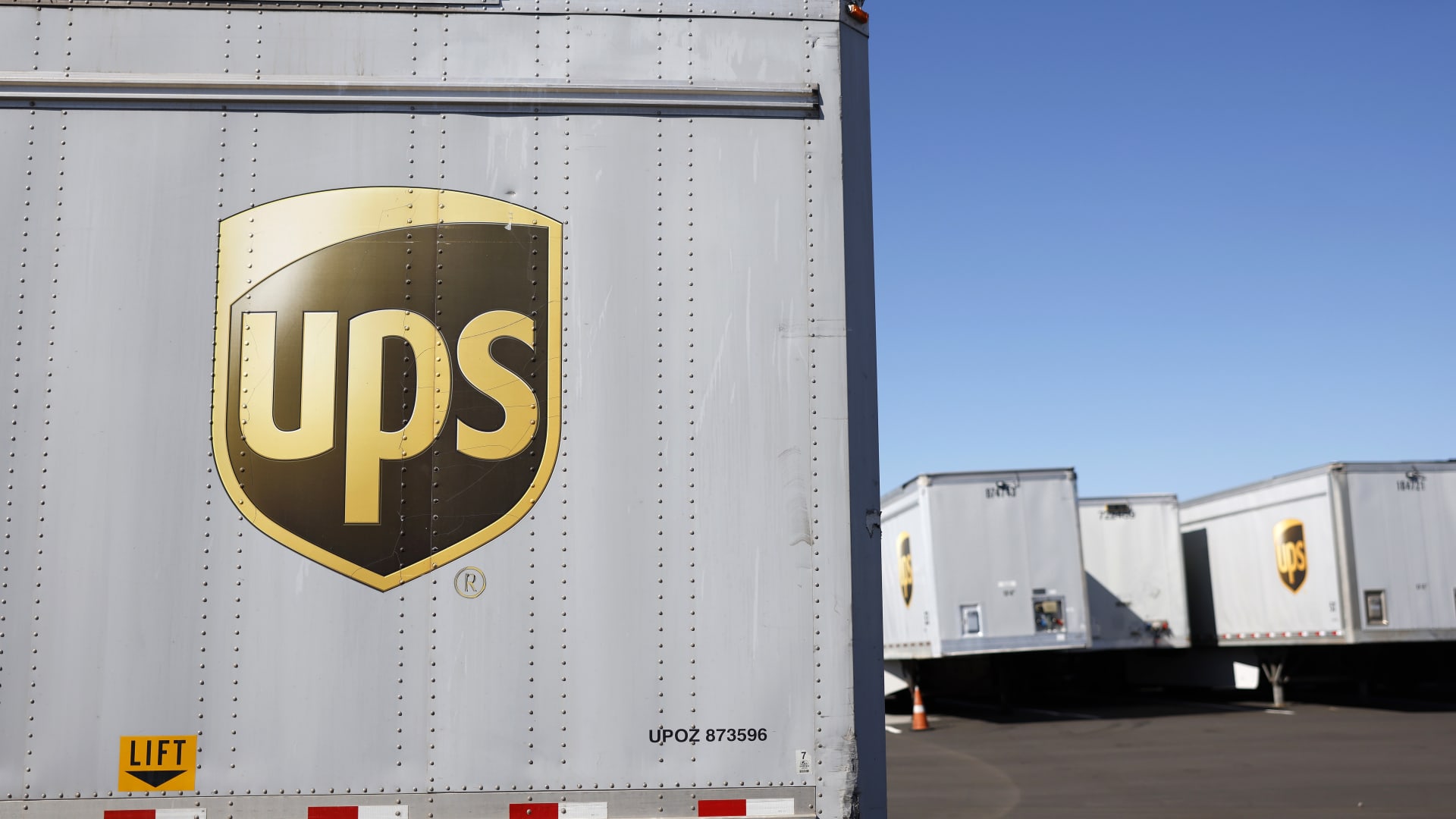
United Parcel Service (UPS) trucks are parked at a UPS depot October 28, 2025 in Vernon, California.
Mario Tama | Getty Images
United Parcel Service is investing $48 million in 27 temperature-controlled facilities as the industry sees a boom in health care logistics, CNBC has learned exclusively.
The facilities, located in America, Europe and Asia, are optimized to move shipments that need to be kept at certain temperatures. The company said the investment would help it anticipate the rise of drugs and pharmaceuticals – like some GLP-1 – that need to be kept at certain temperatures by improving speed and the end-to-end chain of custody.
“Our global transshipment facilities strengthen our end-to-end cold chain capabilities to ensure critical treatments are delivered safely and reliably to patients around the world,” said Kate Gutmann, president of UPS Global, Healthcare and Supply Chain Solutions. “This effort – and all of our work in healthcare logistics – stems from a deep understanding that we do more than move packages.”
Demand for temperature-sensitive biologics is expected to grow at a compound annual growth rate of 8.3% through 2033 and reach a market value of approximately $39.1 billion, according to Growth Market Reports. Many new drugs must be stored at specific temperatures to maintain their effectiveness, UPS said, making health care logistics more crucial than before.
According to the World Health Organization, up to 50% of the world’s vaccines are wasted each year, with a significant portion coming from cold chain storage problems.
“These investments reflect our commitment to continuing to align our end-to-end supply chain to protect innovative treatments and diagnostics, driving better patient outcomes,” UPS Healthcare President John Bolla said in a statement.
UPS’s move comes as the entire industry has seen increasing investment in this area, particularly with the meteoric rise of GLP-1 drugs. Medicines like Novo NordiskWegovy and Ozempic products require refrigeration and strict temperature control during transportation. A November KFF poll found that one in eight Americans takes GLP-1.
UPS CEO Carol Tomé said during the company’s first-quarter earnings conference call in April that health care remains one of the company’s top priorities and growth areas.
“Our global healthcare portfolio has gained market share every year since 2021,” she said on the call. “And in the first quarter of this year, we generated our first quarter of revenue of $3 billion in healthcare, with all three of our segments generating year-over-year revenue growth.”
Tomé added that UPS is committed to continuing to “lean into this space in a meaningful way.”