


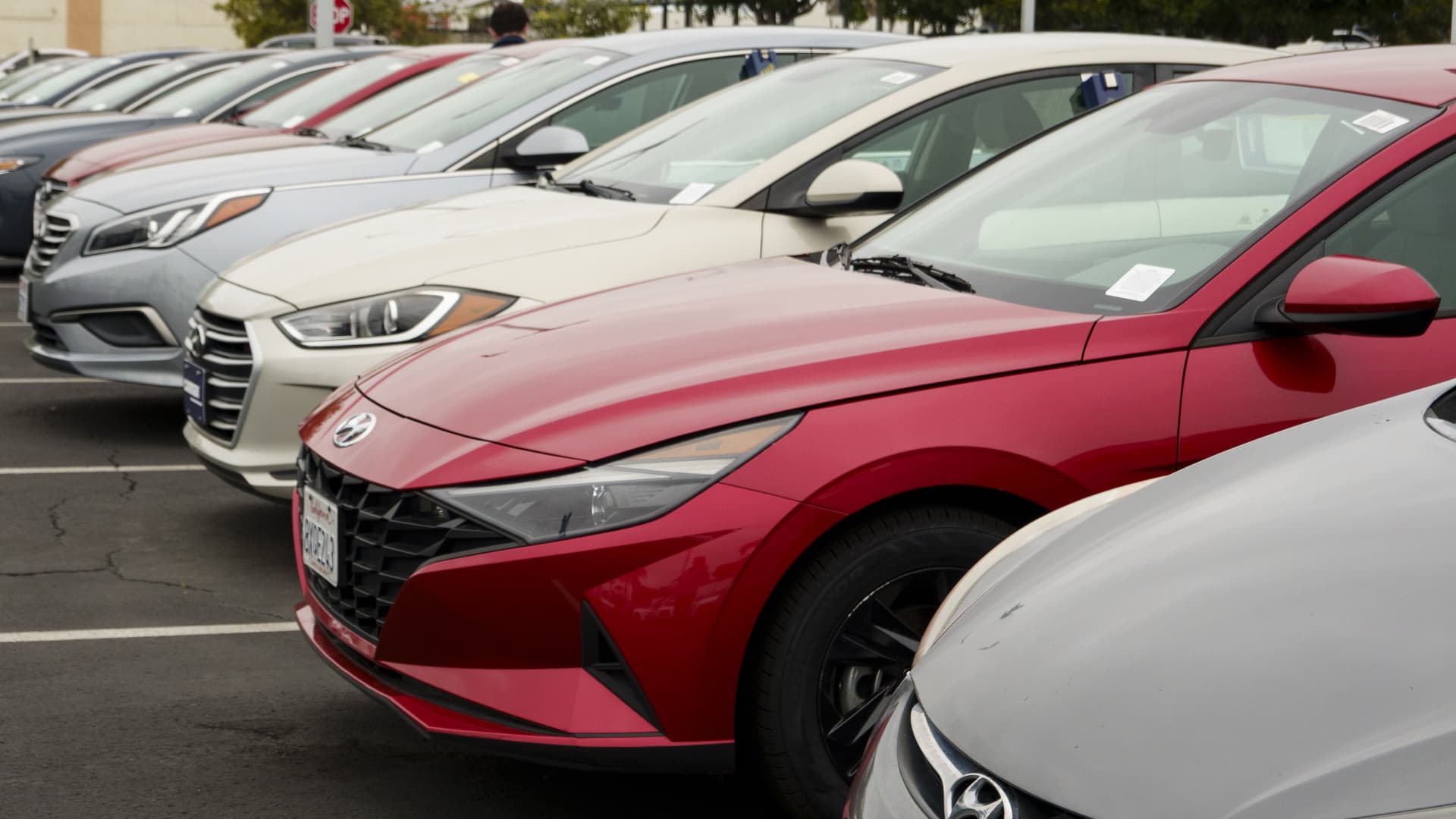

In a country where big trucks are big business, these pickups and SUVs make up a large percentage of auto loans with a large monthly payment, more than $1,000 a month, new data shows.
Experian Automotive’s analysis of more than 5 million auto loans and leases opened in the first quarter shows that nearly 19% of new vehicle loans include a monthly payment of at least $1,000. This is up from approximately 17.4% year over year.
“The assumption is that everything is luxury, high-end, and that’s not the case,” said Melinda Zabritski, head of automotive financial information at Experian Automotive.
Nearly 74% of auto loans requiring owners to pay $1,000 or more each month are for non-luxury models, with the five most popular models being popular pickup trucks, including the Ford F-150, Chevrolet Silverado 1500 and Ram 1500, according to Experian.
Just five years ago, auto loans with monthly payments over $1,000 represented just 5.4% of the market. Then, the global chip shortage hit in 2021 and 2022, and automakers around the world prioritized producing higher-end, more profitable models. Vehicle prices have skyrocketed, as have amounts borrowed for auto loans.
Zabritski said these higher prices have changed the way car and truck buyers think about what it takes to finance the purchase of a new vehicle.
“We haven’t seen a reduction in that MSRP or high loan amounts,” she told CNBC. “I think over time, I think more and more consumers are getting used to the $1,000 payment.”
The average amount borrowed is now at an all-time high of $43,952, and the average monthly payment has also reached an all-time high of $770, according to Experian Automotive. These two phenomena reflect a relatively strong new automobile market.
When it comes to auto loan delinquencies, the percentage of loans with payments more than 30 days late increased slightly to 2% of all new auto loans, with the 60-day delinquency rate also increasing.
Nonetheless, Zabritski noted that delinquency rates remain below 2018 levels.
“The driving force behind 60-day delinquency is actually the subprime market. Lower credit scores will lead to a higher likelihood of default,” she said.