


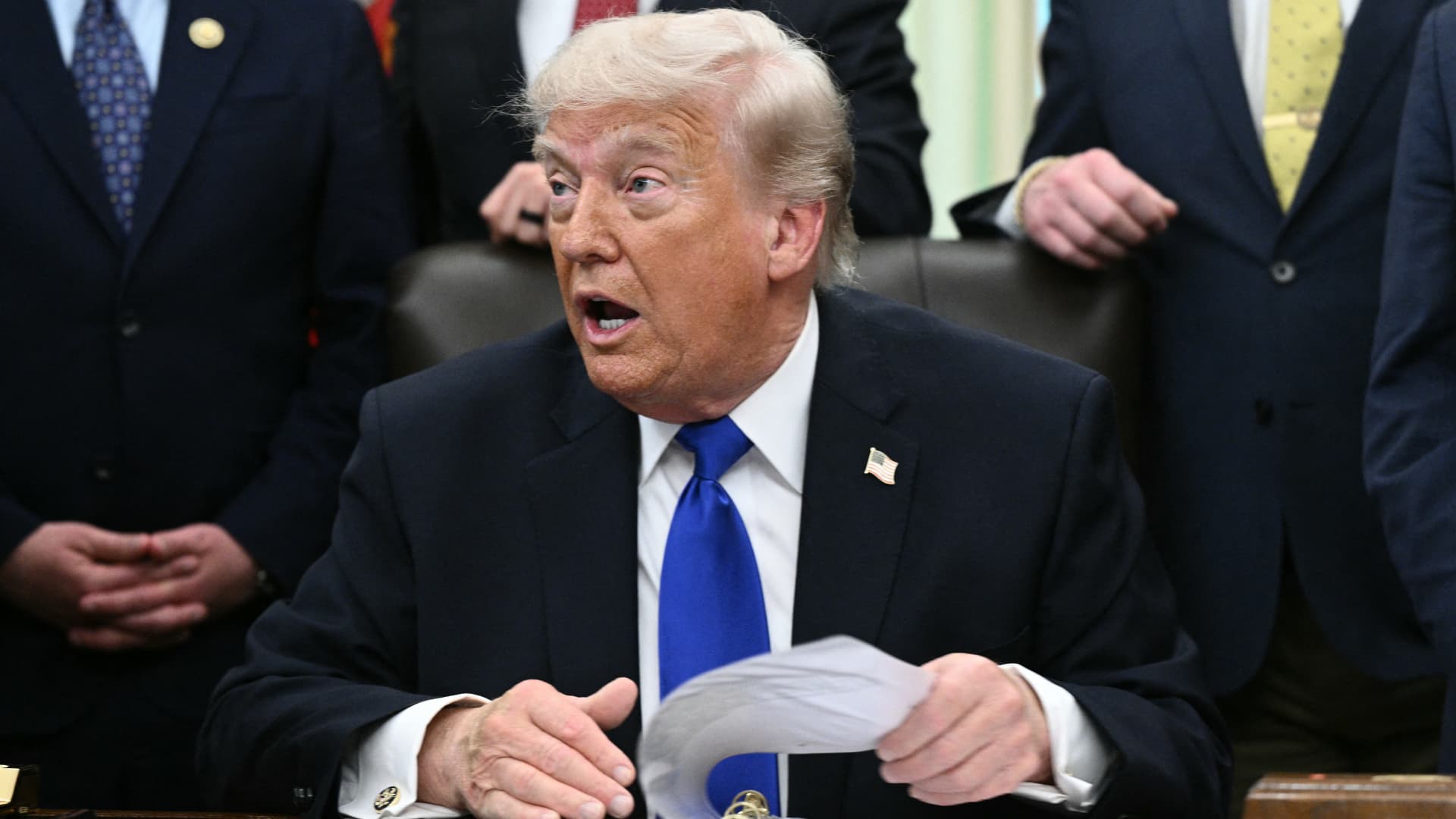

President Donald Trump said he would increase European Union tariffs on cars and trucks to 25%, without specifying what authority he would use to increase the taxes.
“Given the European Union’s failure to comply with the fully agreed upon trade deal, next week I will increase the rates charged to the European Union for cars and trucks entering the United States,” he wrote on Truth Social on Friday. “The tariff will be increased to 25%. It is fully understood and agreed that if they produce cars and trucks in American factories, there will be NO TARIFF.”
The Supreme Court ruled in February that much of Trump’s tariff program was illegal. The president’s “reciprocal” tariffs were invoked using a new reading of the International Emergency Economic Powers Act, or IEEPA, but the high court ruled by a 6-3 majority that the law underlying these import duties “does not authorize the president to impose tariffs.”
Shortly after the Supreme Court’s decision, Trump said he had signed an executive order imposing a new “global tariff” rate of 10 percent to effectively replace the IEEPA tariffs, although those tariffs come with a 150-day deadline under Section 122 of the Trade Act of 1974. He later said he would increase the headline rate to 15 percent.
The EU warned in February that its trade deal with the United States could be in jeopardy after the new tariff rate was announced and postponed a planned vote on the deal.
The European Union said it was following standard legislative practice and keeping the U.S. administration informed.
“We maintain close contact with our counterparts, including also seeking clarification on US commitments,” said a European Commission spokesperson. “We remain fully committed to a predictable and mutually beneficial transatlantic relationship. If the United States takes actions inconsistent with the Joint Statement, we will keep our options open to protect the EU’s interests.”
A White House official said in a statement Friday that the EU “failed to make substantial progress on agreed commitments” under a trade deal between the two countries.
“The White House has always made it clear that the president reserves the right to adjust tariff rates if our trading partners fail to meet their commitments,” the official said.
Last year, the Trump administration largely implemented 25% tariffs on vehicles and certain auto parts imported into the United States, citing national security risks under Section 232. Those levies remain in effect.
European automakers that could be most affected by a tariff rate change would be Mercedes, BMW and Volkswagen, which import a significant percentage of the vehicles they sell in the United States from their factories in Europe.