


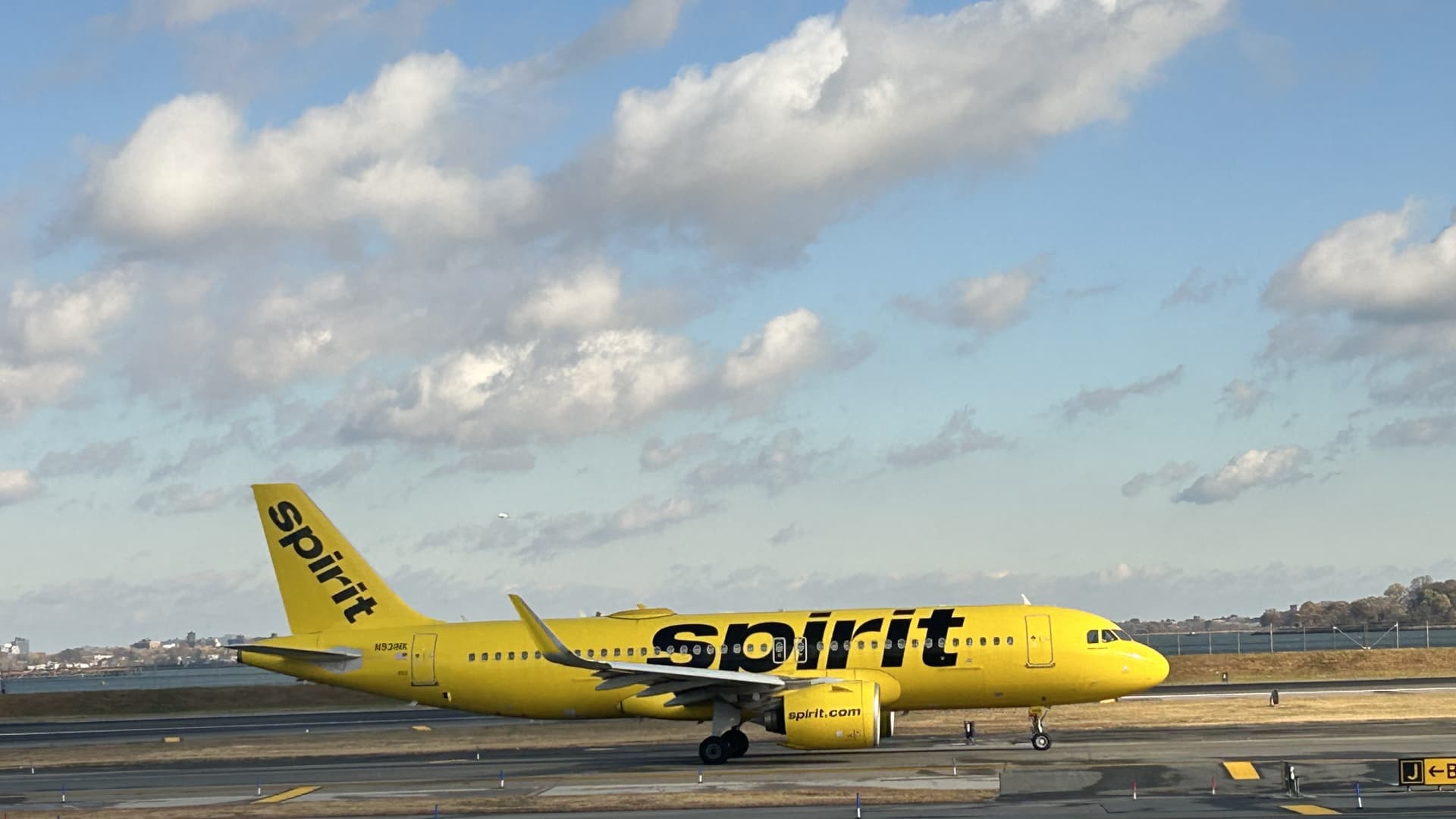
Spirit Airlines’ available cash won’t last long and a government bailout is on the table, a lawyer for the troubled budget airline told a hearing Thursday.
President Donald Trump told reporters at the White House on Thursday: “We’re considering doing it, helping them out, meaning bailing them out, or buying it out.”
Trump told reporters that “when the price of oil goes down,” the government could “sell it for a profit.”
“I wish I could save these jobs. I wish I could save an airline. I like having a lot of airlines, so it’s competitive,” he said.
Marshall Huebner of Davis Polk, the airline’s lawyer, did not present the proposed bailout plan during Thursday’s bankruptcy hearing, but people familiar with the matter told CNBC this week that a $500 million loan was on the table, which could give the government a potential 90% stake in the Florida-based airline. They requested anonymity because they were not authorized to discuss the talks.
The deal would also allow the U.S. government to select a board member, a person familiar with the potential terms told CNBC.
The White House and Spirit did not respond to a request for comment on the board seat.
“We are grateful for President Trump’s support and look forward to continuing to work with him and his administration on a solution that protects thousands of jobs, preserves and strengthens competition, and helps ensure Americans continue to have access to affordable fares,” Spirit CEO Dave Davis said in an emailed statement.
The company needs access to existing liquidity or new financing in the coming days to continue operations, Huebner said Thursday.
“The liquidity that Spirit currently has to fund ongoing operations will not last very long,” he said. “So either new financing or access to almost $240 million in restricted liquidity is absolutely essential. No later than the end of next week.”
The airline is at risk of closing its doors. The potential deal has been shared with different creditor groups, according to people familiar with the matter.
Spirit expected to emerge from bankruptcy midyear, but soaring fuel prices since the United States and Israel attacked Iran have complicated those plans, the company said.
The iconic discount airline has faced problems for years, including an engine recall, an acquisition by JetBlue Airways that a federal judge blocked two years ago, shifting customer preferences toward more premium offerings and rising costs, even before fuel prices soared this year.
“Spirit now definitely finds itself at a crossroads,” Huebner said, with “several hundred million dollars” of the company’s cash “locked up and inaccessible” under the terms of the bankruptcy loan while other funds are in separate accounts for payroll and taxes.
Huebner said the additional funding would “create a fierce and properly capitalized competitor in the airline industry” as a standalone carrier, “but also potentially as the most powerful player in what many believe will happen next, which is consolidation in the value carrier industry,” hinting at a potential merger.