


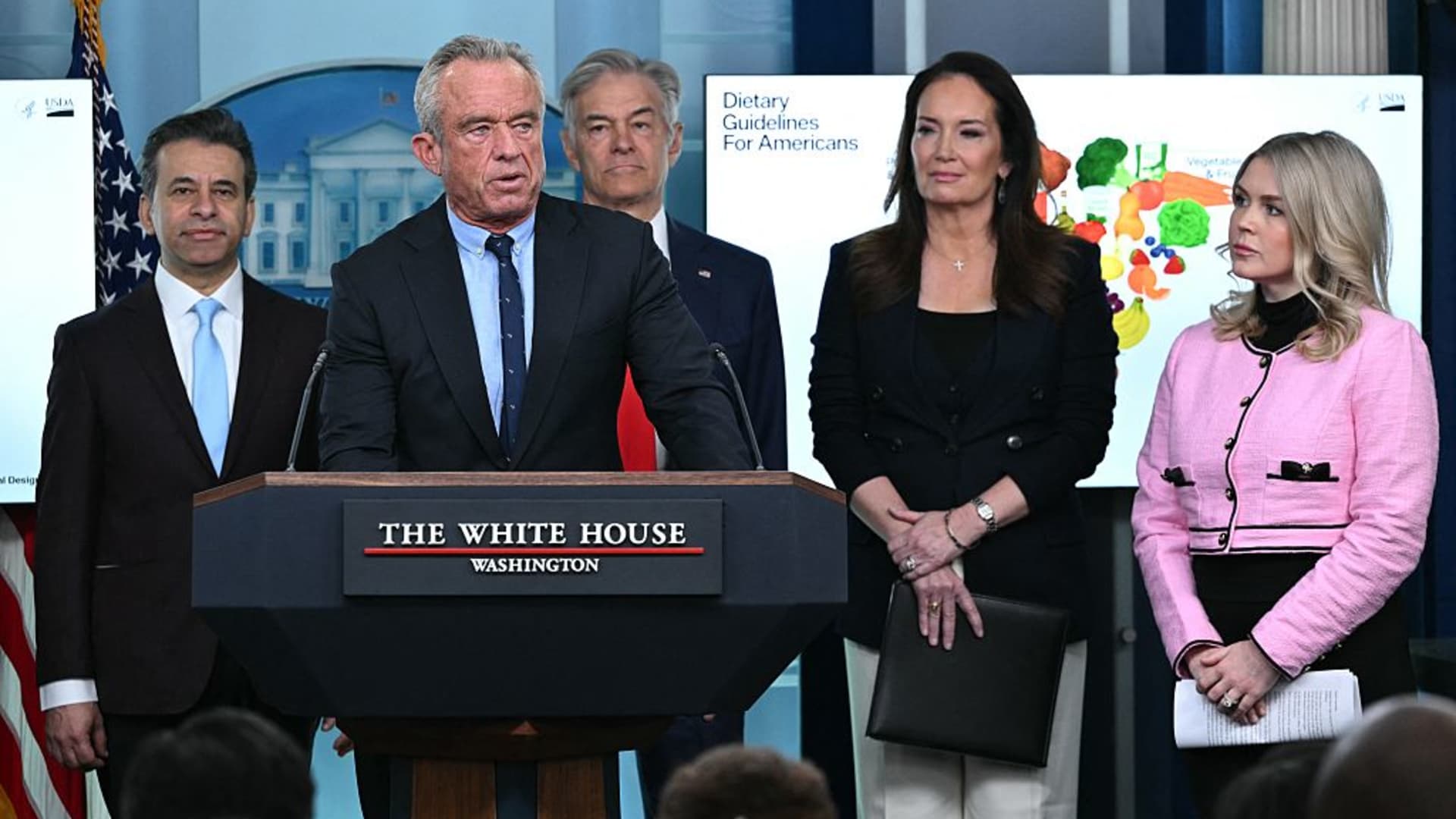
Health and Human Services Secretary Robert F. Kennedy Jr. speaks during the daily briefing in the Brady Briefing Room of the White House in Washington, DC, January 7, 2026.
Mandel Ngan | AFP | Getty Images
Health and Human Services Secretary Robert F. Kennedy Jr. and Agriculture Secretary Brooke Rollins shared new U.S. Nutrition Guidelines Wednesday, advising Americans to eat more “real foods” and reduce their intake of highly processed foods and added sugars.
The government’s new food pyramid replaces the MyPlate chart released under President Barack Obama and emphasizes protein, full-fat dairy and vegetables. The biggest changes under the updated guidelines include prioritizing protein over carbohydrates, recommending high-fat dairy over low-fat options, and cutting out processed foods like white bread, chips, and candy.
“Healthy fats” like full-fat dairy and avocados have also been added to the pyramid, and the guidelines recommend cooking with olive oil, butter or beef tallow.
“We are ending the war on saturated fat,” Kennedy said during a White House press briefing on Wednesday.
Likewise, the website announcing the new guidelines states: “We are ending the war on protein.”
Kennedy called the new guidelines “the most significant reset of federal nutrition policy in history.”
His “Make America Healthy Again” agenda targets processed foods and sugary drinks, while advocating more controversial dietary changes, like cooking with beef tallow and consuming more red meat, which many public health experts say can lead to cardiovascular and other health problems. The backbone of the MAHA platform is that a healthier diet will prevent chronic disease, according to Kennedy.
In response to MAHA’s push, food and beverage giants like PepsiCo And JM Smucker announced plans to phase out synthetic colors and other artificial ingredients. Since Kennedy’s confirmation, the industry has feared greater regulation, particularly regarding ultra-processed foods, even though major policy changes have yet to take place.
The USDA and HHS issue updated dietary guidelines every five years. Although many Americans may ignore the recommendations, the guidelines are intended as a public health tool to inform health care providers, federal agencies, policymakers and nutrition experts. The food industry is also taking this into account, given the broad scope of the guidelines.
Changes in dietary recommendations will impact school meals and federal nutrition programs. The consumer advocacy group Center for Science in the Public Interest estimates that one in four Americans will be directly affected by the changes to the guidelines.
More than a year ago, an advisory committee of health and nutrition experts said Americans should eat more plant-based foods and low-fat dairy products and consume less red meat and sugary drinks, based on a review of scientific evidence. However, it is unclear whether the USDA and HHS used the report to inform the dietary guidelines announced Wednesday.