


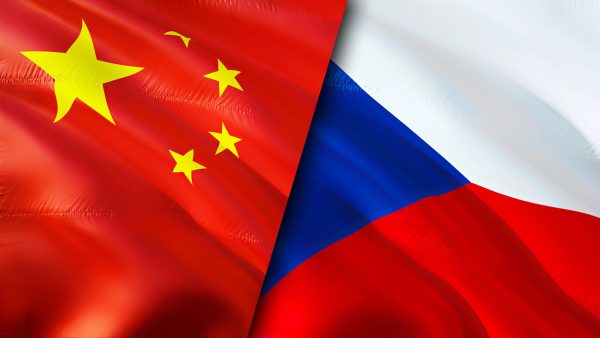
In August, Beijing announced that it cutting contact with Czech President Petr Pavel after his private meeting with the Dalai Lama in India. In reality, there was little contact to be broken. The days of his predecessor, former President Miloš Zeman, who once called Xi Jinping a “young friend” and declared on Chinese television that Czechs should “learn from China, how to stabilize society” – has long since disappeared.
Over the past four years, Sino-Czech relations have reached an all-time low under the government of Prime Minister Petr Fiala. But this collapse cannot be explained solely by a change of government. The fall began earlier, with the spectacular failure of Zeman’s attempt to “revive” relations, which peaked between 2016 and 2018. Once touted as the “golden age” of partnership, it quickly revealed itself to be one of false promises, reputational costs and growing public distrust.
When China’s top leader, Xi Jinping, visited Prague in 2016, Zeman presented China as a strategic partner who would save Czech industries and transform Prague into Beijing’s “gateway to Europe.” Chinese conglomerate CEFCwhose president Ye Jianming became an advisor to Zeman, was presented as the “flagship of Chinese investments”. At the same time, Czech economic elites were deeply invested in closer ties. The country’s largest company, PPF, and its subsidiary Home Credit have relied on political support to access China’s consumer lending market, leveraging their close ties to Zeman to protect their business interests.
But the promised billions of investments never materialized. CEFC collapsed in 2018 amid corruption scandals, and Ye quietly disappeared by the disciplinary bodies of the Chinese Communist Party, while he was still officially an advisor to the Czech president. PPF’s position in China has also eroded as tighter financial regulation, the pandemic and rising domestic competition have made its operations increasingly unviable. This year, the company finally left China, sell your business at a fraction of its supposed value.
Instead of economic windfalls, Prague was left with concerns about elite capture, propaganda and security vulnerabilities, compounded by the bitter aftertaste of unmet expectations. Czech intelligence services on several occasions warned that China, alongside Russia, posed a major threat to national security.
This whole story is important to understand the context of the dynamics of perception of China and its influence in the Czech Republic. In the Chinese indexwhich uses quantitative methods to measure Chinese influence in more than 100 countries, Czechia obtains relatively low scores in both editions (published in 2022 and 2024). One reason is that while the index captures observable examples of Chinese influence – including political contacts, trade dependence and media coverage – it cannot cover all domestic initiatives that indirectly support Beijing’s interests. And as has been explained, local actors played an important role in pro-PRC efforts in Czechia.
For example, PPF – through its subsidiary Home Credit – funded a campaign to “streamline” the debate on China and counter critical voices in the country, in particular the Sinopsis project, which criticized Czech policy towards China and reported on PPF’s business activities in China. Likewise, the circles around Zeman acted as proxies for Beijing. while attacking the late Senate President Jaroslav Kubera for his intention to visit Taiwan.
One of the changes highlighted by the Index is the decline of influence in the areas of foreign and domestic policy. This reflects not only a broader change in Czech political sentiment towards China, but also the transformation of the political landscape after the 2021 elections. That year, neither the Social Democratic Party nor the Communist Party reaching the electoral quorum for the first time; these two parties had the most frequent contact with the CCP through its International Liaison Department. If links with Czech communists were naturally the closest, contacts with certain figures in the Social Democratic Party often proved more useful. For example, when the party leadership sought to revive Sino-Czech relations during the COVID-19 period, exemplified by their servile welcome Chinese medical aid at Prague airport.
While the Communists and Social Democrats sought a comeback in 2025, the October elections once again kept them out of Parliament. Instead, the populist ANO movement of billionaire and former Prime Minister Andrej Babis won a landslide victory and is now exploring coalition options. Although several combinations are mathematically possible, Babis’ first choice for negotiations appears to be the far-right SPD and the once-fringe far-right populist group Motorists for Themselves, which is entering national politics for the first time.
The Motorists’ main foreign policy advisor is former MEP Jan Zahradil, long one of the most prominent pro-China voices on the Czech right and a staunch advocate of a “multipolar” world order. A staunch critic of the current government’s foreign policy, Zahradil chaired the EU-China Friendship Group in the European Parliament and recently launched a new think tank focused on Asia.
As the Czech political landscape shifts again, debates over the country’s approach to China are likely to follow. A complete return to the theatricality of the Zeman era seems unlikely, but voices calling for a new “rationalization” of relations with Beijing are growing louder.