


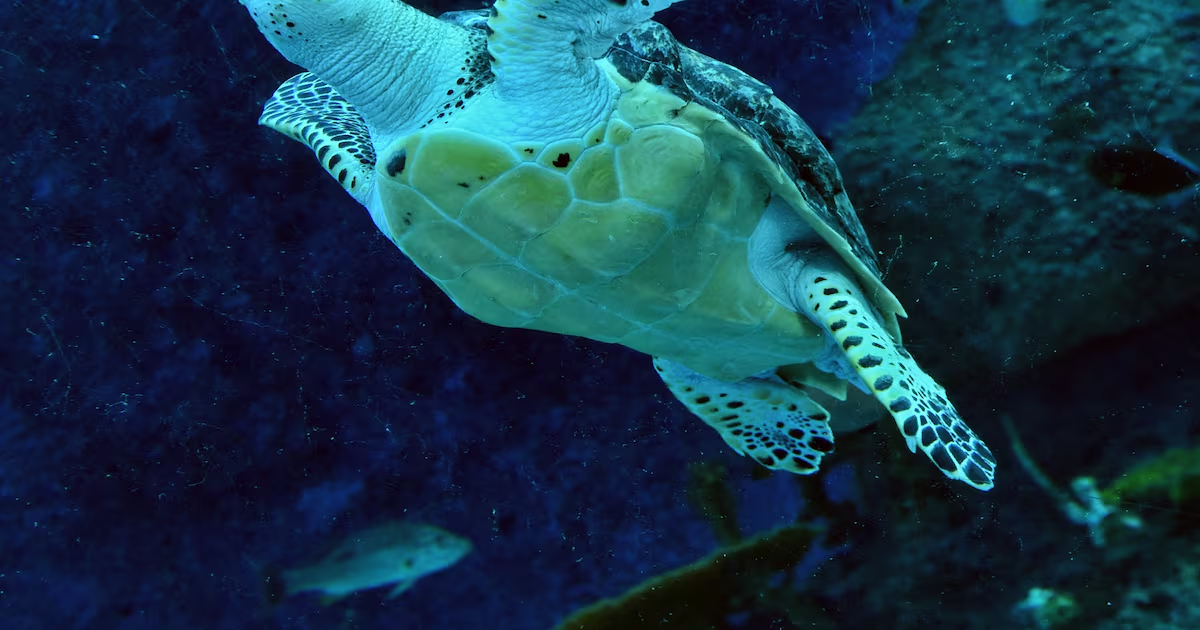
When Chinese researchers recently announced the discovery of a large gathering of endangered hawksbill turtles around Scarborough Shoal, they may have had ulterior motives — experts told Radio Free Asia that the scientific studies served a broader strategic goal by strengthening China’s presence and authority in disputed areas of the South China Sea.
Days earlier, Chinese state media published extensive coverage of a scientific expedition around the shoal, highlighting coral reef studies, ecological protection efforts and marine research.
Although the findings are presented as scientific and environmental news, they are intended to bolster Beijing’s sovereignty claims over the entire sea, Joseph Kristanto, a research analyst at the S. Rajaratnam School of International Studies in Singapore, told RFA.
“I think these activities should be interpreted as an attempt by China to normalize its presence in the South China Sea and lend some legitimacy to its actions,” he said.
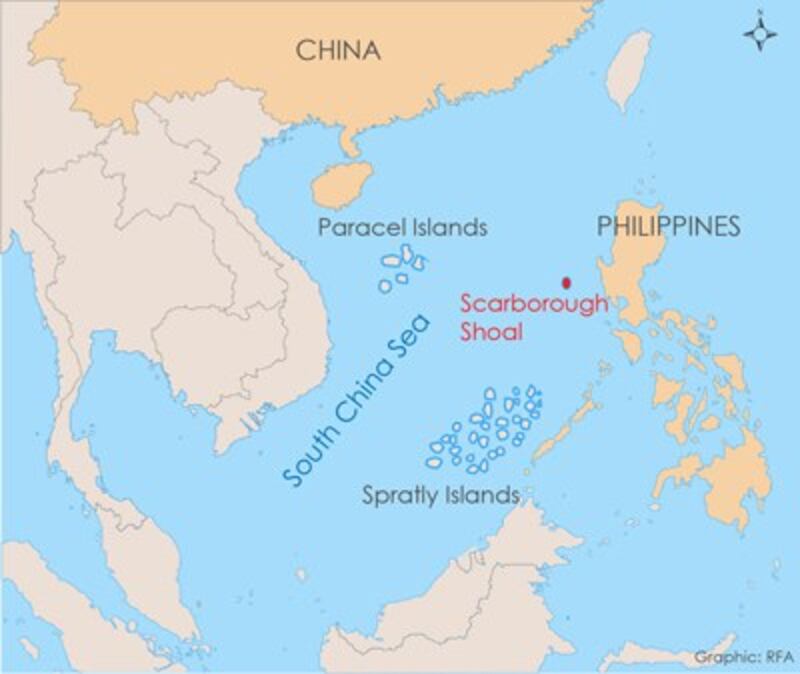
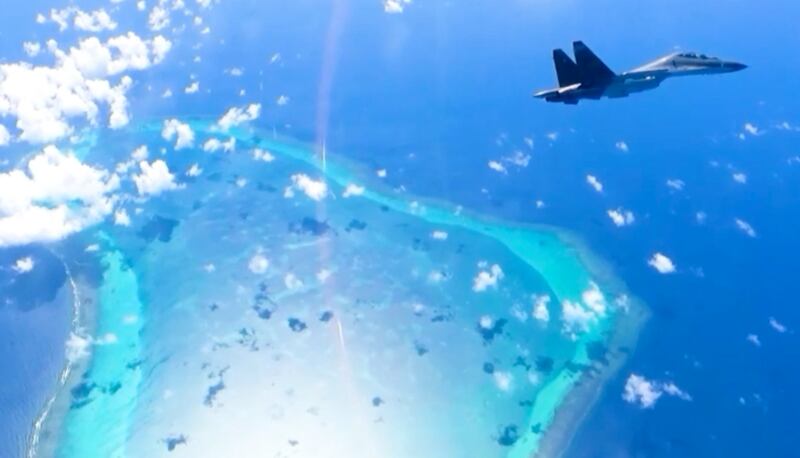
The two reports are part of a growing stream of Chinese state media coverage focused on scientific research, environmental conservation and biodiversity discoveries in disputed waters, particularly around Scarborough Reef, also claimed by the Philippines.
“While the scientific and environmental dimensions of these activities are important, given the considerable ecological pressures facing the coral reefs and marine ecosystems of the South China Sea, in the context of controversial features such as the Scarborough Reef, it is evident that these actions function primarily as a strategic signal from Beijing,” Kristanto said.
Guardian of the environment?
The South China Sea is claimed in whole or in part by several governments, including China, the Philippines, Vietnam, Taiwan, Malaysia and Brunei.
Scarborough Shoal has been a particular flashpoint between Beijing and Manila since Chinese ships effectively took control of access to the item following a standoff in 2012.
But a decade ago, the Permanent Court of Arbitration virtually invalidated China’s historic claims to its nine-dash line, which encircles virtually the entire sea.
Beijing rejected this decision and its coast guard maintains a constant presence there.
Chinese messaging still claims that the shoal is part of its sovereign territory and that Beijing has security and navigation rights.
But recently, state media has begun to emphasize marine ecology, conservation programs, scientific studies and biodiversity protection.
Kristanto said such activities are part of a broader pattern in which states use environmental governance and scientific research to demonstrate effective administration over contested territories.
“By defining its activities as scientific research, environmental protection, study of coral reefs and biodiversity conservation, China positions itself as a responsible actor in maritime governance rather than a mere pretender seeking control,” he said. “This strategy shifts the discourse from coercion, denial of access or territorial conflicts to one focused on conservation, sustainability and the protection of vulnerable marine ecosystems. »
This approach offers Beijing a relatively inexpensive way to strengthen its presence while avoiding the more confrontational optics associated with military deployments or maritime standoffs.
“I believe Beijing will seek to expand these activities in the future, as they provide a relatively inexpensive and less confrontational way to justify and assert its presence in contested areas,” Kristanto explained.
China is also able to suggest that it is the only authority capable of exercising governance over these regions, he said, adding that it also provides “a less militarized framework to respond to criticism that its actions are destabilizing and coercive.”
Hybrid warfare?
Scientific research in contested areas is not just about normalizing Chinese presence, it is an integral part of Beijing’s broader hybrid warfare strategy, Sze-Fung Lee, an independent researcher specializing in Chinese hybrid warfare, told RFA.
“These activities should not be viewed as truly isolated scientific or conservation efforts,” Lee said. “Research infrastructure itself is often dual-use – military and civilian – with ‘civilian’ research functioning as plausible deniability. »
China has long used a combination of civilian, police and maritime assets to strengthen its position in disputed waters, a strategy often described by analysts as operating in the “gray zone” between peace and conflict.
Lee said scientific activities add another layer to this approach.
“These activities are expected to grow in the coming years,” Lee said. “They simultaneously serve multiple functions: normalizing presence in contested waters, supporting operations in the gray zone, and fueling broader influence operations. Beijing has every interest in continuing to invest in this layer.”
Kristanto noted that other applicants also carry out marine research, environmental monitoring and fisheries protection activities in the South China Sea. The difference, he argued, is the extent to which these efforts are integrated into broader state policy and messaging.
“What distinguishes China’s approach is its scale, coordination and political integration,” he said. “The narrative is not simply that China studies or protects the environment, but that it does so as a legitimate authority on this feature.”
Kristanto noted that it was also possible that conservation arguments would ultimately be used to justify tighter controls on disputed waters.
“For example, if a controversial area such as Scarborough Shoal is designated as ecologically sensitive or in need of protection, China could argue that ships or fishermen from certain countries should be excluded in the interest of ecological preservation. »
Edited by Eugene Whong.