


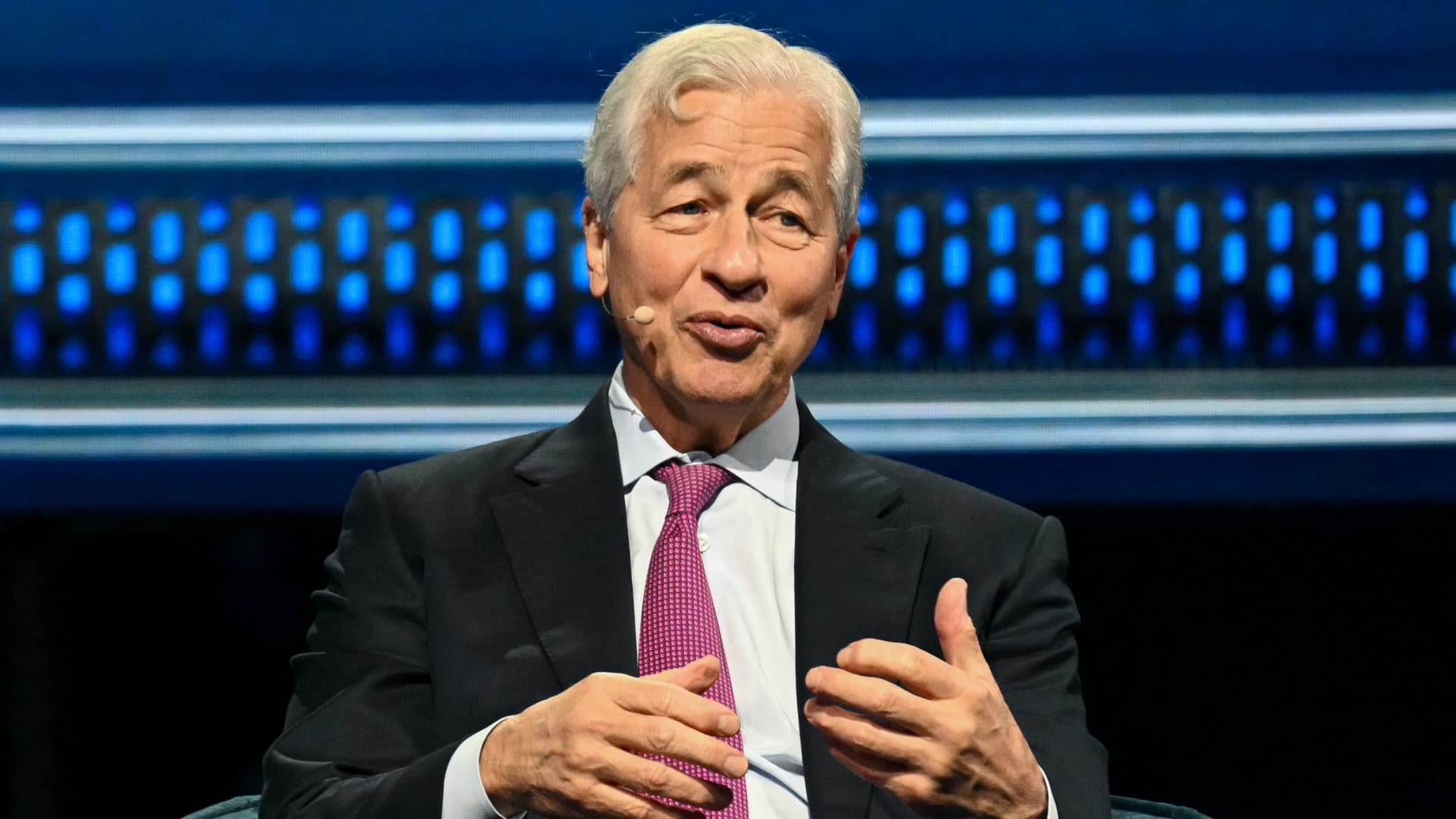
Jamie Dimon, CEO of JPMorgan Chase, speaks at the American Business Forum at the Kaseya Center in Miami on November 6, 2025.
Chandan Khanna | AFP | Getty Images
JPMorgan Chase CEO Jamie Dimon on Wednesday argued for a test of President Donald Trump’s proposed 10% cap on credit card interest rates in two U.S. states: Vermont and Massachusetts.
Dimon, speaking on a panel at the World Economic Forum in Davos, Switzerland, responded to a question about Trump’s order for banks to voluntarily cap their interest rates for a year. The president had requested that the rate cut take effect on Tuesday.
Several major credit card lenders contacted by CNBC on Tuesday said they had not made any changes to their interest rates, but they all declined to be identified as defying Trump’s proposal.
“It would be an economic disaster,” Dimon said Wednesday. “In the worst case scenario, this would result in a drastic reduction in the credit card industry” for 80% of Americans, he said.
On earnings conference calls last week and behind the scenes, banks pushed back against Trump’s order this month to voluntarily forgo billions of dollars in revenue.
Their main argument, that price controls will cause many card customers’ accounts to be canceled by lenders, has resonated with several Republican lawmakers, including House Speaker Mike Johnson. Most banking analysts believe Trump would need legislation to cap card rates nationwide.
“A great idea”
Dimon then said he had a “great idea” to help ease disagreements over the proposed card cap, suggesting the U.S. government impose price controls on Americans in just two states.
Vermont and Massachusetts are the home states of Senators Bernie Sanders and Elizabeth Warren, respectively, who both support a bill capping card rates at 10% for five years. Dimon did not mention the lawmakers’ names Wednesday.
The U.S. government “should force all banks to do this in two states, Vermont and Massachusetts, and see what happens,” Dimon said, drawing laughter from the WEF audience.
Dimon said “the left” and those who advocate for price controls “will learn a real lesson, and the ones who cry the most won’t be the credit card companies,” he said.
“It will be restaurants, retailers, travel agencies, schools, municipalities, because people are not paying for their water,” he said. “That would be something else to watch.”
Dimon added that JPMorgan plans to give the Trump administration its analysis of what would happen if credit card rates were nationally capped.
“I think it’s not right for the government to get heavily involved in setting product prices, but I have to deal with the world that’s out there,” Dimon said.
