


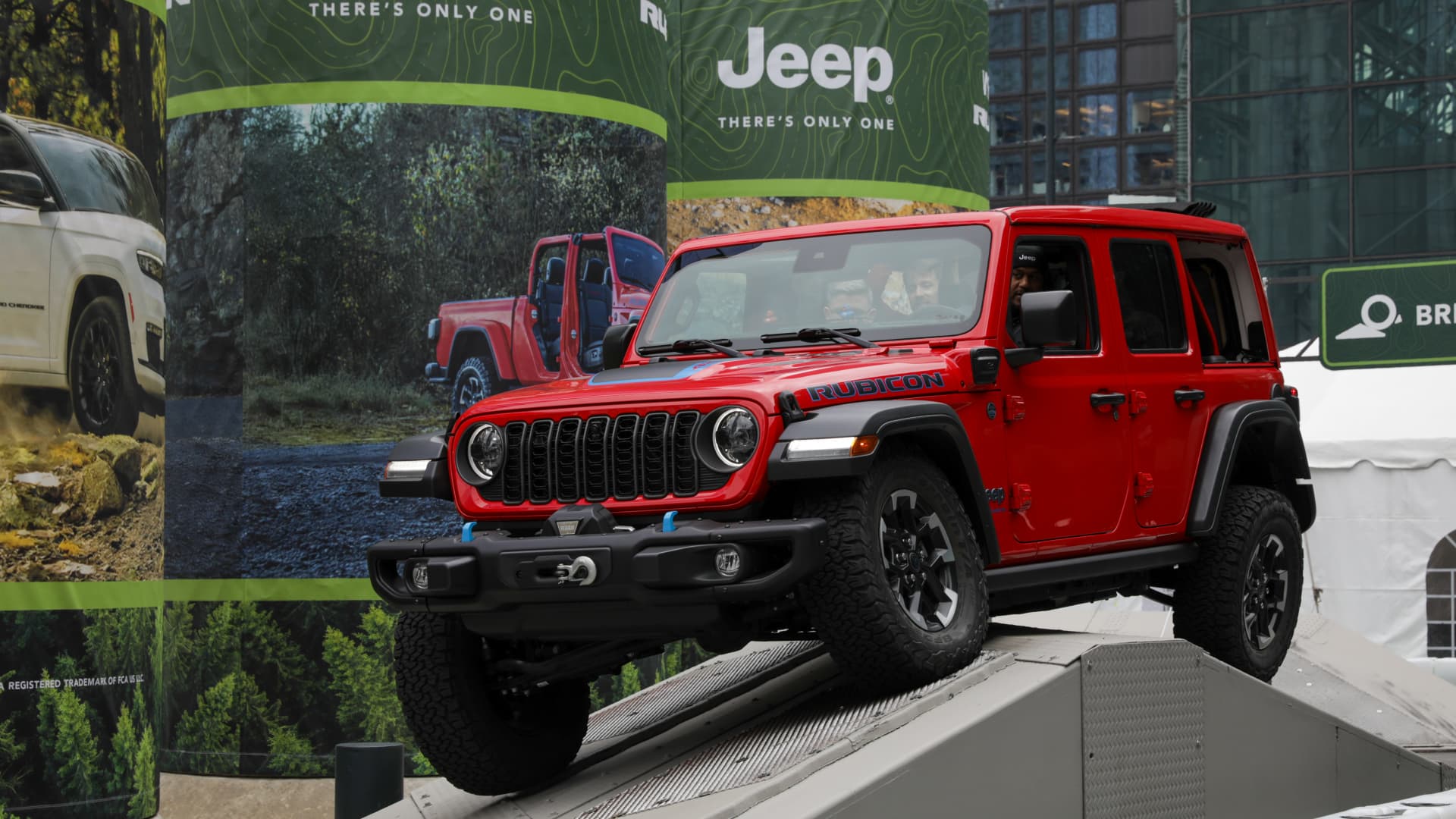
The Camp Jeep exterior lot at the New York International Auto Show on April 16, 2025.
Danielle DeVries | CNBC
DETROIT — Stellantis is discontinuing its plug-in hybrid electric Jeep SUVs and Chrysler minivan amid slowing electric vehicle sales, quality concerns and weakening federal fuel economy requirements.
The automaker said Friday that the decision to end production of the plug-in hybrid Jeep Wrangler, Jeep Grand Cherokee and Chrysler Pacifica was the result of declining customer demand and the need to focus on “more competitive electrified solutions, including hybrid and extended-range vehicles.”
“Stellantis is continually evaluating its product strategy to meet evolving customer needs and regulatory requirements. As customer demand evolves, Stellantis will phase out plug-in hybrid (PHEV) programs in North America beginning in model year 2026,” the company said in an emailed statement.
This decision represents a turnaround for the automaker, which has for years touted its leadership in model sales in the United States. In 2024, then-Jeep CEO Antonio Filosa – who is now CEO of Stellantis – said the SUV brand planned to sell 160,000 to 170,000 PHEVs that year, and the company said it would account for 41% of US PHEV sales.

Besides sales, Stellantis uses PHEVs as a way to offset its production of gas-guzzling trucks and SUVs in an attempt to meet federal fuel economy standards and avoid penalties. This goal has become less urgent as the Trump administration eliminates or weakens aspects of these rules.
Chrysler first introduced its PHEV minivan in 2016. Jeep launched the Wrangler PHEV, which it called “4xe,” in 2020, followed by a Grand Cherokee version in 2021.
PHEVs are powered by traditional internal combustion engines, but also have a fully electric range when charged like an electric vehicle. They have been widely seen as a transition technology from traditional vehicles to electric vehicles; however, they are quite expensive due to their two different propulsion systems.
The cancellation also comes amid a recall of Jeep SUVs due to a fire risk – the latest in a series of problems involving the vehicles. The company is also reevaluating its product portfolio as part of its U.S. turnaround strategy.
A 2022 Jeep Grand Cherokee.
Jeep
The company said the recall, which included stopping sales of the vehicles, “is in no way related” to the cancellation of the vehicles.
Last month, Jeep CEO Bob Broderdorf told CNBC that the brand had been evaluating its electrification strategy since federal incentives of up to $7,500 for electric and plug-in vehicles ended in September.
He said Jeep still has vehicles on the ground that it will continue to sell, but “we’re all waiting to see what the demand is, how it’s going to continue to shake out and what becomes a steady state for the 4xe and [battery] Electric vehicles in general. »
A Jeep spokeswoman said the brand will continue to offer fully electric SUVs such as the Wagoneer S and Recon, which were officially revealed late last year.