


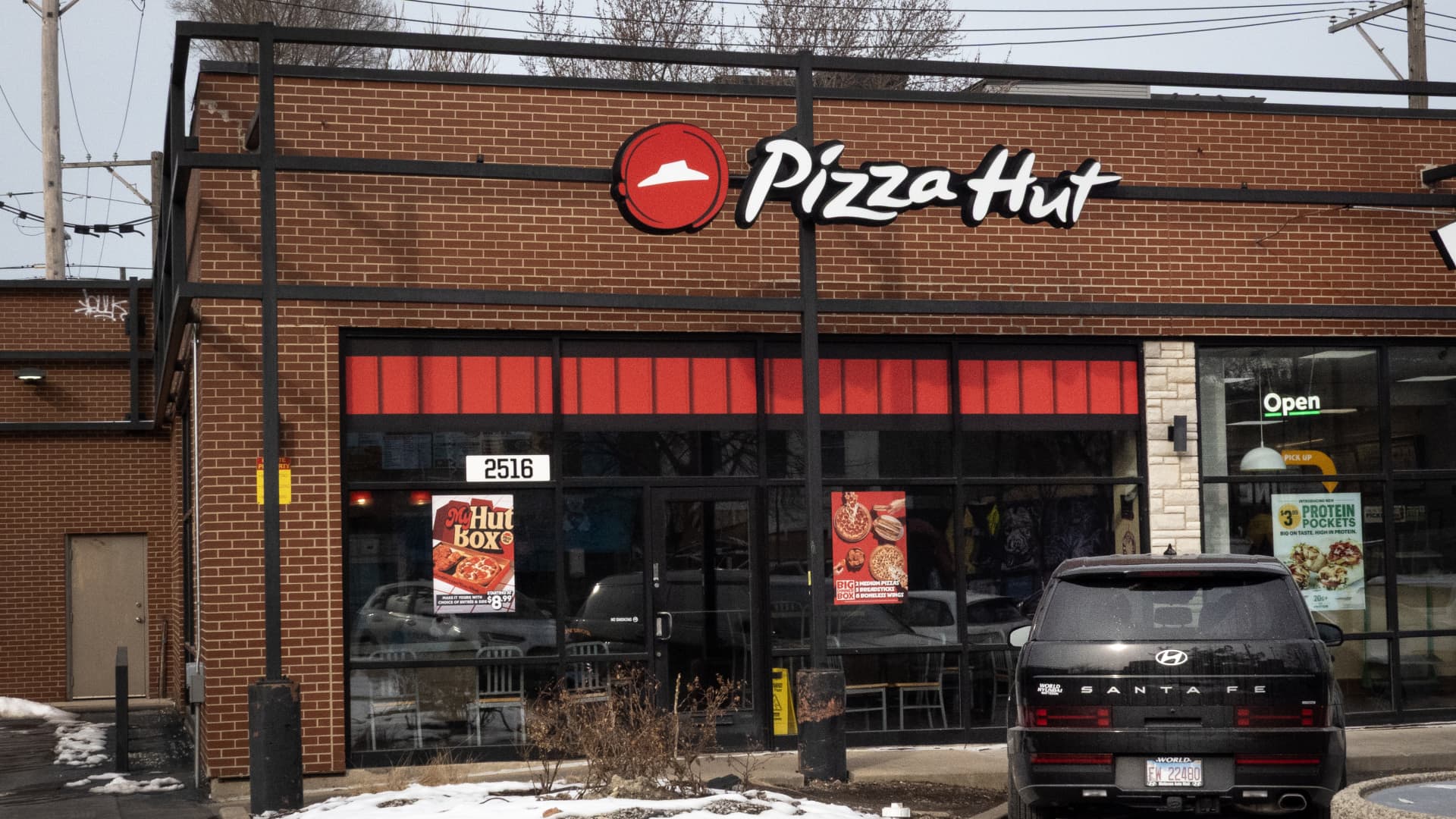
A sign hangs above the storefront of a Pizza Hut restaurant on February 9, 2026 in Chicago, Illinois.
Scott Olson | Getty Images
Yum Brands announced Tuesday the sale of Pizza Hut to private equity firm LongRange Capital for approximately $1.5 billion.
Deal excludes pizza chain’s locations in mainland China; Yum China will acquire them in a separate transaction for approximately $1.2 billion.
For both transactions, Yum expects to receive approximately $2.3 billion in net proceeds after taxes, closing adjustments and fees, excluding a potential $75 million earnout by 2030 from LongRange. Yum also anticipates one-time expenses of approximately $85 million for the remainder of 2026 related to the transactions.
The deals cap years of difficulty for Pizza Hut, which weighed on Yum’s overall financial performance. In the United States, the pizza chain has pivoted from the sit-down format and salad bars of yesteryear to focus on delivery and takeout – way behind the curve. Rival Domino’s Pizza gobbled up Pizza Hut’s market share for years; third-party delivery apps like PorteDash stole sales from the chain again.
In November, Yum said it was exploring strategic options for Pizza Hut. On Tuesday, the company said its management team and board of directors had determined that the sale of Pizza Hut would provide “the strongest path” to maximizing shareholder value and giving the pizza chain an ownership structure “tailored to its distinct markets, competitive strengths and long-term priorities.”
Brothers Dan and Frank Carney founded Pizza Hut in 1958 in Wichita, Kansas. A year later, they franchised the concept.
In 1969, Pizza Hut went public. Just two years later, it had become the world’s largest pizza chain, although it lost that title in 2017 to Domino’s.
The deal severs Pizza Hut’s decades-long ties to Taco Bell and KFC, its sister brands in Yum’s portfolio.
PepsiCo purchased Pizza Hut in 1977, marking the beverage giant’s entry into the restaurant business. By 1986, it also owned Taco Bell and KFC. When Pepsi created its restaurant unit in 1997, the holding company was named Tricon Global Restaurants, later renamed Yum.
Clarification: The headline has been updated to reflect that the $2.7 billion sale value includes deals with LongRange Capital and Yum China.