


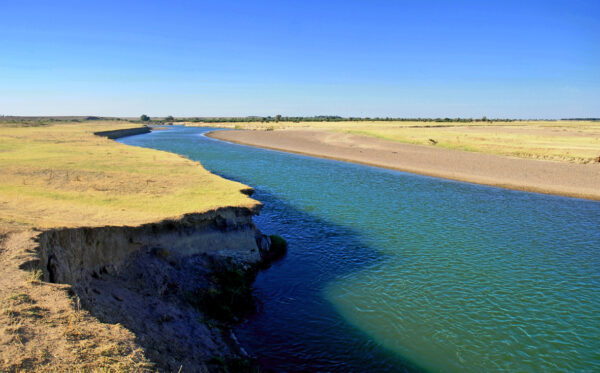
Four regions of Kazakhstan could face water shortages in 2026 as a result of the lingering effects of the 2025 regional drought, according to Kazakh Minister of Water Resources and Irrigation Nurzhan Nurzhigitov.
As reported Vlast.kzAt a government meeting this week, Nurzhigitov warned that low water levels are expected in the Syr-Daria, Shu and Talas river basins, affecting three Kazakh regions – Kyzylorda, Turkestan and Jambyl. The Almaty region, home to Kazakhstan’s largest city and also home to Kazakhstan’s first nuclear power plant, may also face the risk of water shortages this year.
This is not Nurjigitov’s first warning. In Januaryhe sounded the alarm, pointing out that the volume of water in southern Kazakhstan’s reservoirs was 1.9 billion cubic meters lower than in January 2025.
“This is an objective reality, due to reduced autumn and winter precipitation, reduced glacial runoff and the overall impact of climate change. These factors are long-term and require systemic adaptation,” Nurzhigitov said at the time.
The situation is pretty much the same now. In his recent comments, Nurjigitov said reservoir levels were 1.6 billion cubic meters lower than the same period last year.
The Shu and Talas river basins, Nurzhigitov said, “are characterized by consistently low water availability throughout the growing season.” The Kirov reservoir is 78 percent full and the Orto-Tokoy reservoir is 83 percent full. Elsewhere, the problem is less serious, Nurzhigitov said, with much more stable domestic reservoirs, but Kazakhstan is concerned about reservoirs near Kyrgyzstan.
In 2025, Central Asia experienced a drought. As Penny Beames, Erin Menzies Pluer and Zach Goodwin explained in an article for The Diplomat earlier this year“2025 was one of the region’s driest years in decades,” with precipitation around 80 percent of the 2000-2020 average.
As upstream precipitation varies from year to year and is subject to the vicissitudes of climate change, water demand in Central Asia continues to grow, driven by extreme interest in water-intensive industries like mining, nuclear power, data centers and AI.
Return JanuaryNurzhigitov noted that Kazakh authorities were “conducting awareness-raising activities among agricultural producers on water conservation and the transition to less water-intensive crops.” He also said that the government would adjust the structure of cultivated areas taking into account the water situation.
Government officials rarely discuss Kazakhstan’s water situation in the same spirit as its economic and energy ambitions, let alone the issue of food security, as if the two areas do not overlap. But this is indeed the case, and therein lies the big challenge for the wider Central Asia, as drier winters turn to scorching summers.