
Close Menu
Crazy Peks NewsCrazy Peks News
  • Home
  • America
  • Asia
  • Europe
  • Business & Money
  • Politics
  • Technology
  • Sports
  • Entertainment
  • Privacy Policy
  • Get In Touch
Facebook X (Twitter) Instagram
Trending
  • Sources: Cerebras plans to increase its IPO price range from $115 to $125 per share to $150 to $160 per share, potentially raising around $4.8 billion at the top of the new range (Echo Wang/Reuters)
  • Ro Khanna sends Trump into a spiral by going on Fox News and revealing the truth
  • Digital Asset, which is building Canton Network, a public blockchain with privacy features, raises ~$300 million seed round led by crypto a16z at a valuation of ~$2 billion (Bloomberg)
  • Cory Booker Slams Corrupt Supreme Court Majority, Demands Reform
  • Microsoft and G42’s billion-dollar geothermal data center in Kenya is blocked after the government fails to provide annual payment guarantees requested by Microsoft (Bloomberg)
  • Rep. Jim Clyburn warns South Carolina’s Gerrymander will backfire on Republicans
  • Apple is working on a “slight redesign” for macOS 27 to address Liquid Glass issues and plans a feature to automatically group Safari tabs in ’27’ operating systems (Mark Gurman/Bloomberg)
  • Target revamps its baby store to compete with Walmart and Amazon
Facebook X (Twitter) Instagram
Crazy Peks NewsCrazy Peks News
Demo
  • America
  • Asia

    Why an Australian-US rare earths deal sparked backlash in Malaysia – The Diplomat

    May 8, 2026

    Chinese cyber operations hit Asian governments and dissidents abroad – The Diplomat

    May 8, 2026

    In a single day, three democracies pushed back against Chinese transnational repression – The Diplomat

    May 8, 2026

    Satellite images show Philippine construction on two disputed Spratly islands – Radio Free Asia

    May 8, 2026

    The United States and China do not need another dialogue. They need a circuit breaker. – The diplomat

    May 8, 2026
  • Europe
  • Business & Money

    Target revamps its baby store to compete with Walmart and Amazon

    May 10, 2026

    Why a major US auto lender doesn’t care about ‘lifetime loans’

    May 9, 2026

    Dunkin’ Owner Inspire Brands Confidentially Files for IPO

    May 8, 2026

    Fitness wearable Whoop will provide on-demand access to clinicians in the United States

    May 8, 2026

    Trump’s $1 Million Gold Card Fails to Appeal to the World’s Rich

    May 8, 2026
  • Politics

    Ro Khanna sends Trump into a spiral by going on Fox News and revealing the truth

    May 10, 2026

    Cory Booker Slams Corrupt Supreme Court Majority, Demands Reform

    May 10, 2026

    Rep. Jim Clyburn warns South Carolina’s Gerrymander will backfire on Republicans

    May 10, 2026

    Trump’s billion-dollar ballroom is sinking fast

    May 8, 2026

    Democrats heading for House victory despite losing New Virginia map

    May 8, 2026
  • Technology

    Sources: Cerebras plans to increase its IPO price range from $115 to $125 per share to $150 to $160 per share, potentially raising around $4.8 billion at the top of the new range (Echo Wang/Reuters)

    May 10, 2026

    Digital Asset, which is building Canton Network, a public blockchain with privacy features, raises ~$300 million seed round led by crypto a16z at a valuation of ~$2 billion (Bloomberg)

    May 10, 2026

    Microsoft and G42’s billion-dollar geothermal data center in Kenya is blocked after the government fails to provide annual payment guarantees requested by Microsoft (Bloomberg)

    May 10, 2026

    Apple is working on a “slight redesign” for macOS 27 to address Liquid Glass issues and plans a feature to automatically group Safari tabs in ’27’ operating systems (Mark Gurman/Bloomberg)

    May 10, 2026

    Most of the technology on display at this year’s Border Security Expo was autonomous and AI-powered, driven by the Trump administration’s focus on U.S. border security (Elizabeth Findell/Wall Street Journal)

    May 10, 2026
  • Sports
  • Entertainment
Crazy Peks NewsCrazy Peks News
Home » China’s unwinding of Manus deal highlights key advantage for US – The Diplomat
Asia

China’s unwinding of Manus deal highlights key advantage for US – The Diplomat

Frank M. EverettBy Frank M. EverettMay 7, 2026No Comments
Facebook Twitter Pinterest LinkedIn WhatsApp Reddit Tumblr Email
Share
Facebook Twitter LinkedIn Pinterest Email


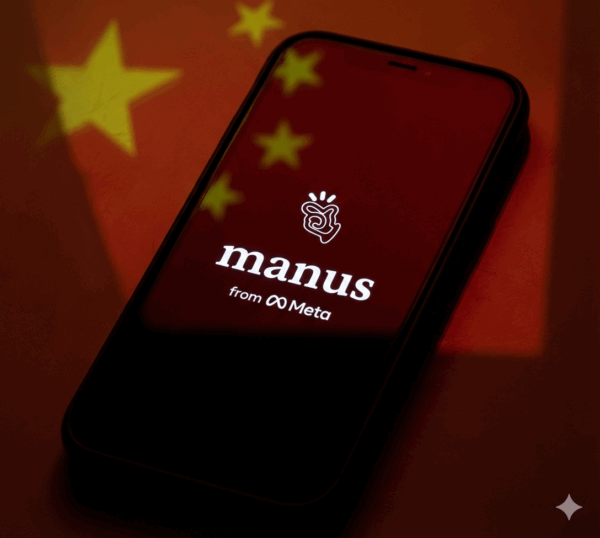
Last year, the American technology giant Meta, formerly Facebook, which is increasingly investing in artificial intelligence, bought the Manus, AI companywhich was founded in China before moving its headquarters to Singapore. This month the agreement was suddenly canceled as the Chinese government forced Meta to cancel its acquisition of Manus.

The move could surprise some foreign investorsbut it simply reminds Chinese entrepreneurs that China views its AI sector as its own national asset, rather than private property. Although some see the move as Beijing increasingly exploiting its economic policies to thwart U.S. businesses and interests, this is not China’s primary concern. Beijing is more likely to remind its burgeoning private AI sector who’s boss, just as it did when it cracked down on Didi Chuxing and Ant Financial.

This is bad news and good news for different people. This is bad news for Chinese startups. China is clearly willing to take radical steps to protect its sovereign interests – even if it means creating a less favorable domestic economic climate in the short term.

The good news is that this shows that the US-based technology financing system is still preferred by startups, even some Chinese ones, despite the massive injection of public funds into the AI ​​industry. This is a U.S. advantage in the AI ​​race with China that appears to be working, even if it receives little attention.

China has not only long blurred the line between the state and the private sector, but it also ensures that even the business decisions of its private companies are ultimately under the full control of the state. In contrast, the United States prefers to keep these two spheres relatively separate, allowing businesses to operate with much less government interference in a more predictable, rule-of-law regime.

But in recent years, the United States has also recognized that if Beijing wants to lead China’s industrial policy, then Washington must align its strategy and economics to some extent. This is seen in everything from export controls to tariffs to U.S. buy/lease rules.

Particularly for AI, the US administration has recognized the need to lead in adoption so that AI can fulfill its transformative role in the private and public sectors. The Office of Management and Budget in 2024 issued a memorandum stating that “the president has made clear that we must seize the opportunities that AI presents while managing its risks.”

The goal of all this government use is not just efficiency but innovation. By integrating and investing in AI, Washington is helping to boost its development with a view to winning the AI ​​race against Beijing.

Additionally, the administration is working to remove bureaucratic hurdles and opposes regulation of the AI ​​sector.

But these seemingly non-interventionist measures should not fit into the broader context of a state-led strategy. If the United States wants to incentivize the private sector to develop AI faster and better, and maintain its lead over China, it must learn the lesson of China’s reaction to the Manus agreement: technology entrepreneurs around the world, including in China, may well prefer the American ecosystem that respects private property rights and the true spirit of free enterprise to a regime heavily subsidized and manipulated by the state.

This is the supremacy of the American dream, in the context of AI. U.S. leadership in this area cannot be measured in months or years. The difference is fundamental and China will simply never be able to compete with the United States.

No discussion of tech competition with China is complete without mentioning Huawei, the Chinese AI conglomerate that acts as an arm of Beijing. Concerned about Huawei’s influence – the company has a long history of suspicion of espionage And Theft of intellectual property against the United States – the Trump administration last year give the green light to a merger between Hewlett Packard Enterprise and Juniper Networks. This happened after the intelligence community would have pushed in favor of the merger, seeing it as vital for national security because it would create a competitor for Huawei.

Here again, the strategic and commercial interests of the United States went hand in hand. The United States should redouble its efforts to favor business interests that strengthen its industrial sectors rather than weaken them, as with China’s desperate seizure of Manus.

If China is concerned about its talent and startups taking advantage of global opportunities offered by the U.S. system, U.S. policies should make it easier for companies from around the world to come, compete, and contribute to the U.S. tech stack. In other words, identifying innovators like Manus earlier, helping them better prepare to escape the shackles of state control and reap the rewards of owning their intellectual property.

advantage Chinas deal Diplomat Highlights key Manus unwinding
Share. Facebook Twitter Pinterest LinkedIn Tumblr Telegram Email
Frank M. Everett

Related Posts

Why an Australian-US rare earths deal sparked backlash in Malaysia – The Diplomat

May 8, 2026

Chinese cyber operations hit Asian governments and dissidents abroad – The Diplomat

May 8, 2026

In a single day, three democracies pushed back against Chinese transnational repression – The Diplomat

May 8, 2026
Leave A Reply Cancel Reply

© 2026 Crazy Peks News | All rights reserved.
  • Home
  • Privacy Policy
  • Get In Touch

Type above and press Enter to search. Press Esc to cancel.