


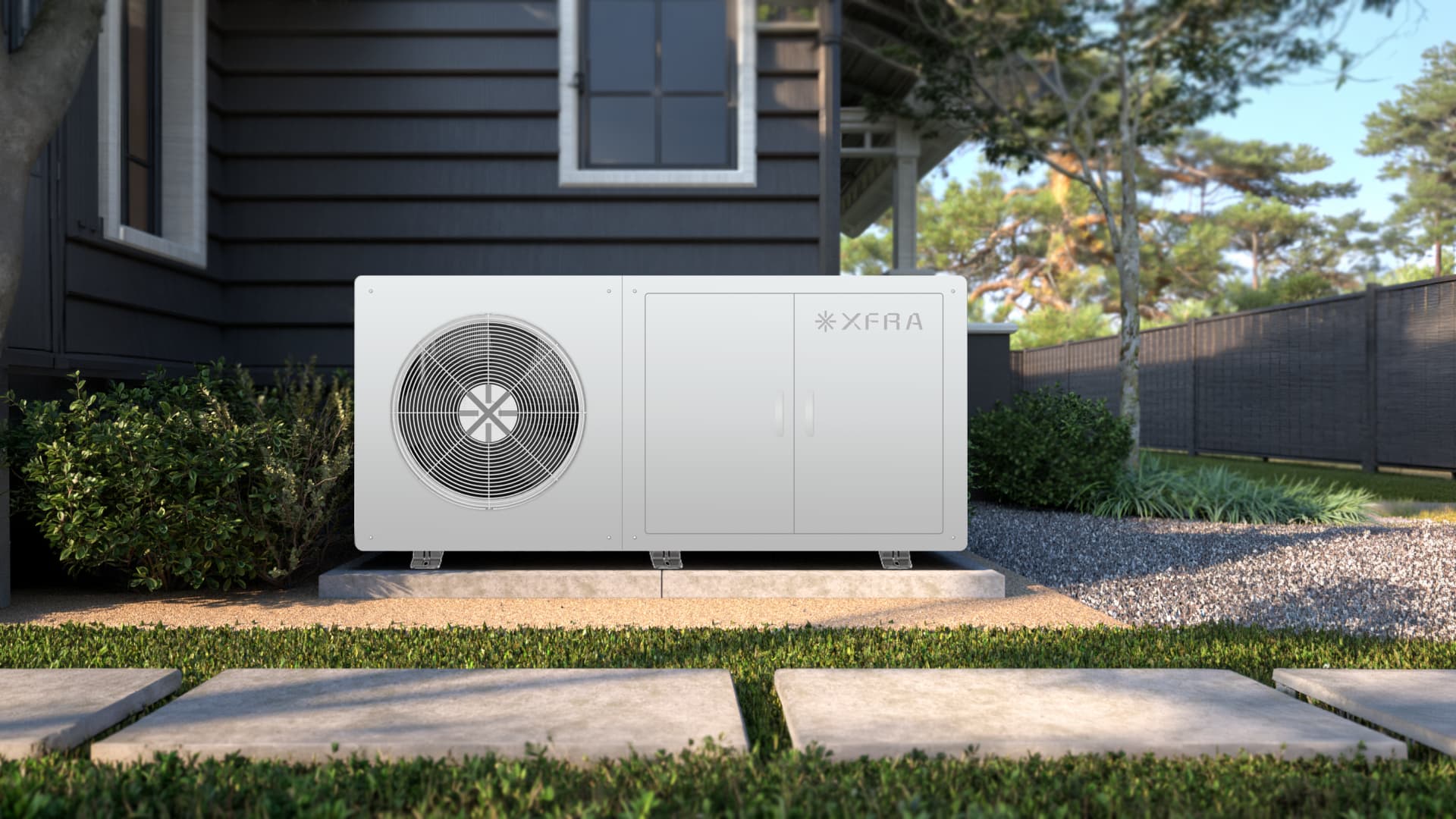
A version of this article first appeared in the CNBC Property Play newsletter with Diana Olick. Property Play covers new and evolving opportunities for the real estate investor, from individuals to venture capitalists, private equity funds, family offices, institutional investors and large public companies. Sign up to receive future editions, straight to your inbox. Even as more communities speak out against the proliferation of massive, energy- and water-hungry data centers, some big players in the real estate industry are betting that consumers would be willing to install mini data centers directly on the walls of their homes. Span is a California-based startup that initially launched “smart” electrical panels designed to help homeowners save money on their electricity bills. Now, with help from Nvidia, the company has developed something new: small, split data centers, or “nodes,” called XFRA units, that can be placed on the side of residences and small commercial businesses. The idea is to take advantage of unused electrical capacity in local networks, which Span smart panels can identify. The rapid growth of artificial intelligence has strained power grids nationwide and, in some cases, led to higher electricity bills for homeowners. A network of these nodes, communicating with each other across the country, is the equivalent of a traditional small or medium-sized data center, which could either complement an existing center or eliminate the need to build a new one, Span says. Hyperscalers and AI cloud providers simply operate the network as they would in a traditional data center. “Fundamentally, this is an infrastructure play,” said Arch Rao, founder and CEO of Span. “We are in a unique position to build infrastructure that can simultaneously help us meet what is clearly an insatiable demand for more compute, in a much more cost-effective manner, while benefiting individual consumers.” The small white XFRA boxes with the hardware inside are placed outside homes, next to conventional HVAC and electrical systems. Span says it can install 8,000 XFRA units about six times faster and at five times lower cost than building a typical 100-megawatt centralized data center of the same size. Span collaborated with Nvidia, using its technology in the system, including one of the first market uses of liquid-cooled Nvidia RTX PRO 6000 Blackwell Server Edition GPUs. These don’t require any fans, so there’s no noise. “We’re trying to get access to power, and there’s a lot of power on the grid right now. But unfortunately, coming up with significant loads for large data centers is a challenge,” said Marc Spieler, senior general manager of the global energy industry at Nvidia. “The ability to leverage existing sites that have access to electricity makes a lot of sense. … We think we can get AI solutions up and running more quickly, and that should help with affordability.” Span’s systems include its smart electrical panel, the XFRA unit, a home battery backup and, in some cases, solar panels. The panels harness existing, unused electrical capacity, which then powers the XFRA system. Homeowners would pay a flat fee for electricity and Wi-Fi. “If you are one of the households that hosts an XFRA node, then XFRA will offer you compensation for energy and internet usage,” Rao said. “We expect the value to be a greatly reduced cost of energy and internet.” Span systems are used in newly constructed homes. PulteGroup, one of the nation’s largest homebuilders, is in the first phase of testing as it evaluates the capabilities and economics of the XFRA nodes, according to a company spokesperson. So far it has been deployed in only one house. “There is certainly an opportunity as SPAN can provide homeowners with access to innovative technology and potential revenue generation that can help offset monthly energy costs,” the spokesperson said in a statement. “On a larger scale, if the technology proves effective, it could also prevent local infrastructure from being overloaded, which could leave land open to other uses, such as building houses.” Correction: This story has been updated to reflect corrected information from PulteGroup that Span XFRA units have been deployed to one home so far.