


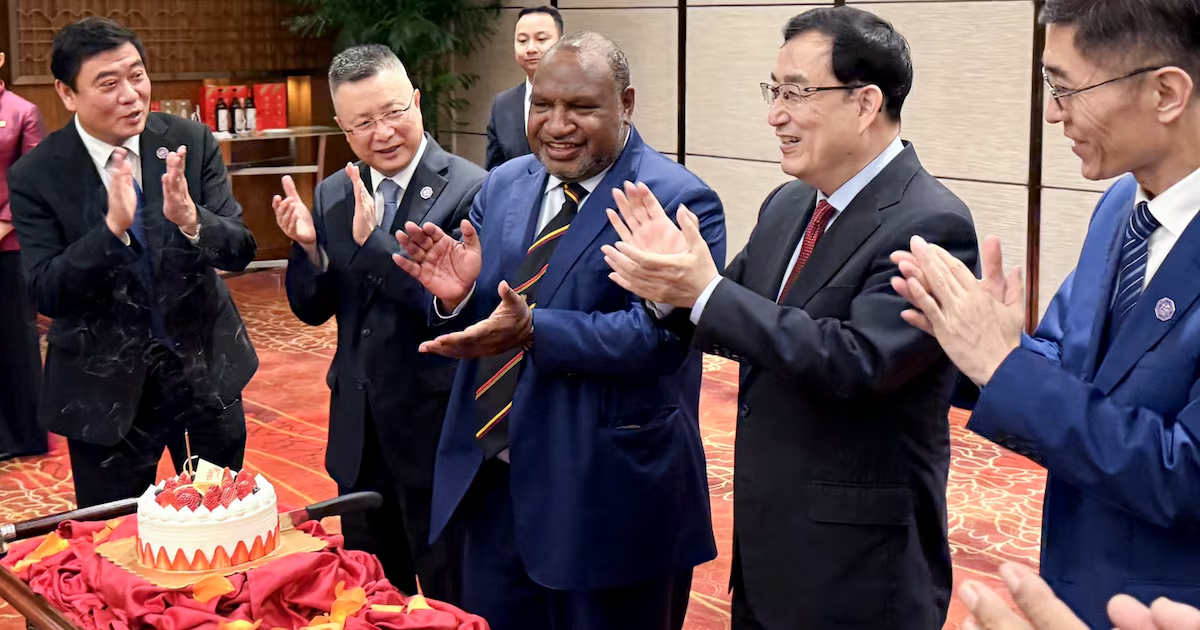
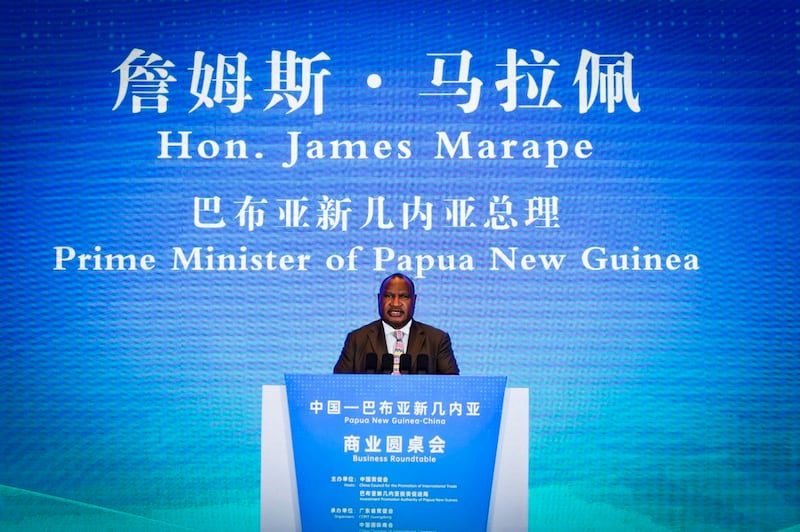
PORT MORESBY, Papua New Guinea – Papua New Guinea Prime Minister James Marape advanced his economic agenda during his visit to China this week, but experts stressed that the economic benefits of Chinese investments should not come at the expense of the environment or workers’ rights.
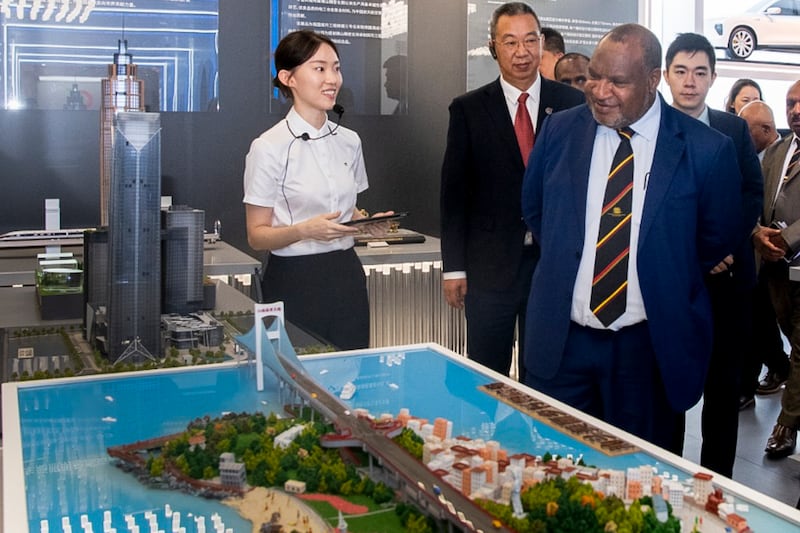
During his three-day visit to the southern coastal city of Guangzhou, Marape discussed partnerships in green energy, agriculture and special economic zones, and he met with investors in two controversial mining projects: a potential gold and copper mine on the Frieda River and an expansion of the Ramu nickel mine.
Although the Frieda River project has not yet started, critics fear its environmental footprint will be so large that it could destroy the entire Sepik River ecosystem. Meanwhile, the Ramu nickel mine is often cited as an example of PNG’s environmental and social warning. Not only has it been criticized for poor workplace health standards, but in 2019 a toxic waste disaster at the nickel mine turned the ocean red, killed marine life and caused severe rashes among residents.
The problem is not limited to Papua New Guinea; Chinese investments in overseas mining projects around the world have led to serious human rights abuses and environmental damage, according to a 2023 report from the London-based Business & Human Rights Resource Centre.
But Marape’s office sees both projects as essential to national economic growth and diversification of the economy away from the export of raw materials to include downstream processing.
At what price?
While the government’s attempts to attract investment are welcome, projects should not be rushed, Paul Barker, executive director of the PNG Institute of National Affairs, a Port Moresby-based think tank, told RFA.
“PNG is a relatively high-cost economy, which is why there isn’t more diversification and value addition already,” he said. “High domestic costs are associated with poor infrastructure, local monopolies, including poorly performing state-owned ones, law and order problems, low investment over the years in human resource development, particularly in technical and business skills, and other factors. »
Barker said addressing these challenges was necessary to enable economic diversification and to encourage Papua New Guineans to participate and lead their own economy.
“Secondly, the Prime Minister should be careful not to rush investment with inadequate safeguards,” Barker said. “Social, environmental and safety standards, equity and ensuring local benefits must be prerequisites. »
The goal of investment should be to uplift the people, not undermine them, Anton Sekum, acting general secretary of the Papua New Guinea Trade Union Congress, told RFA.
“Foreign investments are welcome. But they must come with responsibilities,” he said. “Too often, experiences across all sectors – from large-scale resource projects like the Ramu Nickel mine, to wholesale and retail trade, to major infrastructure construction – have shown that worker welfare, wages and conditions fall below acceptable standards for Chinese investment. »
He said it was important that jobs for Papua New Guineans were not just paid a survival wage.
“They must ensure dignity, security and the possibility of real economic mobility,” he said. “Foreign investment must play a transformative role, not just extracting value, but creating it. »
He also stressed that respect for people’s human rights and democratic rights was equally important, and called on Marape to make it clear to China that labor exploitation would not be tolerated.
“Papua New Guinea should not look for investors who come just to take,” he said. “Instead, we must seek partners who are ready to build, transfer knowledge and leave a legacy of empowered people. »
Land acquired
At a news conference Friday, Marape said his trip was “good and wonderful.”
He revealed that as well as securing investment in mining, China has also given PNG two plots of land – one in Beijing and one in Guangzhou – which will be used for diplomatic purposes.
“I would like to thank China for this gesture which was unknown to us. The Kundu Beijing project will be feasible and will put the face of PNG in China,” he said, referring to a partnership program aimed at advancing PNG’s economy, named after the hourglass-shaped drum often found at official ceremonies in Papua New Guinea.
Edited by Eugene Whong.