


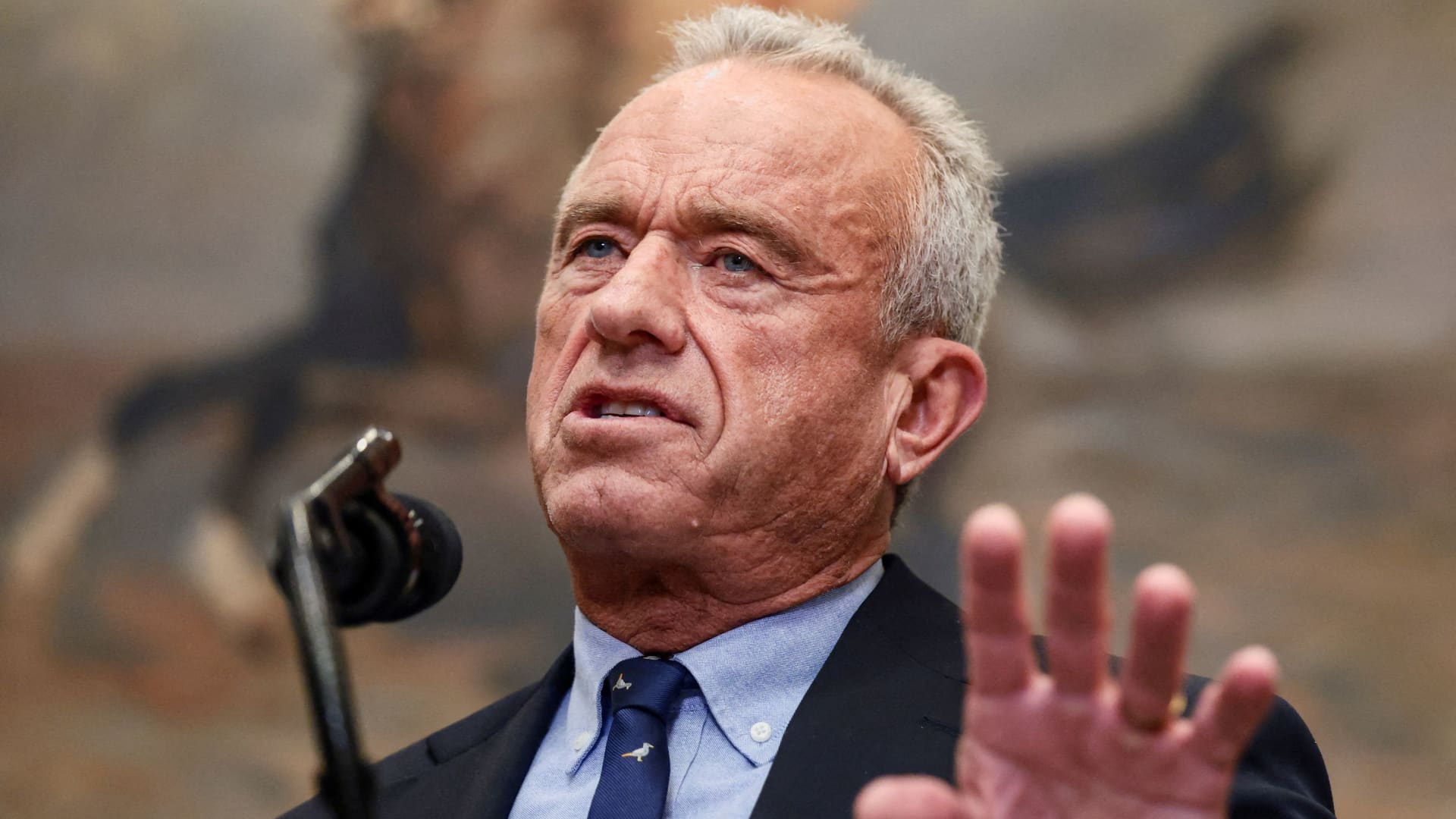
U.S. Secretary of Health and Human Services Robert F. Kennedy Jr. gestures as he speaks during an event in the Roosevelt Room of the White House in Washington, DC, U.S., December 19, 2025.
Evelyn Hockstein | Reuters
Health and Human Services Secretary Robert F. Kennedy Jr. said Wednesday he would support a possible ban on junk food television ads in the United States — an effort that would likely draw fierce backlash from major food manufacturers.
Speaking at a Senate Health, Education, Labor and Pensions (HELP) committee hearing, Sen. Bernie Sanders, I-Vt., said President Donald Trump’s nominee for surgeon general, Casey Means, recently told the panel that she supports banning junk food ads on television.
Asked if he agreed with a ban, Kennedy said, “I would support that.”
But Kennedy also seemed to hint that he would like the effort to be voluntary for food companies.
“The only hesitation I had was we tried to ban smoking on television, and the tobacco companies willingly came to the table, which was a good thing,” he said. “And I think the same arguments apply to junk food, [which is] probably even worse for Americans than smoking. »
Food, beverage and restaurant companies spend nearly $14 billion annually on food advertisements in the United States, more than 80% of which promote fast food, sugary drinks, candy and unhealthy snacks, according to a 2017 study from the Rudd Center for Food Policy and Health at the University of Connecticut. It is unclear how much trends have changed in the intervening years.
The Trump administration is already exploring the possibility of limiting the ability of food companies to market certain unhealthy foods to children, according to a “Make America Healthy Again” policy document released by the White House in September.
HHS, the Federal Trade Commission and other agencies will consider establishing guidelines for the food industry on marketing to children, “including the evaluation of misleading claims and images,” the document says.
Twenty years ago, the food industry launched the Children’s Food and Beverage Advertising Initiative with the goal of committing to advertising only to children under 12 years of age for products meeting certain nutritional parameters. But the initiative is voluntary, and children still watch about 1,000 TV ads a year for unhealthy foods and drinks, according to a 2024 University of Illinois at Chicago study.
Kennedy’s testimony before the HELP committee is the latest in a series of congressional hearings over the past two weeks surrounding the proposed HHS budget for fiscal year 2027.
Means, during her Senate confirmation hearing in February, said she would “absolutely lend” her voice to support banning junk food TV ads aimed at children.
— CNBC’s Amelia Lucas contributed to this report