


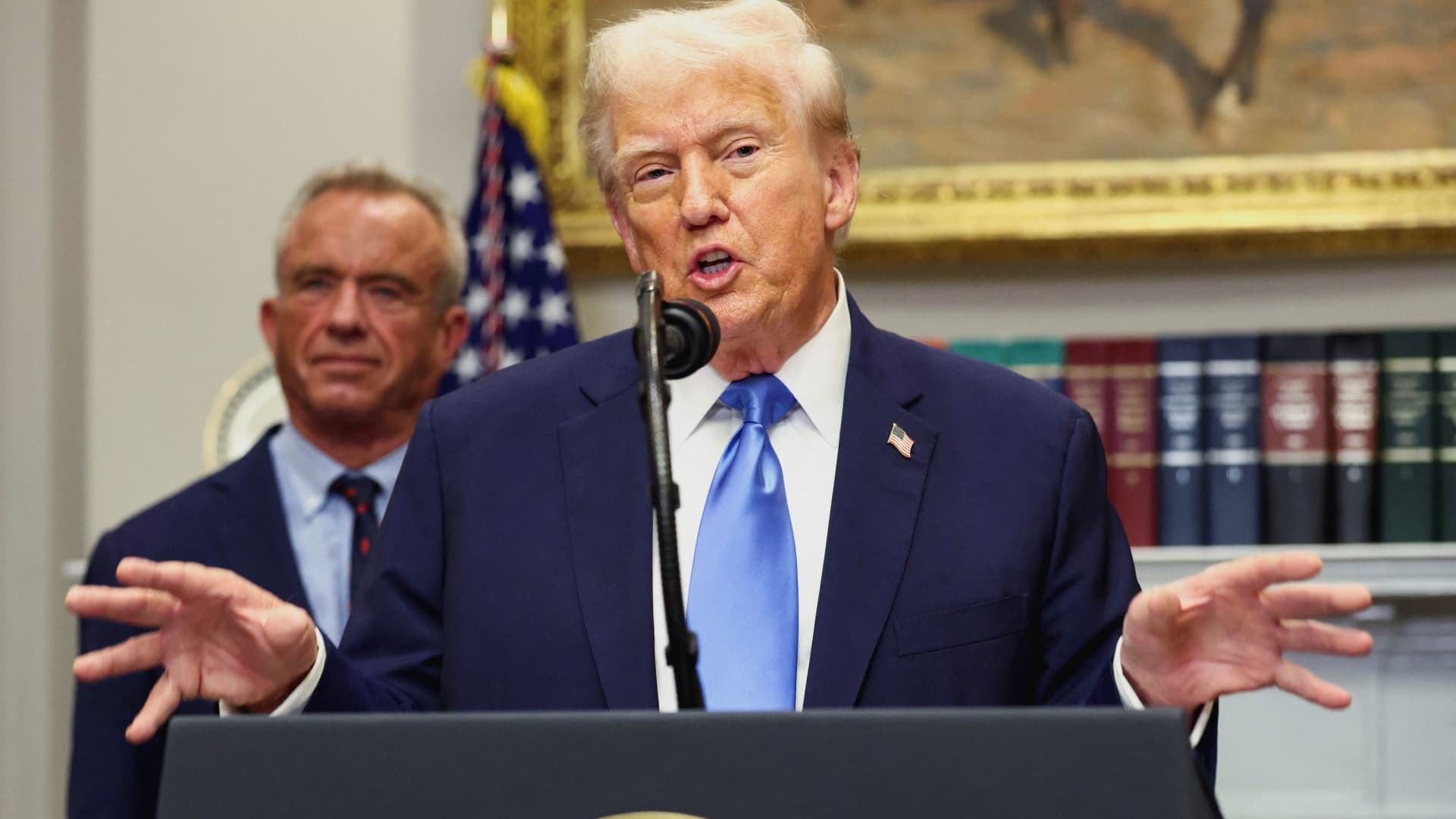
U.S. President Donald Trump, before U.S. Secretary of Health and Human Services Robert F. Kennedy Jr., delivers remarks at the White House in Washington, DC, U.S., September 22, 2025.
Kevin Lamarque | Reuters
President Donald Trump on Thursday unveiled the outlines of a health care plan that the White House says will reduce drug prices and insurance premiums.
The announcement comes as congressional efforts to expand the Affordable Care Act’s key tax credits run into headwinds from Senate Republicans, leaving millions of people at risk of seeing their health insurance premiums rise.
The Trump administration has dubbed the initiative “The Big Health Plan,” the president said in a video unveiling his policy Thursday morning.
“I call on Congress to adopt this framework without delay,” Trump said. “I have to do it now.”
The plan would codify deals Trump recently struck with major drugmakers to reduce the cost of some prescription drugs in the United States by tying them to lower prices abroad, as part of his “most favored nation” policy.
More than a dozen pharmaceutical companies have agreed to lower prices on some products for Medicaid patients in exchange for a three-year price waiver.
As part of the deals, the companies also agreed to sell certain drugs at a discount on Trump’s direct-to-consumer platform, Trump Rx.
Trump, in his video announcement, said this drug price cut would go into effect on the platform when it launches this month. He claimed these prices would fall by as much as 500%, although that would mean prices falling well below $0.
The health care framework would “make more safe, verified pharmaceutical drugs available for over-the-counter purchase,” according to a White House fact sheet.
It would also send money for health insurance coverage “directly to the American people” instead of giving “big insurance companies billions of dollars in additional taxpayer-funded subsidies,” the fact sheet says. Trump has repeatedly floated similar proposals in his recent remarks.
The plan would further “fund a cost-sharing reduction program,” which the administration says would “reduce premiums for the most common Obamacare plan by more than 10 percent.”
Other elements of the policy include requiring health insurers to prominently display “plain English” coverage comparisons on their websites, as well as other information about overhead costs and claim denial rates.
It would also require providers who accept Medicare or Medicaid to “publicly and conspicuously publish their prices and fees to avoid surprise medical bills.”
This is developing news. Please check again for updates.